Deconstructed: Gorgon
A Tier 2 humanoid with deadly aim and a stony gaze. Look upon them at your peril!
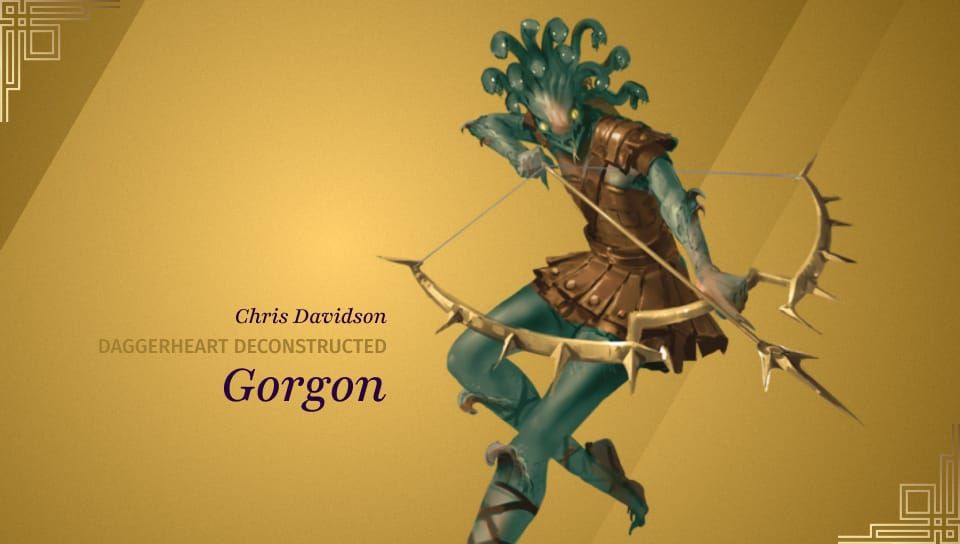
THE GORGON COMES TO US from Greek myth and in Daggerheart, without the baggage of being confused for a mechanical bull. This snake-crowned Adversary has some unique mechanics and interesting features that build on its mythology. It also packs a punch with its powerful Sunsear Shortbow, and living snakes for hair, making it dangerous from any distance.
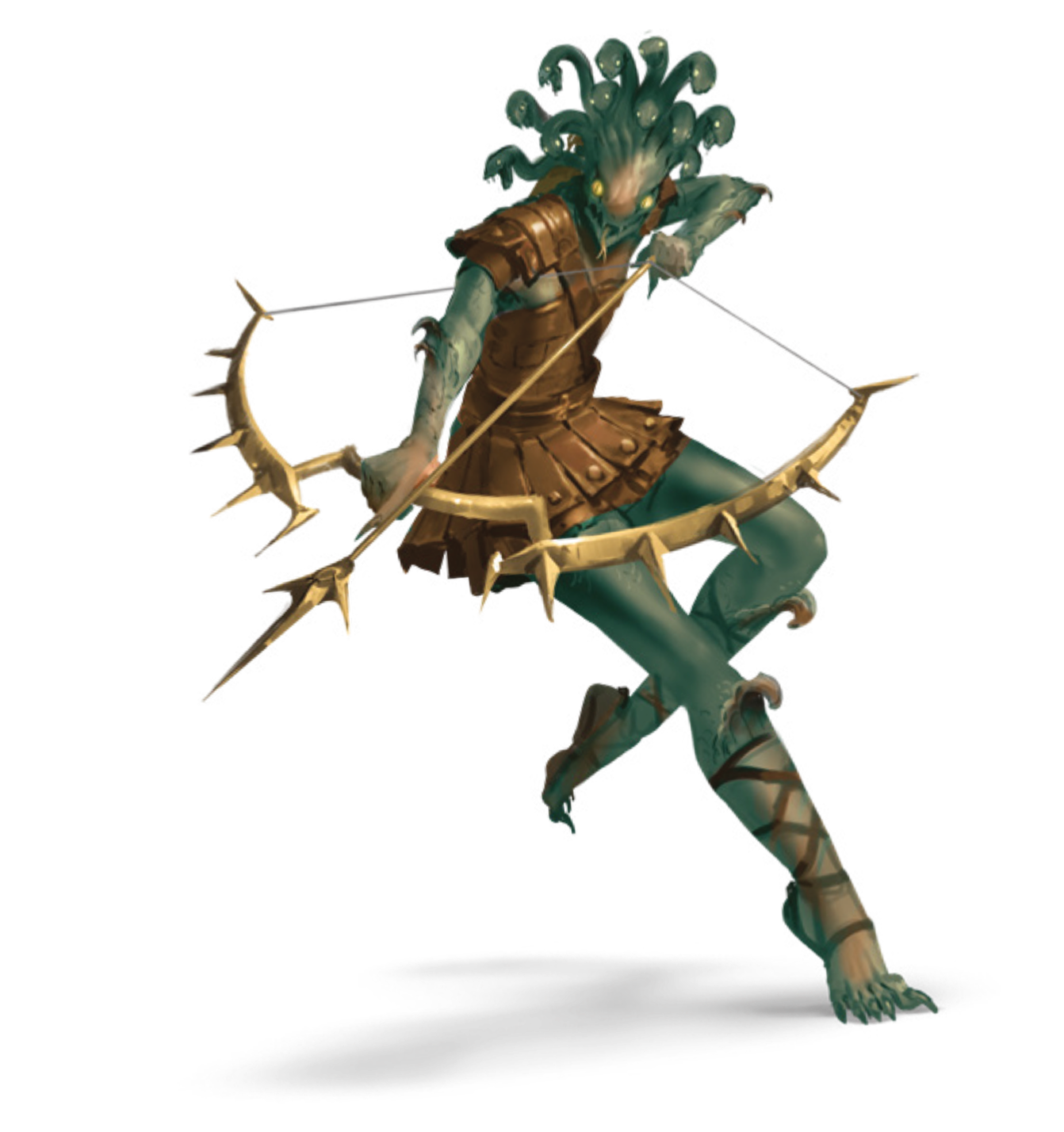
In discussion of damage potential and scaling Adversaries, the Gorgon inevitably comes up because of its very swingy standard attack. I find the unique way the designers crafted its Petrifying Gaze to be a more interesting topic because of individual Countdowns which can get very tense at the table. It lacks the canonical weakness to its own reflection, but don’t let that stop your players from using it.
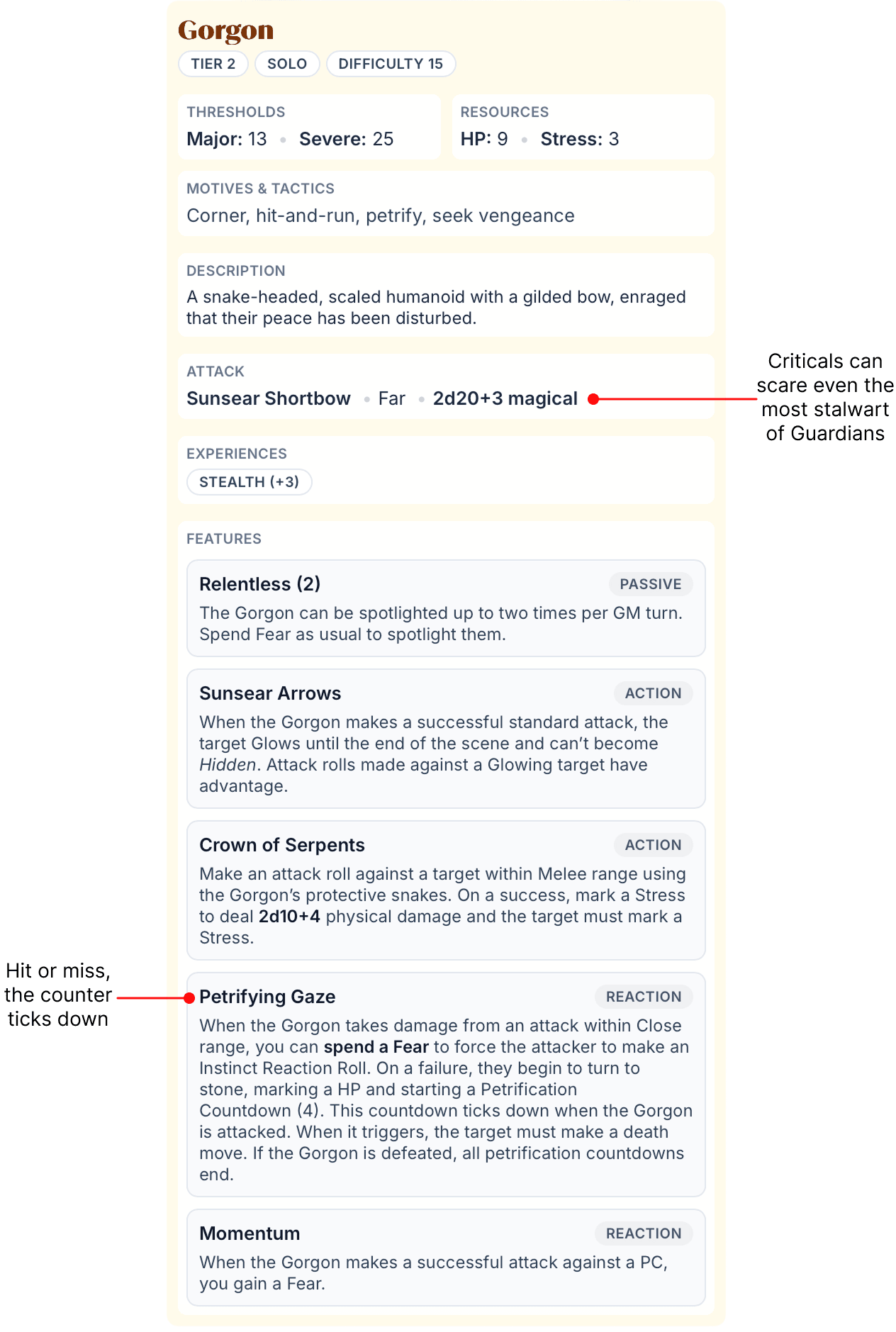
The Gorgon’s stats put it right in the middle of most Solos until we get to its attack. It has a high attack bonus for its tier (with only the Mortal Hunter having a higher one) and the highest damage potential of the entire tier with a whopping 2d20+3 magic damage at Far range.
Looking at its Experience, which is Stealth, and HIT-AND-RUN as one of its tactics, we can see that the Gorgon is a skirmisher that will move to cover and stay away from opponents. This means that a GM running the Gorgon should consider what sort of location they can be found in. One that favors the Gorgon should encourage movement and have lots of blind corners, pillars, and of course, petrified victims.
For features, it has the Momentum/Relentless combo which means that if it is successful with its first attack, you gain a Fear and can make another attack by spending that Fear immediately (whether that be with its standard attack or Crown of Serpents). It also has advantage against any target that it has already hit with its standard attack, so that is the more likely play. This alone should tell you that the Gorgon is a dangerous foe.
How we bring them to life at the table can make a tense fight even more dangerous. As with most Adversaries, the first thing you want to do before your PCs ever catch an ill-fated glimpse of the Gorgon is to broadcast the danger that they represent. As GMs, we do that through narrative descriptions and NPCs. You want the player, not the character, to understand that a fight against the Gorgon could result in a death move through petrification or overwhelming damage. The easiest and most obvious way to tell the characters about these features is to show them. Talk about the tall pillars that hold up the temple’s interior, the long shadows cast by burning pyres, and of course, the gruesomely detailed statues that litter this place, each etched with a look of abject terror.
The Gorgon starts the scene Hidden and will likely make demands that the party leave at once. After a short exchange of words, the Gorgon would fire upon the one leading the conversation to show they mean business. Normally I would not suggest using Fear on an experience, but this is one time you want to give the Gorgon every mechanical opportunity to be successful. If you have it to spare, spend a Fear to add the Gorgon’s experience to the attack roll. This also gives you that Fear back because of Momentum. Taking the shot reveals the Gorgon’s location, but spend that Fear you just earned to spotlight the Gorgon again (because of Relentless) to dash back into cover or darkness (rules for cover, line of sight, and darkness can be found on page 104). Make sure to describe how the target of the first volley now Glows, which is a special condition.
The Gorgon will continue this chase as long as they’re able, firing once and then moving to a location that can conceal or give them cover; anything to impart disadvantage (more on that later). The Gorgon will prioritize Glowing PCs, especially ones attacking from range, unless they are in Melee range of another PC. In this instance they’ll use their Crown of Serpents and attempt to move away and then use their standard attack. Firing a ranged weapon at melee range does not impose disadvantage in Daggerheart, but showcasing your Adversary means using all the tools at your disposal.
Throughout this process, remember to keep a few extra Fear for Petrifying Gaze. Resolve the attack within Close range, mark HP then spend the Fear to force an Instinct Reaction Roll. If a PC fails, describe the stiffness in their joints and the pallor of their skin then ask them to start a countdown and explain the mechanics of the feature. I like the thematics of giving out small rocks as counters the players can use for tracking the Petrification Countdown. It’s important to remember that ANY attack on the Gorgon, successful or not, ticks down ALL of the countdowns, which is why you want to keep a source of disadvantage if at all possible.
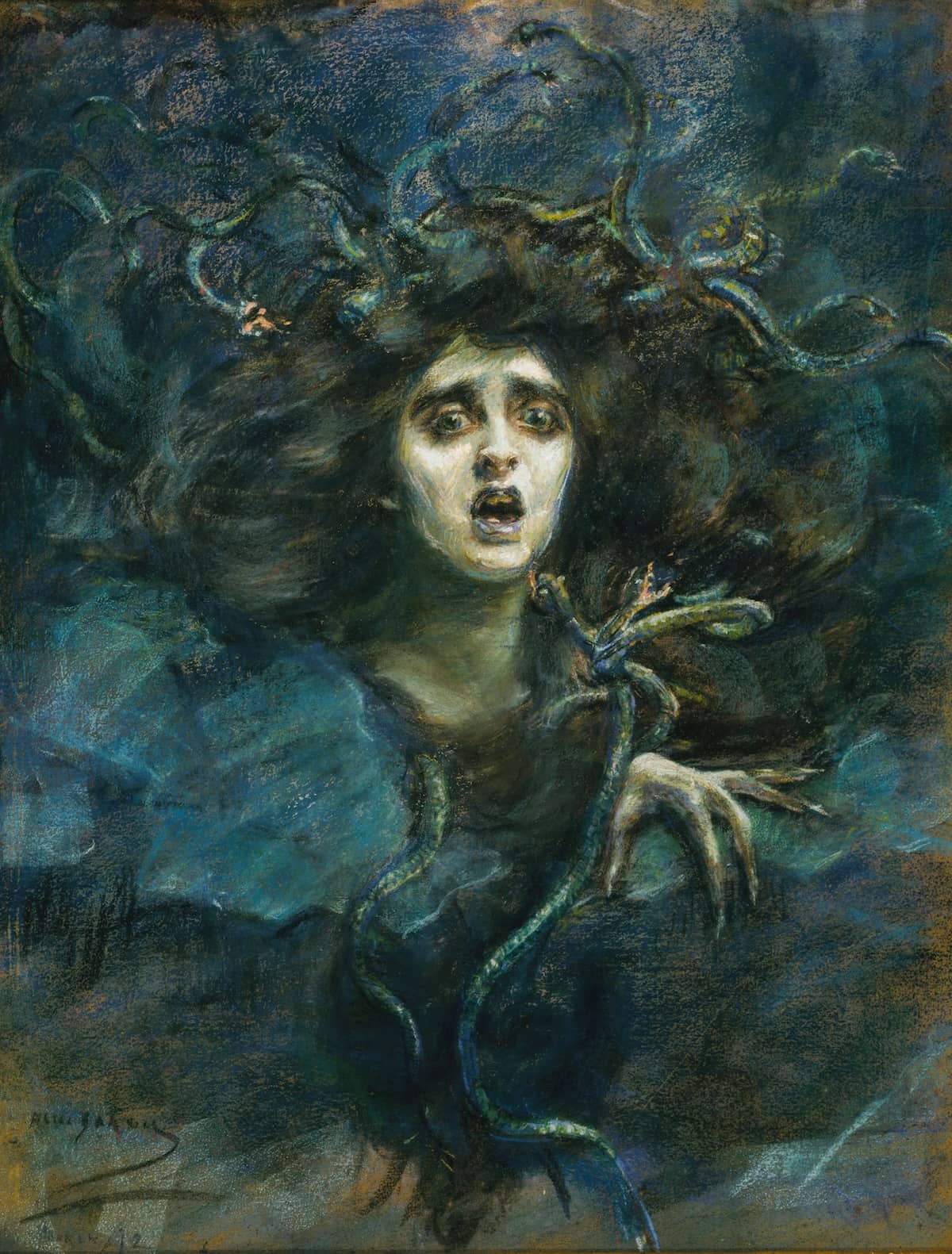
In encounters like this, you might find yourself flush with Fear. It’s a good idea to have an Environment to go along with your Adversary to funnel that Fear to. Think about what sort of things would be thematic in a Gorgon’s lair. Maybe the Gorgon has limited control over their petrified victims and can command them to make attacks at PCs. Perhaps the temple has ancient images and lore the PCs can use to reach out to the Gorgon and convince them to stop attacking, or shattered mirror pieces the PCs can find a way to mend and use against the Gorgon. Always try to have alternative objectives in a conflict and encourage your players to look for them.
Also remember that Fear is your gas pedal for the narrative, especially during combat. You don't have to use all of it if you want to relax the pace. Use a spotlight for an Environment that allows the PCs to discover the tragic backstory of this Adversary (or make parallels to a PC's own backstory). In Daggerheart, combat isn't the only point of an encounter.
After getting absolutely pummeled by the Gorgon, the party might want to loot that body! Obviously, Adversaries are asymmetrical, meaning they don't use the same rules that PCs do. So giving a PC a bow that does d20 magic damage, might upset the balance of your game. Instead, consider giving them sunsear arrows that do d20+3 magic damage and are consumable items.
Daggerheart Deconstructed is written by ENNIE Award-winning writer Chris Davidson, author of RightKnight's Guide to Making Custom Adversaries, one of the authors of Incredible Creatures, and Additional Writer for the Daggerheart Core Rule Book.