Deconstructed: Sallowlands Episode 2
The journey through a rotted wasteland begins with a single step.
WHEN WE LOOK at the map for the Sallowlands, we see very few named things. The rising spire of the Tower of Oxudos, the small villages of Oathwell and Hookburrow, and the gothic castle of the Sorrowheart Sanctum draw our eyes as we look over this desolate map. The party started in the Rustsaw Woods and in two episodes have only made it to the Tower of Oxudos. Mere inches, but more than a day's travel out into the lake bed.
So if there are not that many named locations to visit and a far off destination to reach, then the journey must be the story. If you were going to create a campaign where travel is an important part of the story, you could borrow from Journey to Horizon in the Hope & Fear expansion, the PDF of which came out earlier this week to preorders. But one of the things the new Horizon campaign frame doesn't provide are features for these biomes—and in the short amount of time the players have been at the table, we've seen 4 of them. As a result, I thought it might be useful to look at how you might construct these Environments for use in your home games by using a few examples from the first two episodes of Sallowlands.
When making an Environment from scratch, you usually want to hit a few goals:
- Establish the defining trait of the Environment, usually something the PCs can engage with. This is the thing that most embodies the fiction.
- You want something that shifts the Environment away from the established rules in the book. Something that changes how things play, thereby creating obstacles.
- Most of the time, you want a way to do damage to the PCs, either directly or through summoning Adversaries. This is especially true of Traversals.
The defining trait of an Environment is what makes it feel mechanically like what you’re describing narratively. Back in episode 1, when we hear Matt describe the Rotten Shallows, we find out that it is a long-dead, underwater forest. It smells of decay and death, and moving through the silt-strewn basin makes for difficult terrain to navigate. So when Matt made the features that make up this Environment, those are the data points he leaned into.
For traversals, getting from one place to another by way of countdowns demands the PCs interact with the Environment mechanically. The traversal of the Rotten Shallows was the Patchy Expanse, which had both a progress countdown and a consequence countdown. The feature probably looks like this:
Patchy Expanse - Passive: Crossing the Rotten Shallows requires the party to complete a Progress Countdown (6). At the same time, start a Consequence Countdown (3). When this countdown triggers, summon a Tatchra who appears within Far range and immediately takes the spotlight.
You might have noticed that Matt did not explain the Consequence Countdown or even declare its existence; he merely narrated the Tatchra swooping closer each time they rolled with Fear. This created narrative tension and told the PCs about the consequences should they continue to roll with Fear. It was also a good reminder that a GM can make a move that ticks down a countdown timer, as Matt spent a Fear to tick down the final tick of the consequence countdown, leading to a powerful end to the first episode.
When the book talks about shifting the Environment as a GM move, it specifically calls out actions (aka "features") from an Environment stat block. That means we are translating a narrative description into a mechanical feature. The Rotten Shallows are a marshland and the mud and muck of these stinking wetlands are hard to move quickly through. With that narrative in mind, we can translate that into a feature:
Mucky Marshland - Passive: While in the Rotten Shallows, a PC has disadvantage on Agility Rolls to move beyond Close range.
When Mercy attempted to close the distance on the Tatchra, he had to push himself harder than normal, which represents the disadvantage die. This changes the way the rules work (Agility Rolls to move a Far distance), modifying them to better portray the fiction and immerse the players in the moment. It also gives them tactical decisions to make.
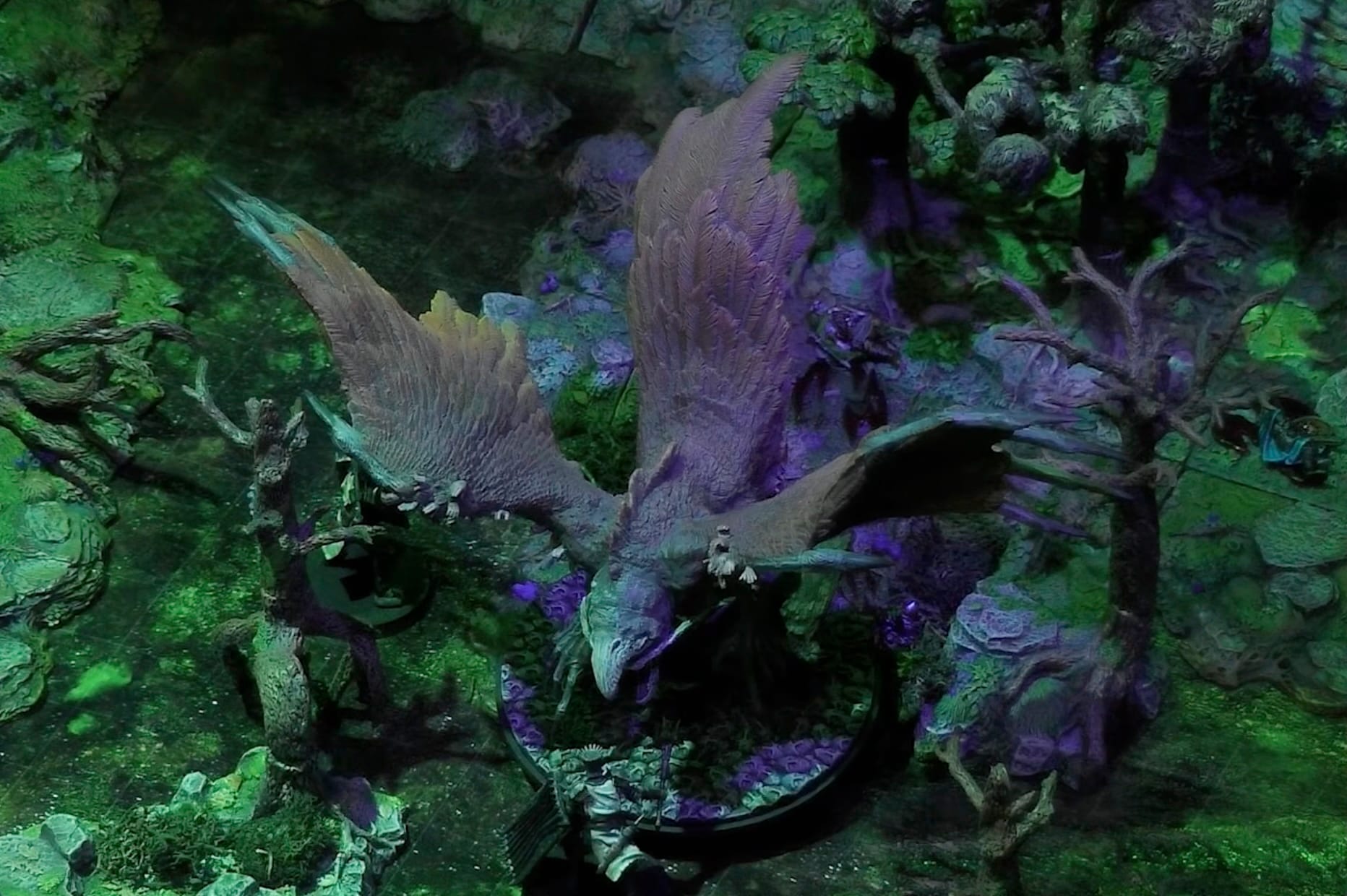
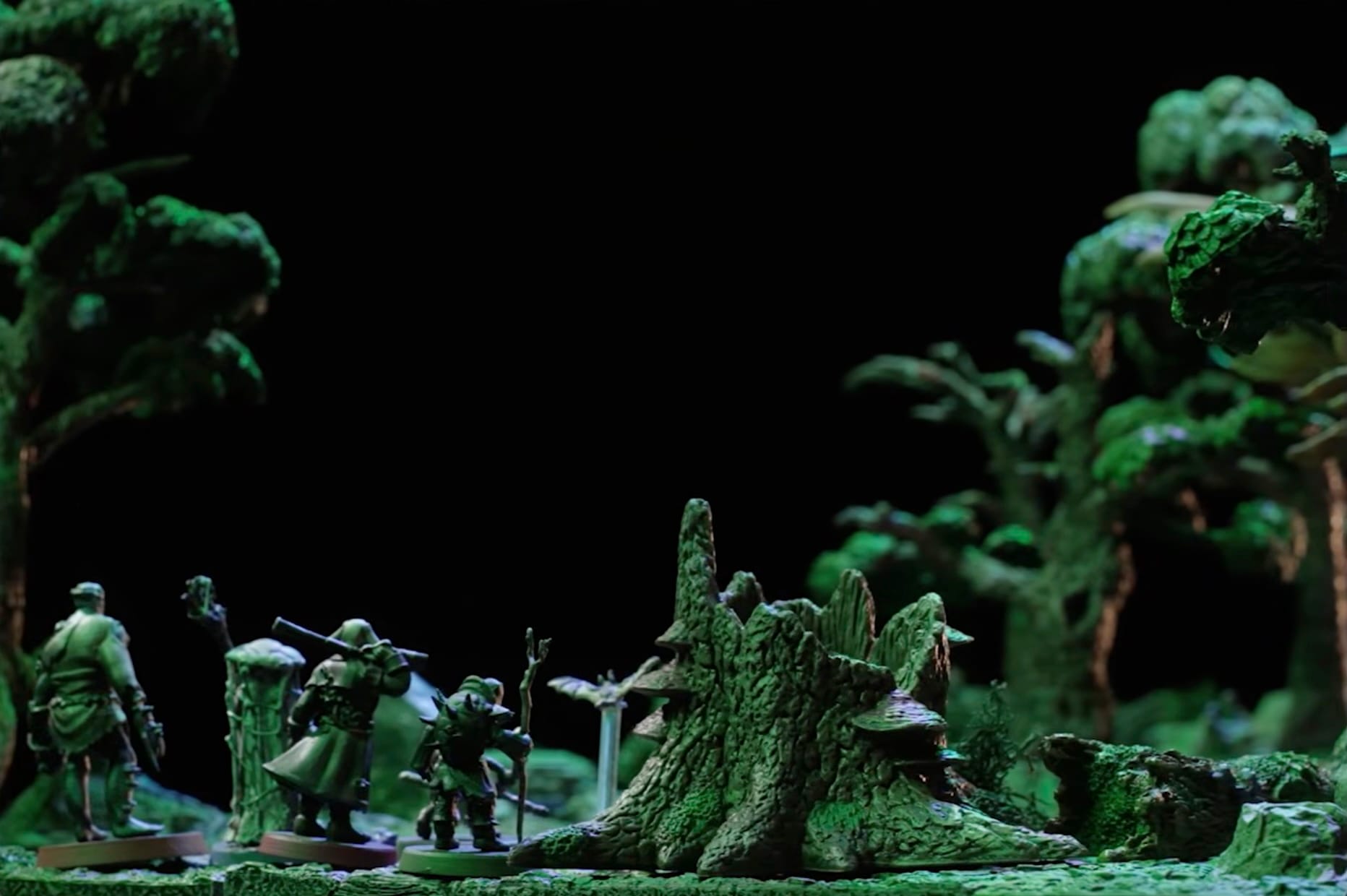
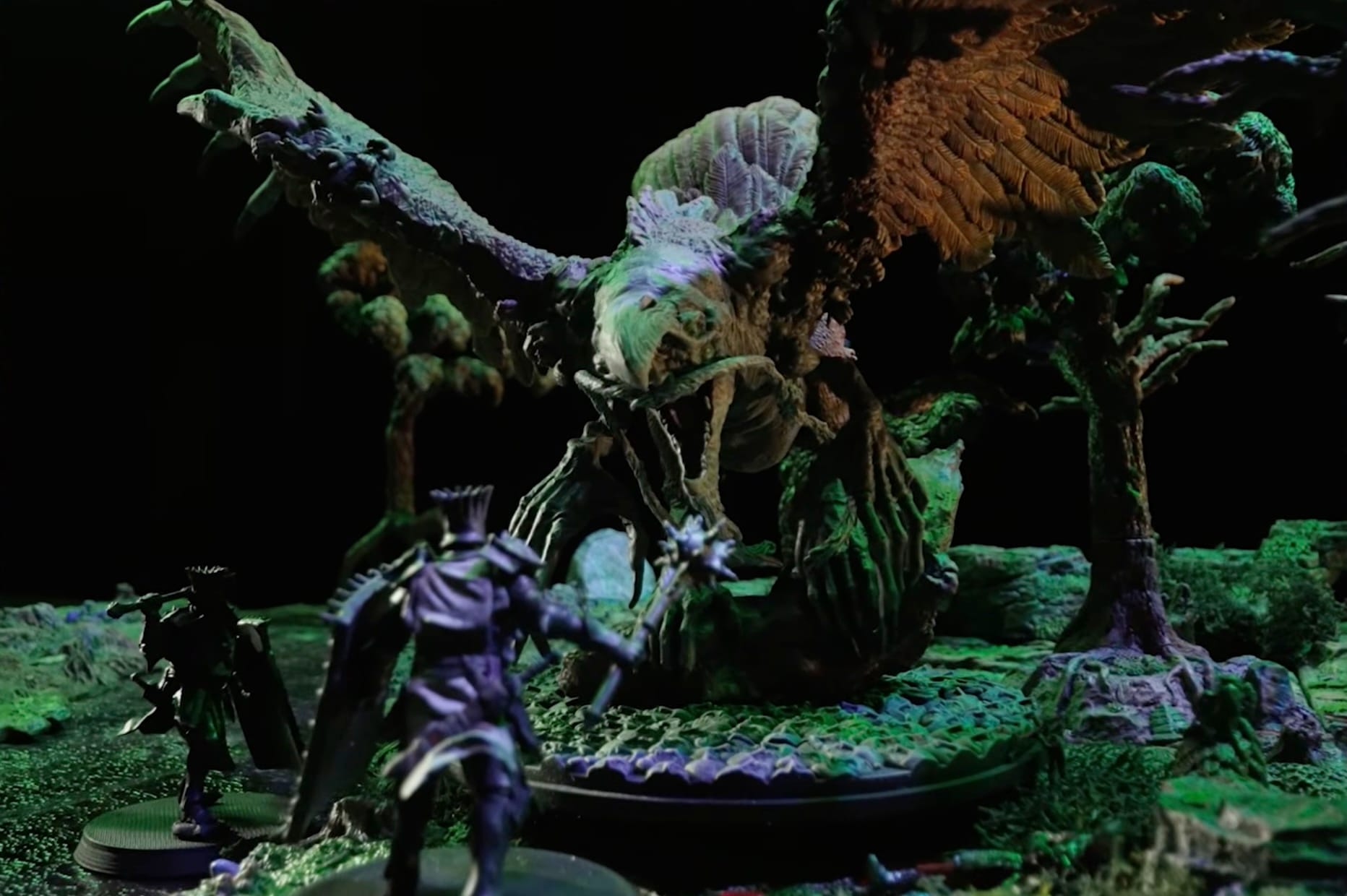
In episode 1, Matt asked the party, completely unbidden and during the middle of the countdown, if they wanted to rest. Then, near the beginning of the second episode, after the PCs have driven off the Tatchra and burnt the bodies, he asks again. For me, it was a little jarring and out of place, especially after finding out he was trying to prod a feature in the Environment. When running your own tables, I recommend that you Hold on Gently to designs and be okay if they get left behind.
The feature in question is a little unconventional and I’m glad we got to see it despite how it came about. It might look like this on a stat block:
Sickening Sleep - Reaction: At the end of a long rest, all PCs must succeed on a Strength Reaction Roll. Targets who fail become Sickened. A Sickened target rolls a d4 and subtracts the result from each of their action rolls. When a Sickened target would clear a HP they can tick down the die equal to the number of HP they would have cleared.
Conditions are difficult to keep track of most of the time and the bespoke conditions that are inherent to Daggerheart mean that there is not a defined, shared lexicon for conditions. I would recommend the conditions you introduce have immediate—and easy—application. For most conditions, a single successful roll removes the condition, but things like the Sickened condition introduced here need time to simmer and resolving it more slowly or at a greater cost makes sense. When you want something to persist over scenes, a countdown is basically mandatory, and setting the way it ticks down gives you a lot of levers to pull. Just remember that the goal is fun, not frustration.
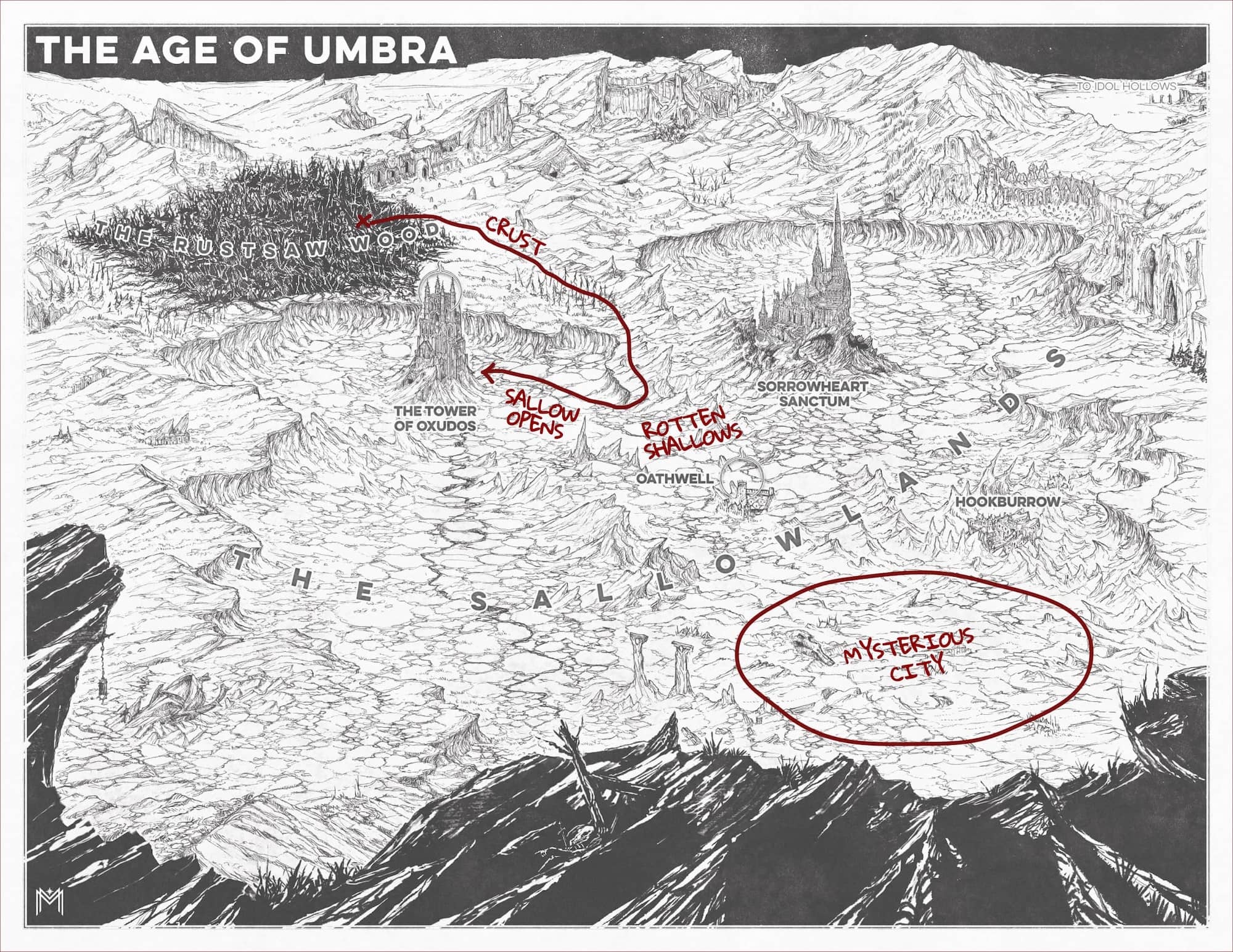
Once the party was out of the Rotten Shallows, they found themselves in Sallow Opens, a dusty expanse. Matt spend 2 Fear to shift the Environment, creating a dust storm, causing PCs to mark a Stress and give everyone disadvantage for the rest of the scene (not to mention the negatives to the roll from being Sickened). Once they made it to the camp and the dust storm rolled over we were treated to an inversion of the bandit camp trope with Styg's Company.
One of the GM Principles that was missing from the last Age of Umbra series was to "Shine Light in the Darkness Often." The trading company and the beautiful interaction between Caguama's Mr. Beaks and Edra was definitely that. This was something that I believe was pulled from Caguama's extensive backstory. Undoubtedly Edra Stygs was something that Matt and Vico spoke about, but likely when the scene started, they ad-libbed most of the connection. One of the most fun things you can do as a GM is let your players fill up the holes in the plots with the narrative that best suits their character. This one was a touching display that revealed a character who believes this world can be saved, even when everyone else believes it to be lost.
Once in the Tower, Alphonse hits upon a feature of the social Environment of the Tower of Oxudos which is probably worded closely to the Local Tavern Environment. Features like this allow the PCs to engage with the world, and if Matt doesn't write down questions like those in the official Environment stat blocks, what he did ask was a perfect fit, and something you should probably be doing often. "Who do you find, and what do you ask them?" Afterward, the PCs were given bits and pieces of information, but were left with so many questions. What could this city in the distance be? Maybe Jack Panic knows?
Daggerheart Deconstructed is written by ENNIE Award-winning writer Chris Davidson, author of RightKnight's Guide to Making Custom Adversaries, one of the authors of Incredible Creatures, and Additional Writer for the Daggerheart Core Rule Book.