Deconstructed: Soul-Shattered Mage
If knowledge is power, and power corrupts, then this T1 Mage from H&F is the end result! Plus: a brand new Encounter Frame.
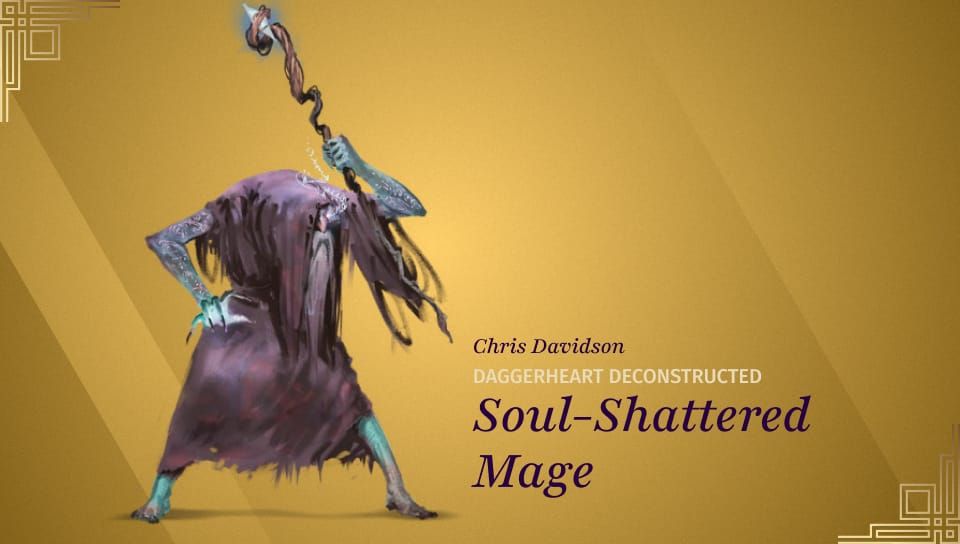
THE PURSUIT OF KNOWLEDGE is an admirable goal–until it isn’t. Such is the case of the Soul-Shattered Mage.

TTRPGs all tend to portray this figure similarly: someone who learned a secret about the universe that they weren’t prepared to comprehend. Maybe their search for truth revealed a discovery so impossible that it broke them entirely. Perhaps they were visited by an unknowable being or made a Faustian bargain. A good trope-filled backstory is useful when introducing Adversaries, and this one comes with some lore built in. Which is good, because you’ll want to bring those brain-breaking horrors to life in the minds of your PCs.
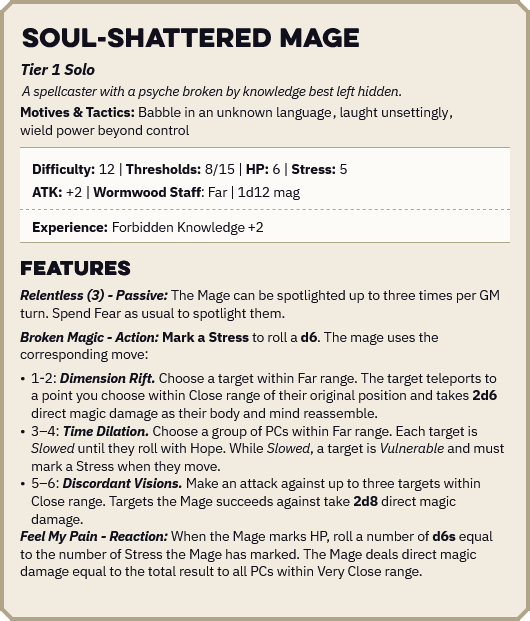
Most of the Mage’s stats are on par with other Solos, but to represent the fragility of their body that goes with their broken mind, they have lower HP than most others of its type and tier. Don’t expect them to stand up to punishment. Instead, expect to take the spotlight early and often, then fade away with a horrible cackle and cryptic mutters about how the PCs will be next.
The Motives & Tactics and Experiences of this Mage only reinforce its madness, which means that the Mage does not have a solid plan of attack, likely responding to threats with confusion and overwhelming magical destruction. This is reinforced mechanically by their Broken Magic’s random actions.
To understand how the Mage works, we need to look at all their features at once. We know Relentless 3 gives them three spotlights. They are going to mark a Stress on each of their spotlights to use Broken Magic because Feel My Pain is dependent on how much Stress the Mage has marked. They’re not going to be around long enough to care about being Vulnerable and they want to be hit, so they will do as much as they can in their first two spotlights to burn through their Stress.
If you roll Dimension Rift, bring the PC as close as you can to the Mage, if not, then move the Mage closer with each spotlight. You can even describe it as some spooky movement where the Mage isn’t quite in sync with time. If you roll Time Dilation, pick out the biggest group. If you happen to then roll Discordant Visions, use it on that same group that you used Time Dilation on. If not, then the closest threats are fine targets.
After that first volley of direct magic damage, the PCs are sure to want to get payback. After the first jolt of direct magic damage from Feel My Pain though, they might reconsider. It’s important here that you have some idea of the origins of the Mage’s madness when this goes off. What flashes of visions do the PCs endure? What manic lore can you impart in those moments? Most importantly, when the Mage is no more, what scars on their psyches do the PCs endure from these visions? And how long do they last?
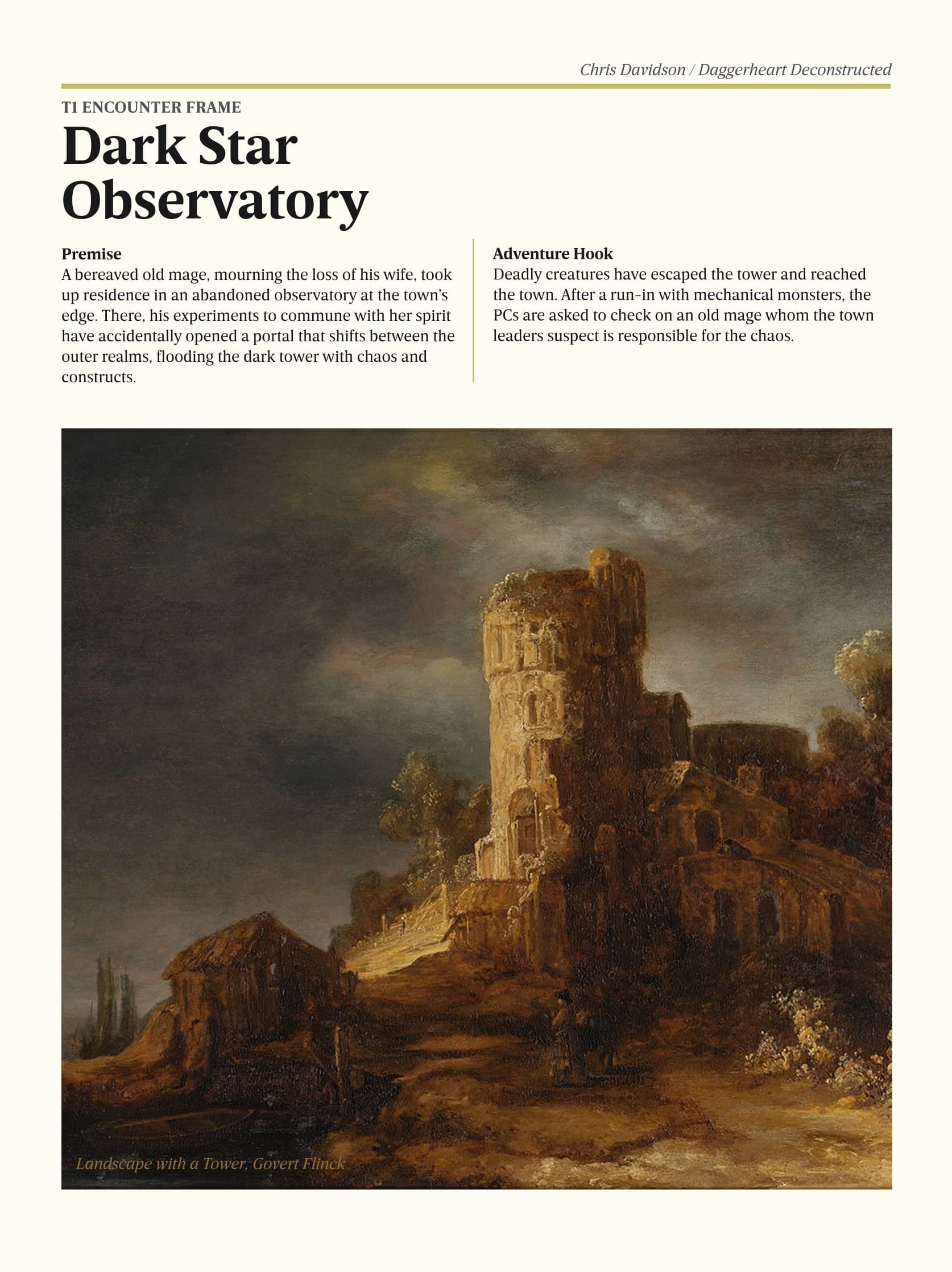
You might think to put the Mage in the Alchemist’s Abandoned Workshop Environment, but I feel like a place dedicated to the pursuit of forbidden truths might be where I put a broken wizard like this. And certainly something that speaks more to the outer-realm chaos than a traditional wizard’s tower. For our paid subscribers, we have a T1 Encounter Frame to befuddle and horrify your PCs called the Dark Star Observatory.