Daggerheart GM Tools Survey: 2025
Over 200 GMs shared how they plan, prep, and run Daggerheart. Here’s what we learned about the habits and tools needed to deliver a great player experience.
DAGGERHEART HAS BEEN on a tear since its launch in May. The core rulebook sold out multiple times across regions, and within three months players had created over half a million characters on Demiplane Nexus, the game management platform. Age of Umbra, Critical Role’s dark fantasy series, drew hundreds of thousands of fans to the system, while on Reddit, the Daggerheart sub grew from 3,000 to 30,000 members in just a few months. Most importantly, the system has attracted droves of players and GMs from other TTRPGs, contributing to the meteoric rise of the game.
To better understand this moment, The Dispatch conducted a survey of over 200 Daggerheart GMs, focusing on who is running the game, what tools they’re using, and how their prior experience shapes their approach. The result is an early snapshot of GM behavior and tool use within the Daggerheart community, a baseline intended to track how play patterns evolve as the system matures.
Which is a all a fancy way of saying—what’s going on?
ABOUT THE GMs
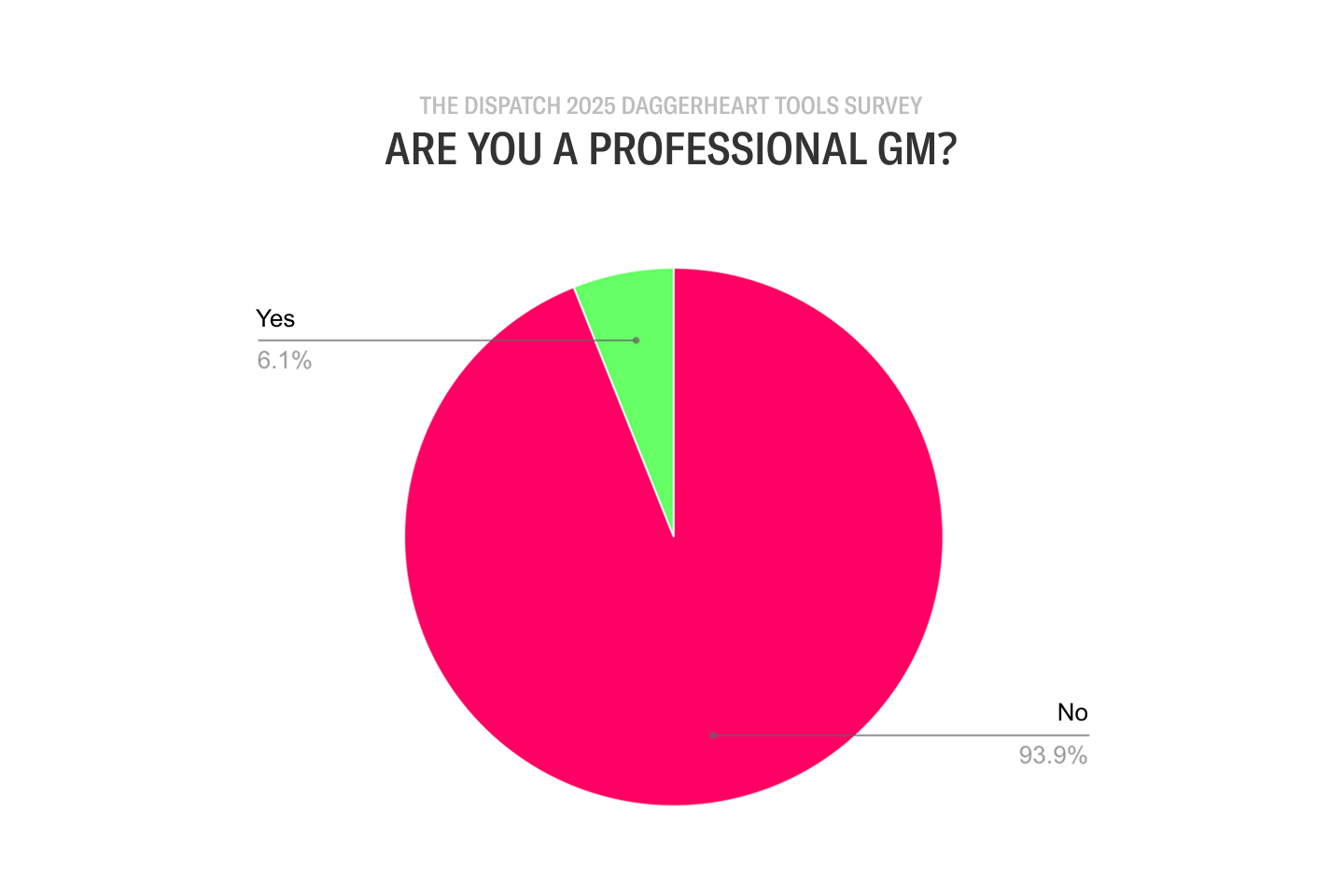
1. ARE YOU A PROFESSIONAL GM?
- Yes: 6.1%
- No: 93.9%
Just a few years ago, this question wouldn’t have made sense. But the pandemic reshaped tabletop play, fueling digital platforms, normalizing remote games, and making room for services like StartPlaying. Paid GMing is now part of the ecosystem, so we opened the survey by asking: are you one?
Notable: Most of the paid GMs in our sample are relatively new behind the screen, with 4 out of 5 reporting less than five years of experience. Their toolkits are lean and practical—Roll20, Discord, and Docs—but a few also use streaming and video tools like OBS and Zoom, suggesting they’re ready for client sessions or public-facing games.
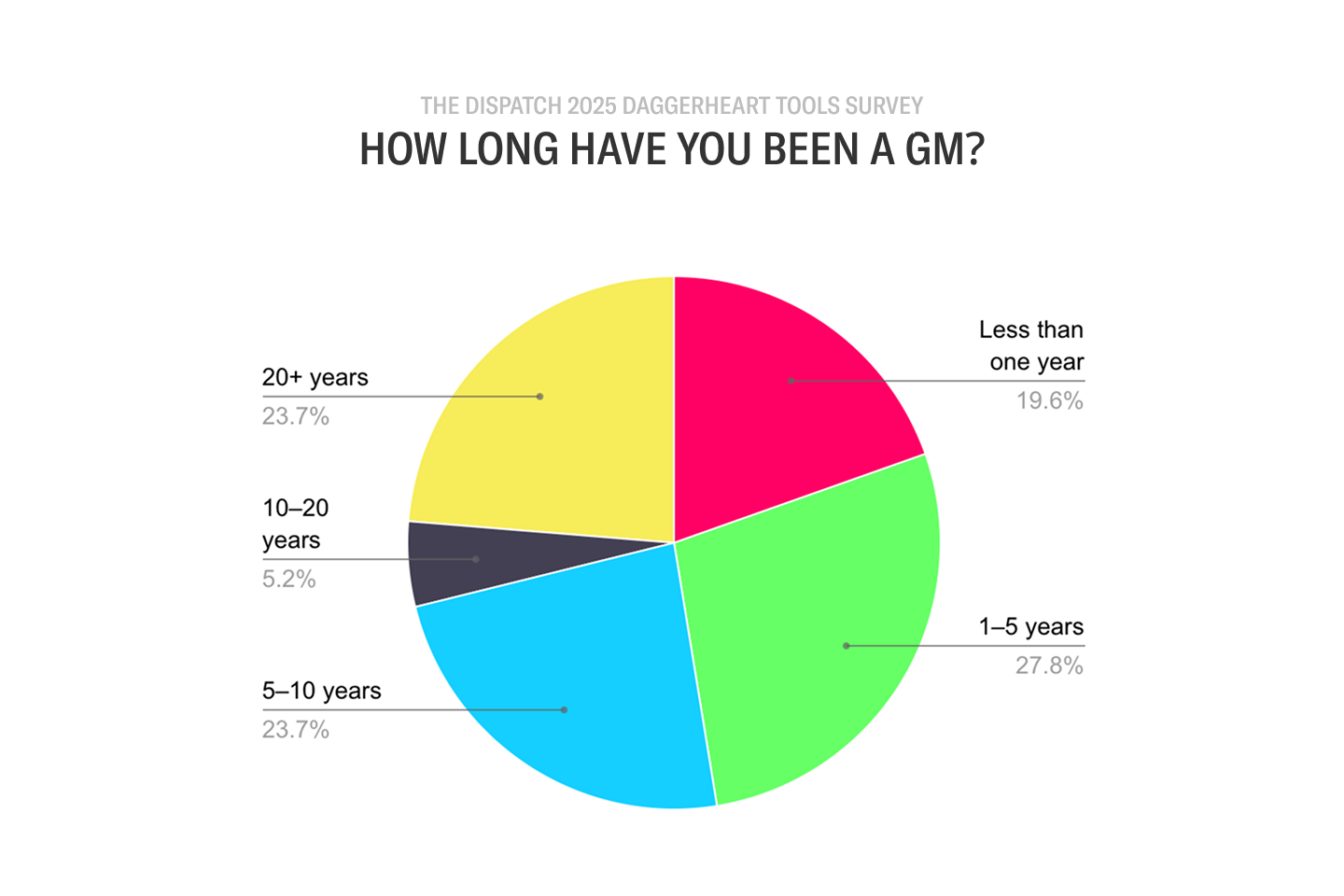
2. HOW LONG HAVE YOU BEEN A GM?
- Less than one year: 19.6%
- 1-5 years: 27.8%
- 5-10 years: 23.7%
- 10-20 years: 5.2%
- 20+ years: 23.7%
The longer you GM, the more you accumulate tools, habits, workflows, even philosophies. And when something new comes along—like Daggerheart—most GMs don’t start fresh. They bring what they know. That’s why we asked: how long have you been behind the screen?
Notable: Years GMing shows up in how VTTs are used: newer GMs cluster around integrated, beginner-friendly platforms, while more experienced GMs spread out across extensible tools like Foundry and Owlbear.
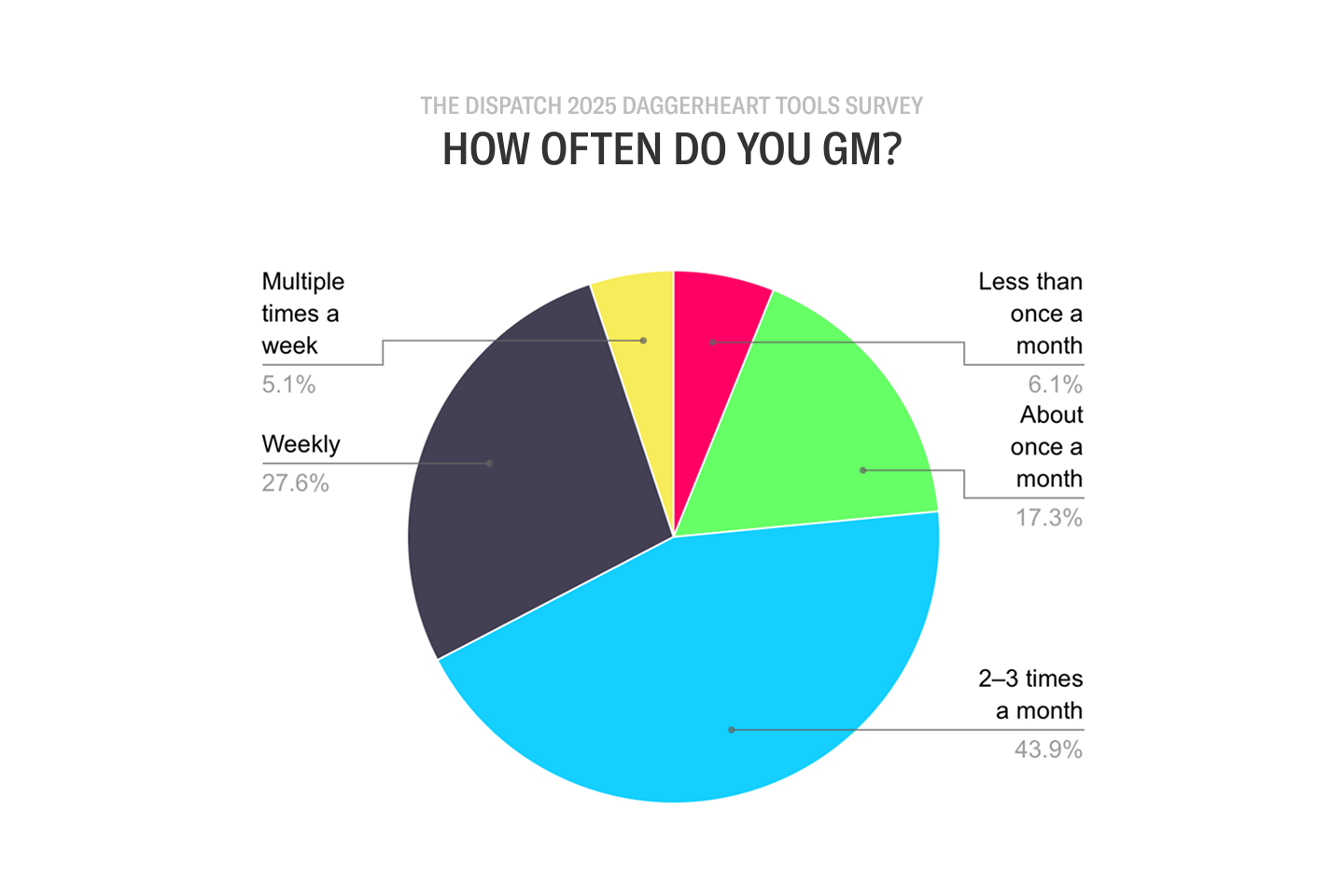
3. HOW OFTEN DO YOU GM?
- 2–3 times a month: 43.9%
- Weekly: 27.6%
- About once a month: 17.3%
- Less than once a month: 6.1%
- Multiple times a week: 5.1%
How often someone GMs shapes more than just their calendar. It influences how they prep, the tools they rely on, and how they see their role at the table. But frequency also matters from a market perspective: it reveals where habits are locked and where new tools might have a shot at breaking in.
Notable: Newer GMs tend to run games less frequently: 80% of those with five years or less experience GM less than once a month. But that doesn’t mean they’re disengaged. Many are likely still learning the rules and building confidence. But with fewer habits carried over from other systems, they’re often more open to trying new tools. For devs and designers, this group may be slower to adopt, but faster to convert once they hit their stride.
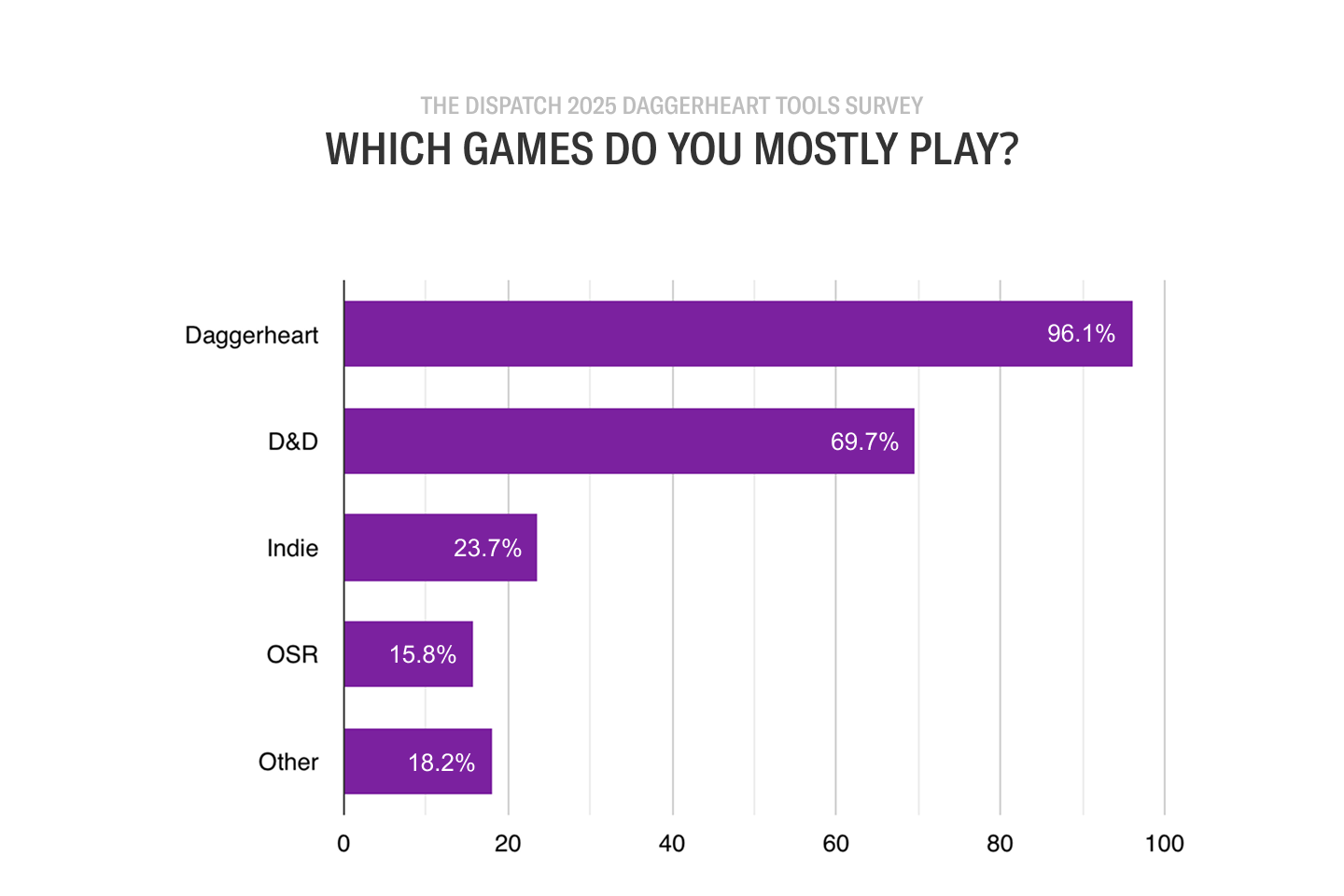
4. WHICH GAMES DO YOU MOSTLY PLAY?
- Daggerheart: 96.1%
- D&D/Pathfinder: 69.7%
- Indie: 23.7%
- OSR: 15.8%
- Other: 18.2%
This question is both a survey vector and a personality test. Most GMs don’t just run one system; they collect them. IKEA shelves buckle under the weight of boxed sets and 3lb hardcover rulebooks. This was reflected in the “Other” category, which saw dozens of additional titles—from stalwarts like Call of Cthulhu and Cyberpunk RED to narrative-driven systems like Candela Obscura and Fate, all the way to crunchy outliers like Lancer, GURPS, and Tormenta20.
Notable: OSR really is old school, even among this Daggerheart-centric crowd. While DH GMs are spread across every kind of play format—online, offline, hybrid—those same people tend to head back to a physical table when it’s time to run OSR. Three out of four OSR GMs in the survey play it mostly or exclusively in person, a reminder that the system and its aesthetic shape the room as much as the rules.
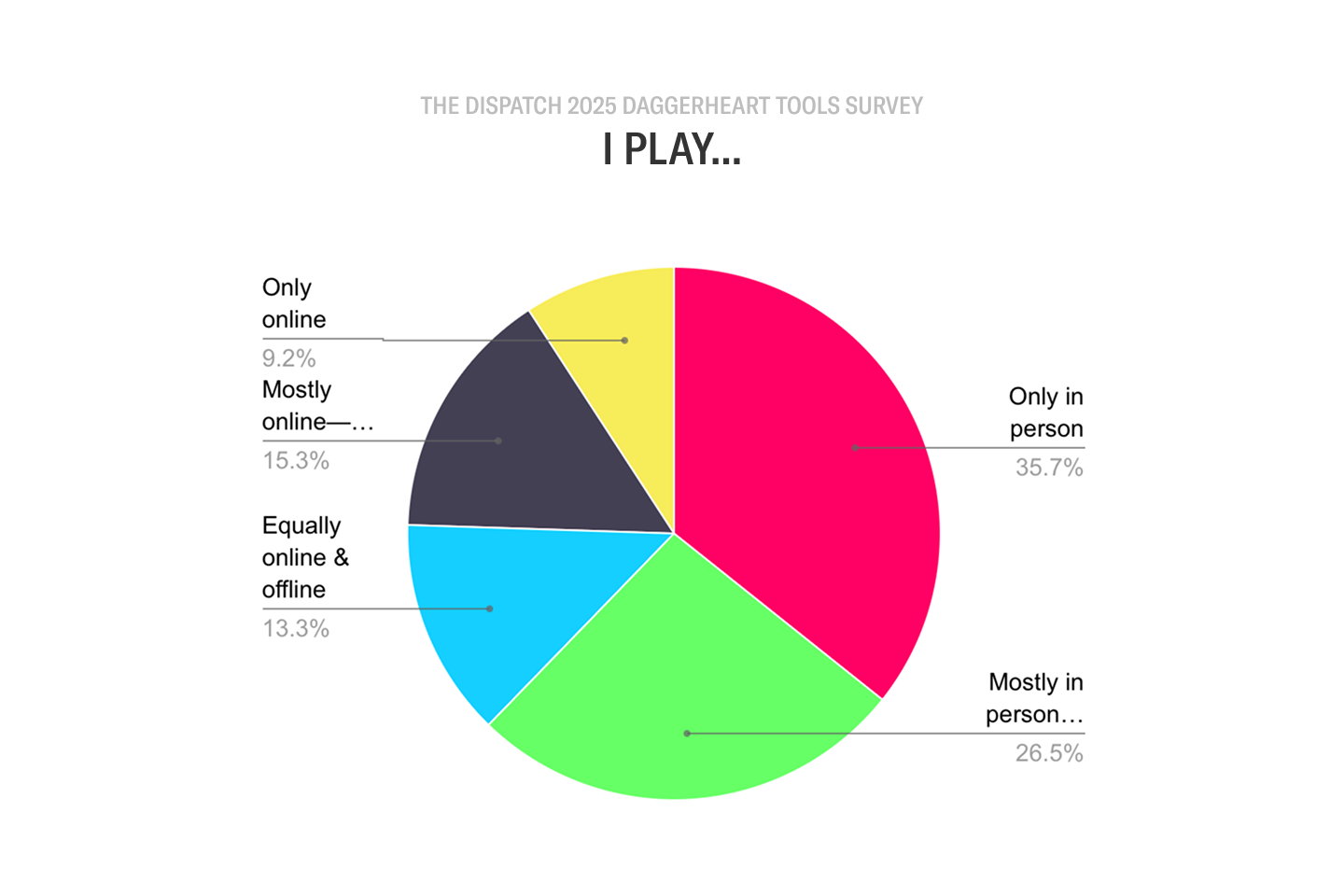
5. HOW DO YOU PLAY?
- Only in person: 35.7%
- Mostly in person, sometimes online: 26.5%
- Mostly online, sometimes in person: 15.3%
- Equally online and offline: 13.3%
- Only online: 9.2%
We live in a hybrid world, constantly toggling between screens and real life, work calls and game nights, Discord and the dinner table. So when we ask how you run your games—online, offline, somewhere in between—we’re really asking how TTRPG fits into that complicated rhythm. It’s a simple question with deep implications as the answer says as much about your lifestyle as your playstyle.
Notable: The table still matters. Nearly a third of GMs who play only in person are brand new—less than a year behind the screen. Add in the veterans with 20+ years of experience, and together they make up over half of this group. This continuity across generations speaks to the enduring pull of in-person play. Even in a world full of online options, gathering around a table hasn’t lost its charm or effectiveness.
ABOUT THE TOOLS
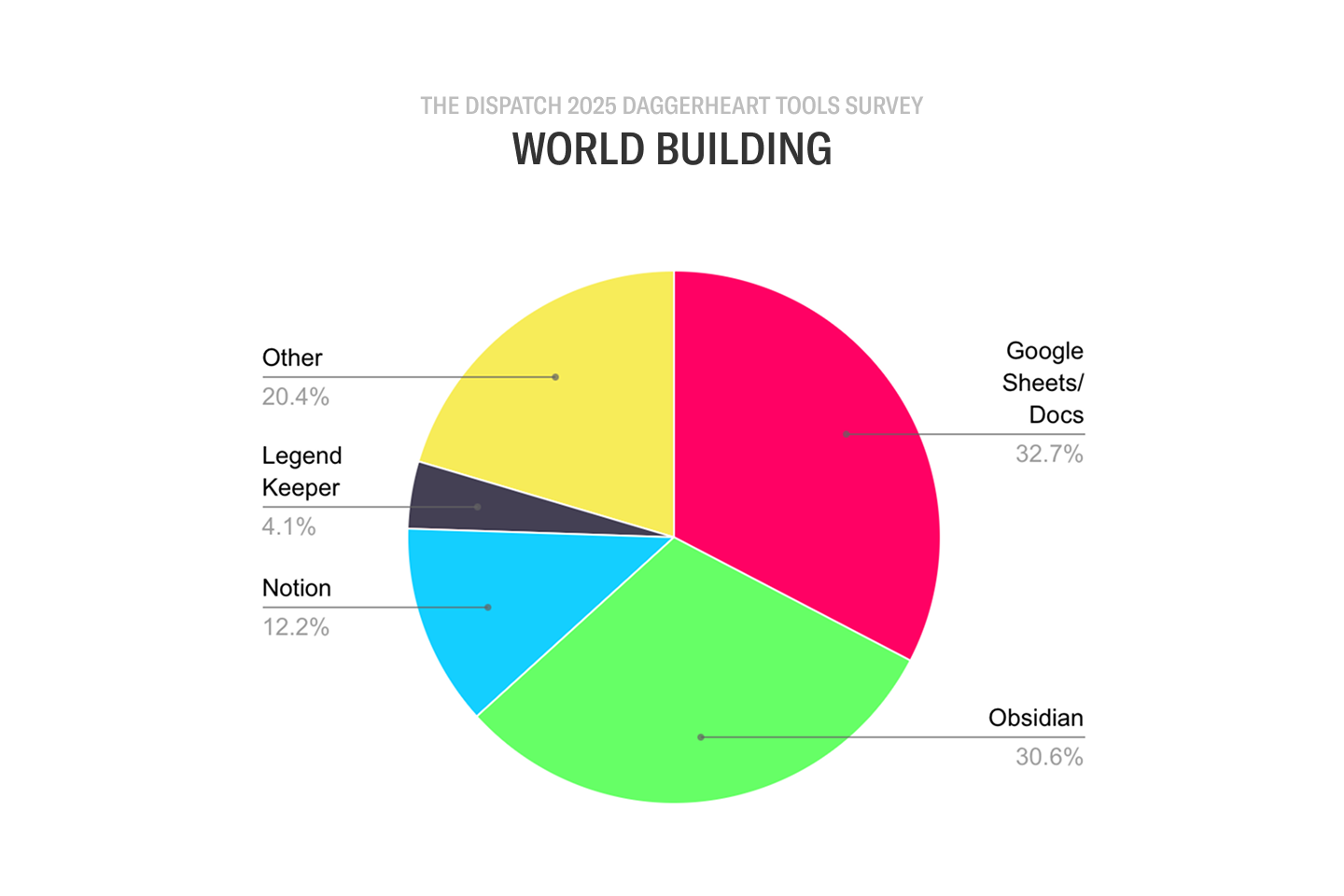
6. WORLD BUILDING
- Google Sheets/Docs: 32.7%
- Obsidian: 30.6%
- Notion: 12.2%
- Legend Keeper: 4.1%
- Other: 20.4%
Despite platforms built specifically for world-building—like World Anvilor Legend Keeper—most GMs in the survey just use their note-taking tool of choice. Google Docs is the most common, followed closely by Obsidian, which generally appeals to those who want plug-ins, markdown, encounter management, etc.
Notable: The adoption of dedicated, paid platforms is extremely low, likely a combination of cost sensitivity and a DIY mindset. World building, for the most part, is writing. And most writers don’t like to pay to think.
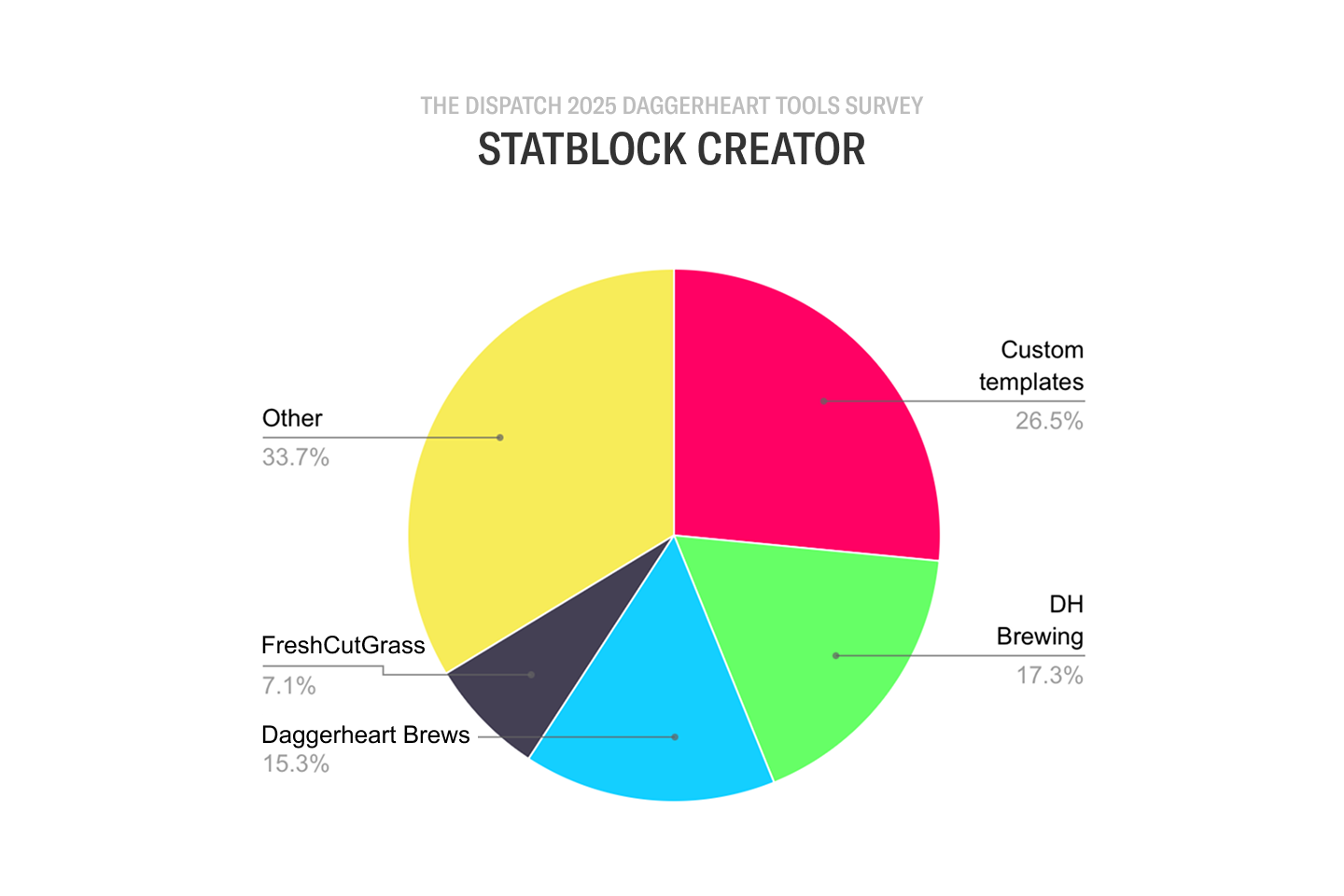
7. STATBLOCK CREATOR
- Custom templates: 26.5%
- DH Brewing: 17.3%
- Daggerheart Brews: 15.3%
- FreshCutGrass: 7.1%
- Other: 33.7%
Most GMs in the survey don’t rely on dedicated statblock generators. Instead, they adapt whatever tool they’re already using: Notion, Google Docs, Obsidian, or good ol’ paper.
The notable exceptions are DH Brewing and Daggerheart Brews, two indie tools that are gaining traction among online or hybrid GMs who run games 2-3 times a month. It will be interesting to survey this category next year to see if one outpaces the other, or if statblock generation is subsumed into a larger tool.
8. ENCOUNTER PLANNING
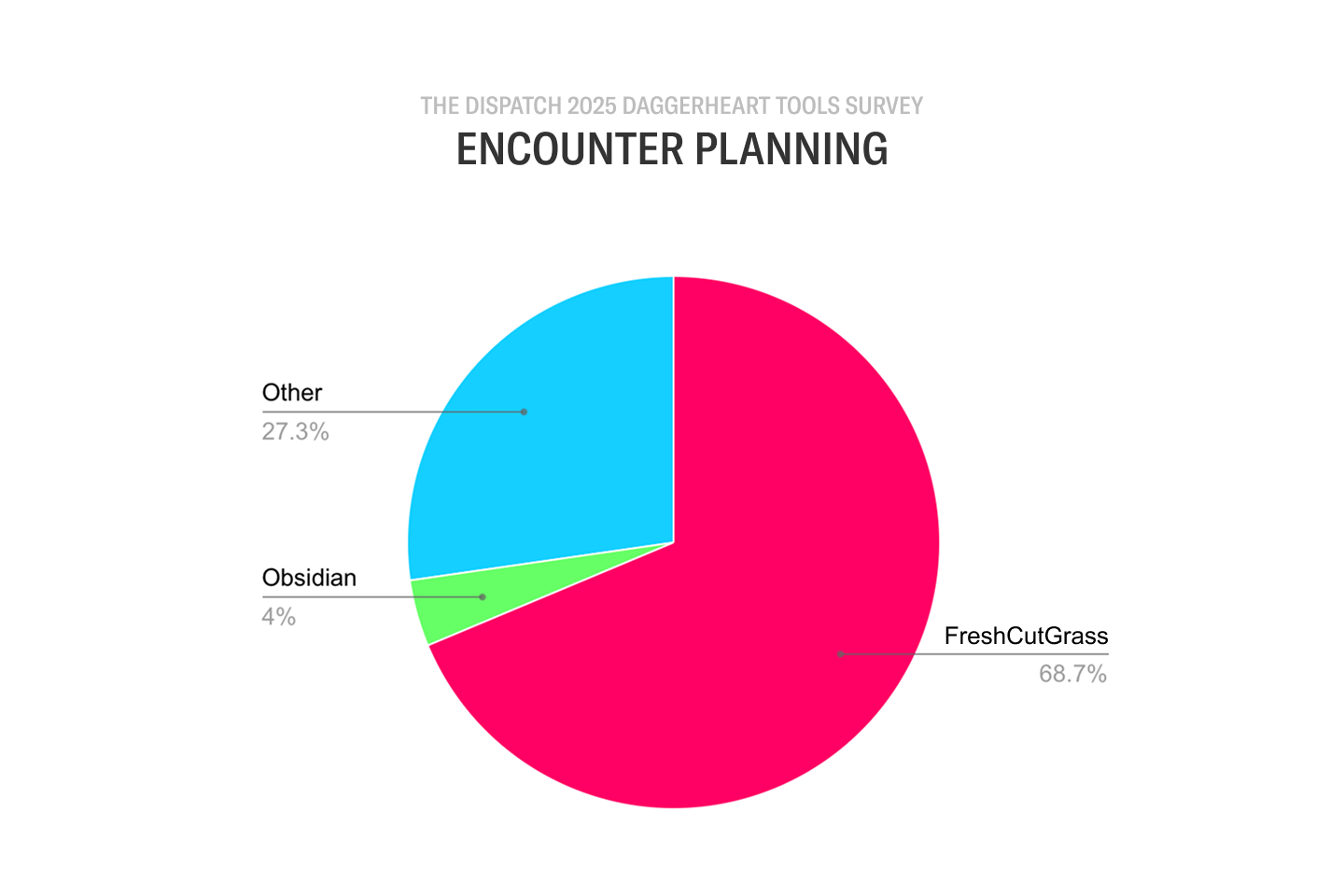
- FreshCutGrass: 68.7%
- Obsidian: 4%
- Other: 27.3%
FreshCutGrass is the only tool in the survey to fully dominate its category. No other tool comes close to the kind of category adoption FCG has for encounter planning. Only Obsidian pokes through for those GMs who use it as an all-in-one custom platform.
Notable: What makes FCG intriguing isn’t the usage so much as the pattern. FCG is an indie tool that launched early in Daggerheart’s life and grew alongside it. It fills a need precisely, is free, and doesn’t ask GMs to change workflows. That’s familiar to anyone who watched Kobold Fight Club quietly become the default encounter builder for D&D. For the most part, tools like FCG don’t win with splashy launches or unwieldy feature sets. They win by being good enough, early enough, and easy enough.
9. GM SCREEN
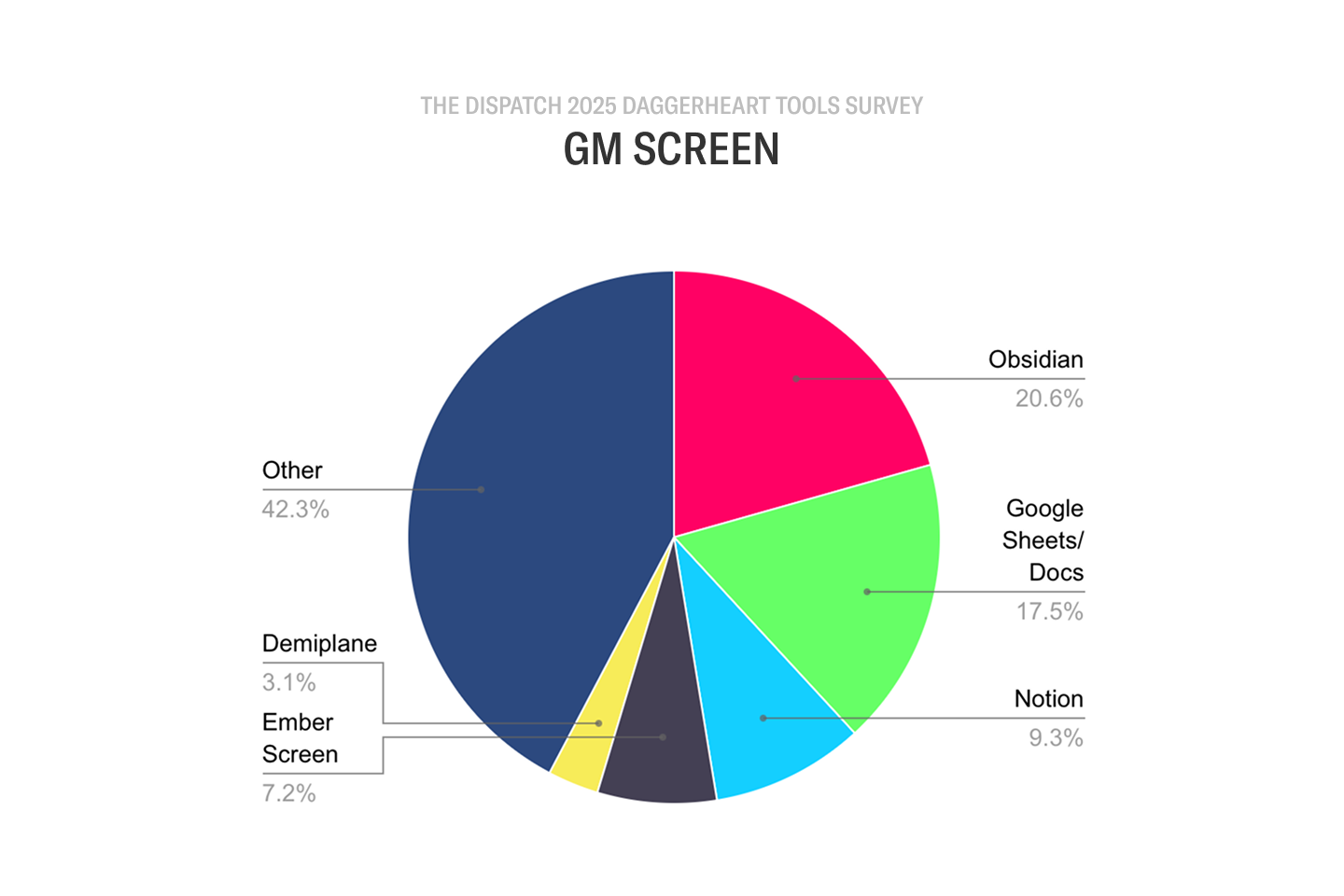
- Obsidian: 20.6%
- Google Sheets/Docs: 17.5%
- Notion: 9.3%
- Ember Screen: 7.2%
- Demiplane: 3.1%
- Other: 42.3%
No single tool dominates this category, but two behaviors stand out. GMs either repurpose Google Sheets/Docs, or they build custom dashboards inside Obsidian, which often functions as their all‑in‑one TTRPG control panel. Obsidian appears most often among hybrid or in‑person GMs who use it across multiple categories, while upstart EmberScreen was cited mostly by GMs who run games largely online.
For those who play at the table, most still use a physical screen—most certainly festooned with Fear trackers, printed statblocks, rulebook pages, and whatever cheat sheets they trust most.
10. NOTE TAKING
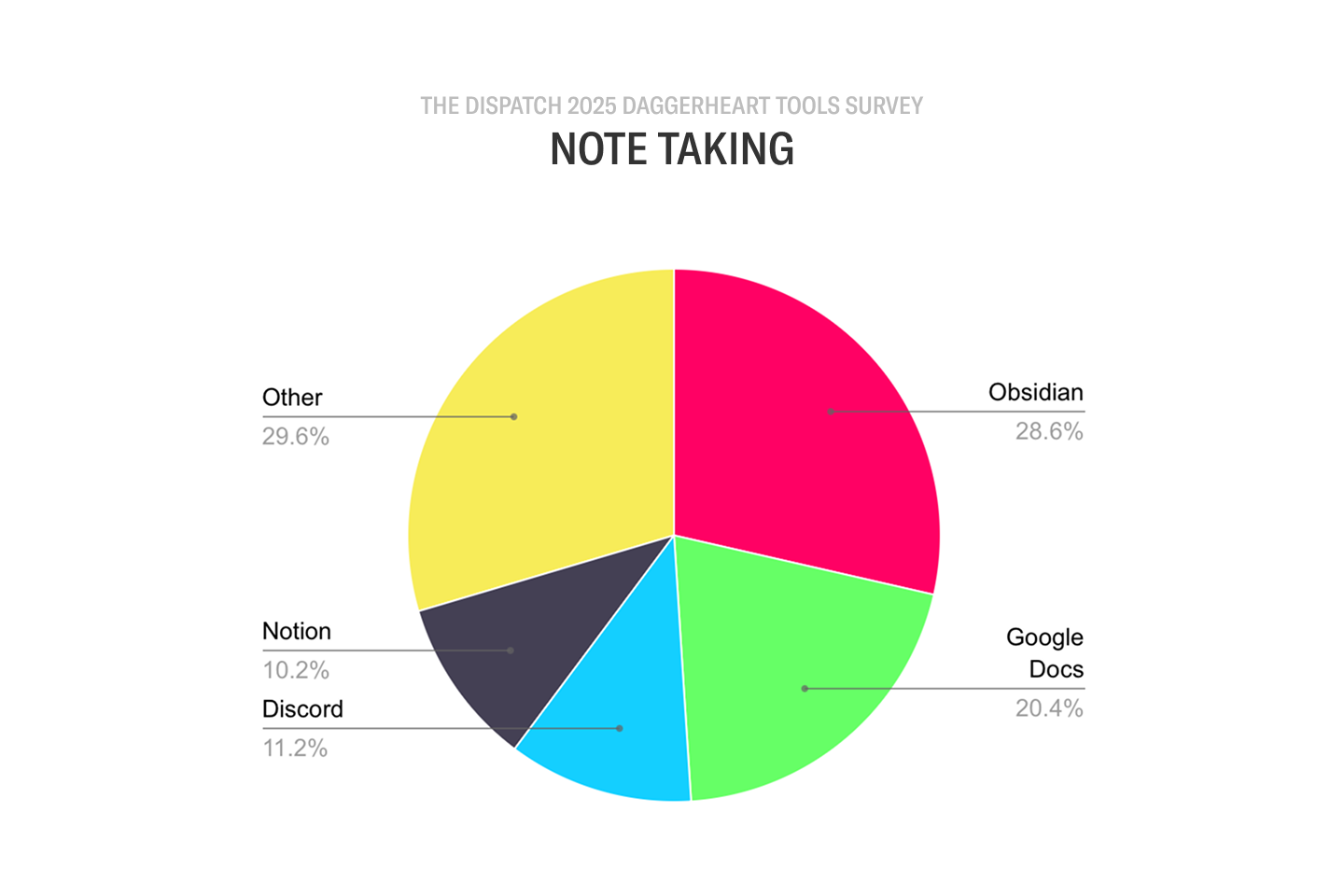
- Obsidian: 28.6%
- Google Docs: 20.4%
- Discord: 11.2%
- Notion: 10.2%
- Other: 29.6%
Obsidian doesn’t dominate any single category, but it’s the only tool to show up as a key player across five different ones: note-taking, GM screens, world-building, encounter planning, and statblocks. That reach reflects how GMs use Obsidian as a game management platform.
Obsidian is especially popular with GMs in the 1–10 year band who are experimenting with systems/tools, but it also appeals to vets who favour its extensibility. It shows up most often among hybrid and in-person GMs, especially those running games multiple times a month.
11. MAPS
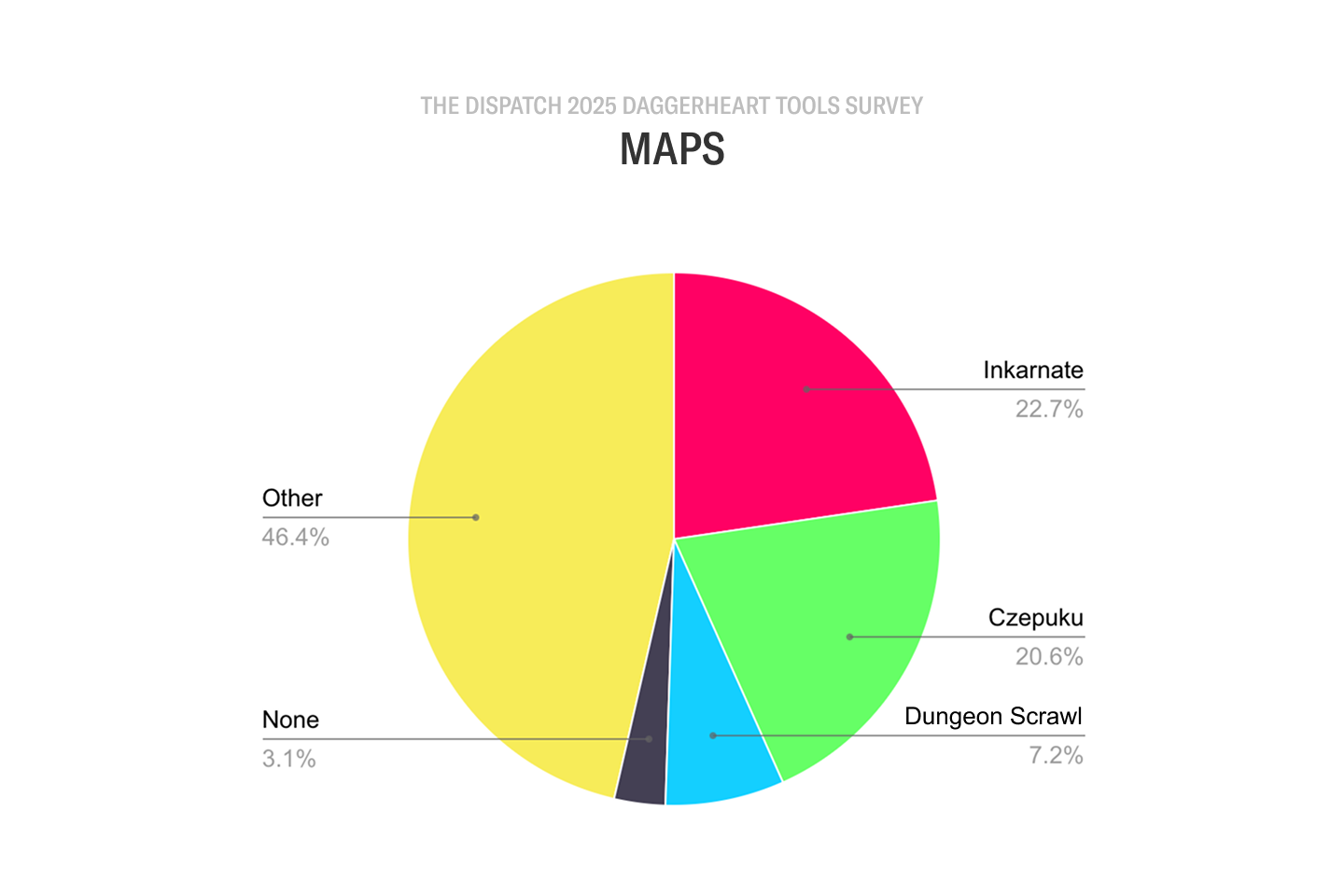
- Inkarnate: 22.7%
- Czepuku: 20.6%
- DungeonScrawl: 7.2%
- None: 3.1%
- Other: 46.4%
GMs either design their own maps or buy pre-made ones, with Inkarnate and Czepeku leading the pack, respectively. (Inkarnateskews toward in-person GMs, and Czepeku is more common among hybrid or online-first groups.) From there, many import them into VTTs like Foundry, Owlbear Rodeo, or Roll20. Below the top tier, the category fragments quickly, with several online and offline tools mentioned only once. Map usage feels personal and improvisational, driven more by GM idiosyncrasies than shared standards.
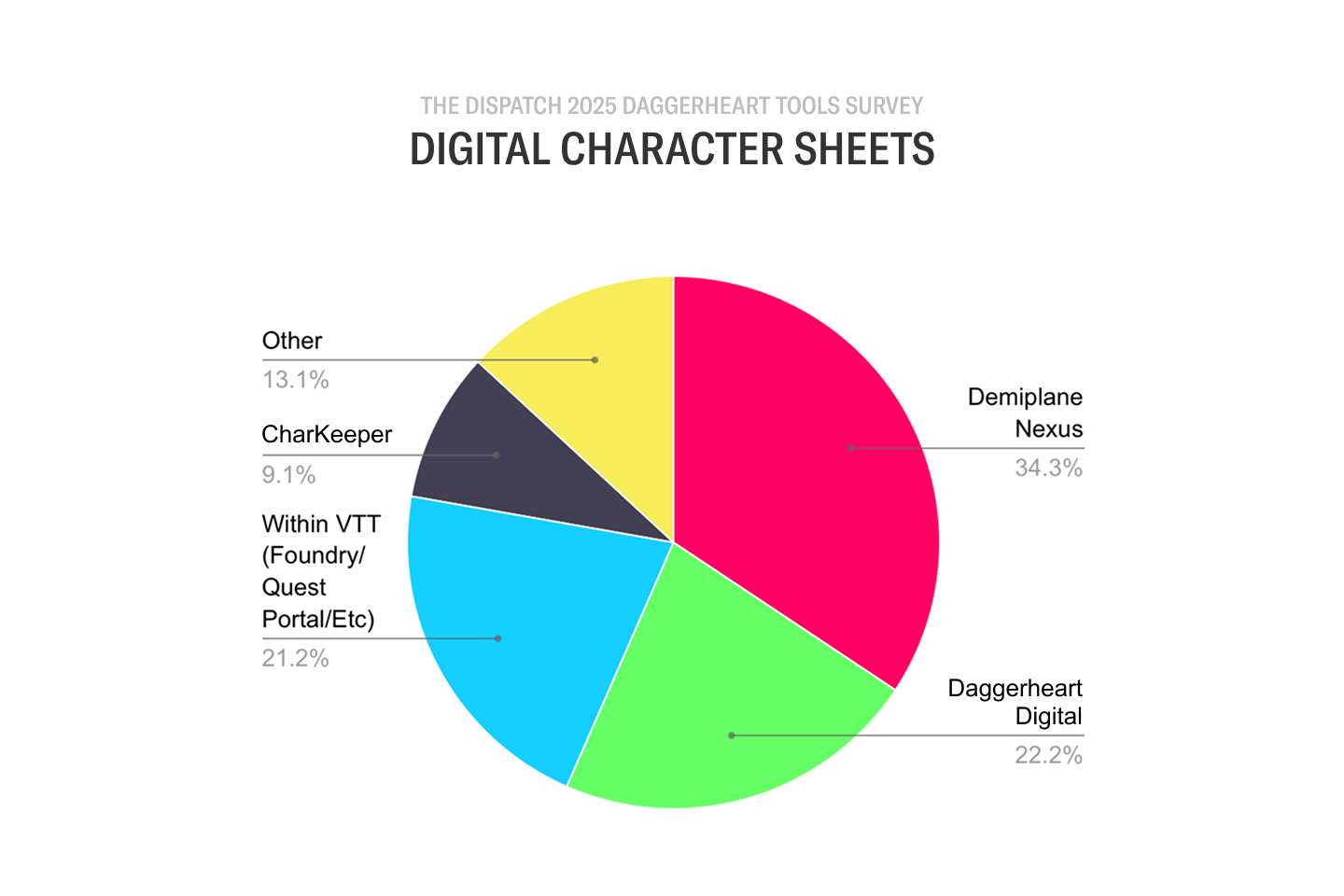
12. DIGITAL CHARACTER SHEETS
- Demiplane Nexus: 34.3%
- Daggerheart Digital/Duality Codex: 22.2%
- Within VTTs (Foundry, Owlbear, etc): 21.2%
- CharKeeper: 9.1%
- Other: 13.1%
Demiplane Nexus leads the pack here, thanks to being the only officially integrated character sheet at launch. A few community-led projects have used the SRD to hotwire VTTs like Foundry, Owlbear Rodeo, Quest Portal, and Sending Stone to manage sheets until official integrations are completed.
But close behind Demiplane and ahead of all the VTT integrations is Duality Codex (previously named Daggerheart Digital), an indie project led by a single dev that launched only a couple of months ago. Its rapid climb tells us something about how quickly lean, single-purpose tools can gain ground when they speak directly to GM and player pain points.
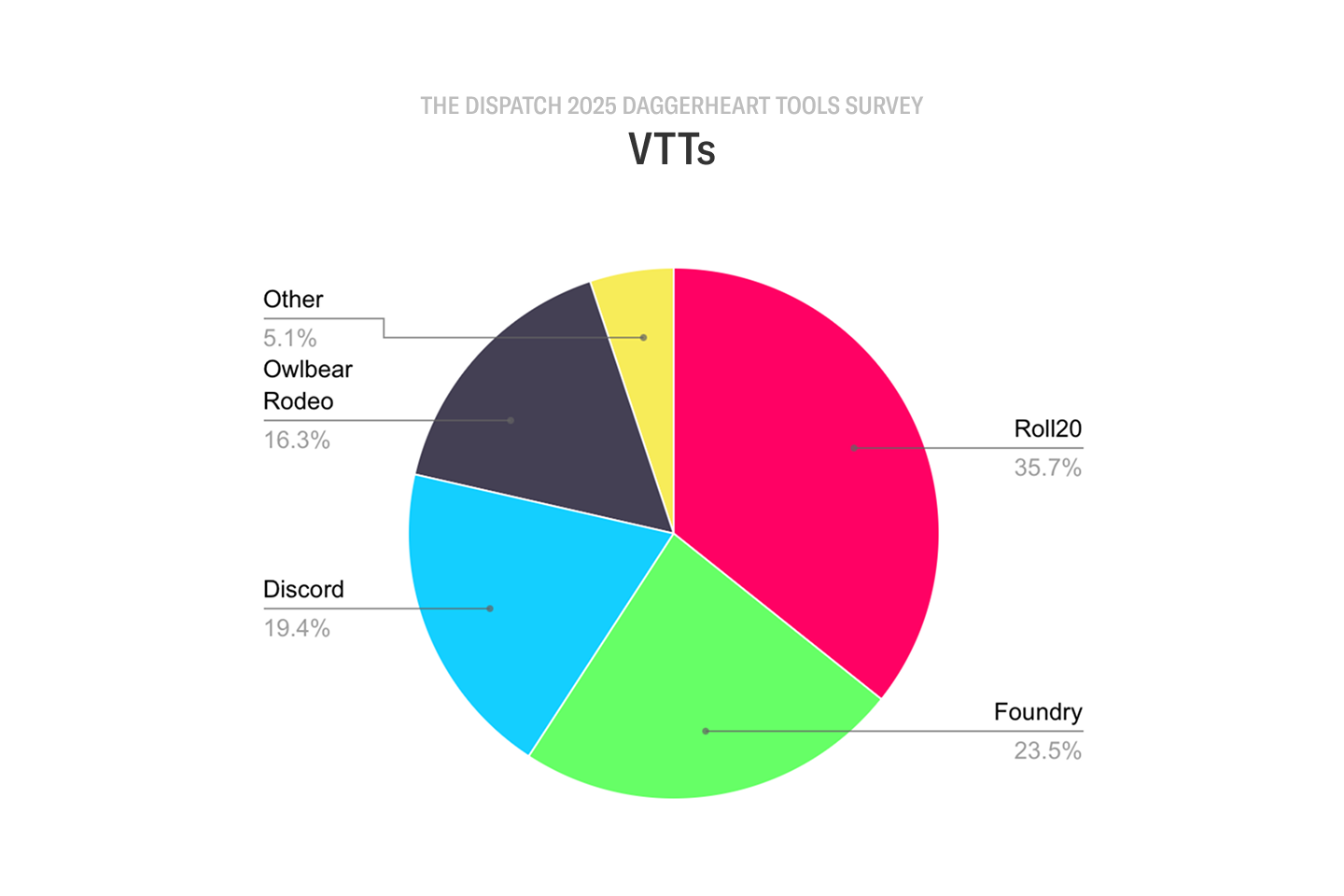
13. VIRTUAL TABLE TOPS (VTT)
- Roll20: 35.7%
- Foundry: 23.5%
- Discord: 19.4%
- Owlbear Rodeo: 16.3%
- Other: 5.1%
Roll20 leads here, likely driven by its official Demiplane integration and strong brand recognition. It’s especially common among newer or weekly GMs, where ease of setup and baked-in character support matter.
Foundry and Owlbear Rodeo—unofficially supported via community-built modules—trail close behind. Foundry shows up most among GMs who’ve been running games for 5+ years, while Owlbear shows up across experience levels and likely appeals to GMs looking for a simpler alternative to Foundry.
Discord shows strong use as well, but not as a traditional VTT. In almost every case, respondents specified “voice/video + dice bot,” pointing to a minimalist setup: no maps, just rolls and conversation.
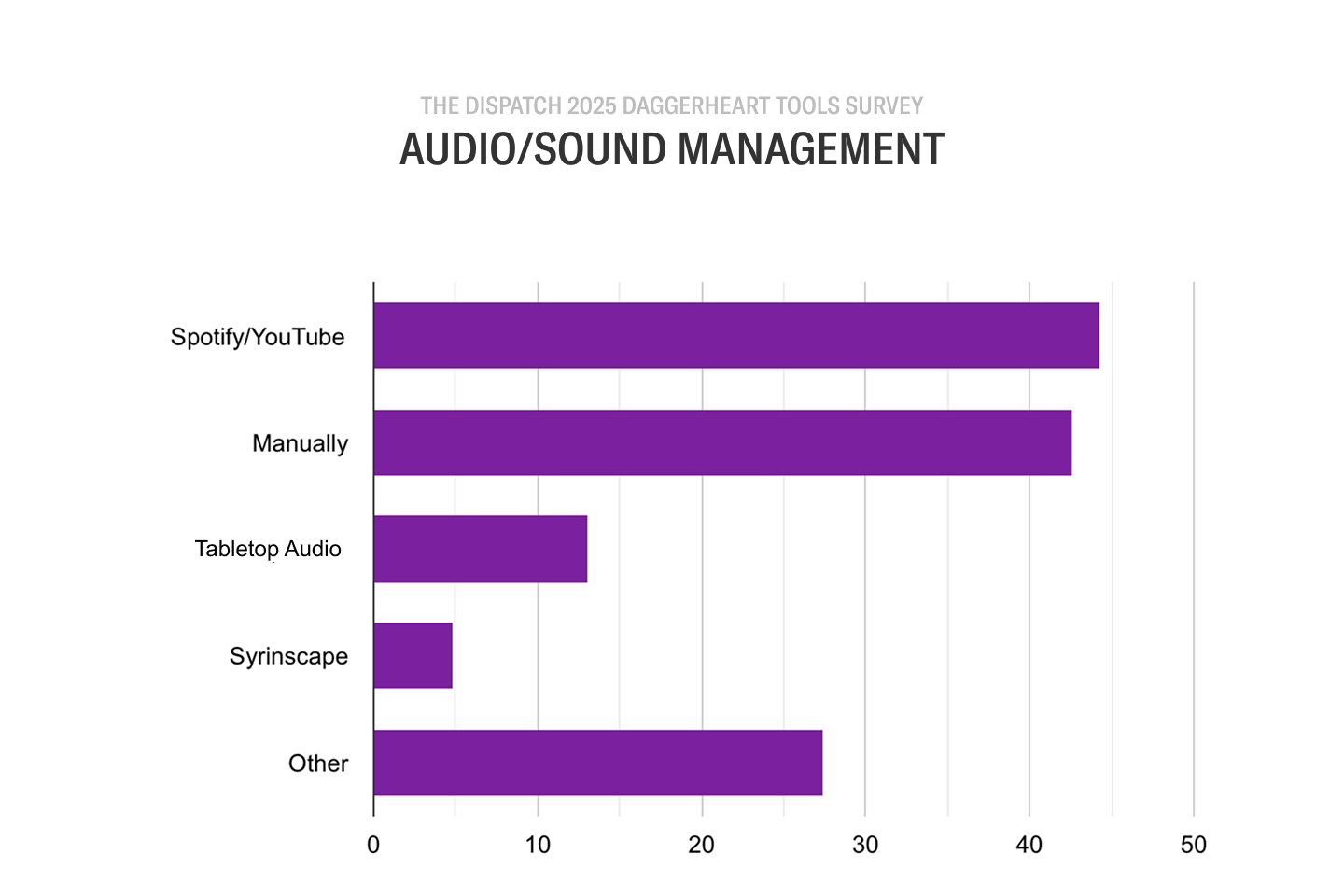
14. AUDIO/SOUND MANAGEMENT
- Spotify/YouTube: 43.2%
- Manually: 42.5%
- Tabletop Audio: 12.9%
- Syrinscape: 4.8%
- Other: 27.3%
Spotify and YouTube dominate this category, each used by over 40% of GMs, and typically deployed as ambient music, especially during in-person sessions. GMs who play weekly or 2–3 times per month are the most likely to rely on these platforms, occasionally paired with manual playback from personal libraries.
Tabletop Audio and Syrinscape show up less frequently overall, but more distinctly among GMs who play online or run multiple games per week. These purpose-built TTRPG sound libraries point to GMs who take an integrated approach to sound, using scores, ambient loops, and sound effects to support a scene.
Infrastructure tools like Kenku and Voicemeeter Banana are more rare, but used almost exclusively by GMs who play online and share audio through Discord or other platforms.
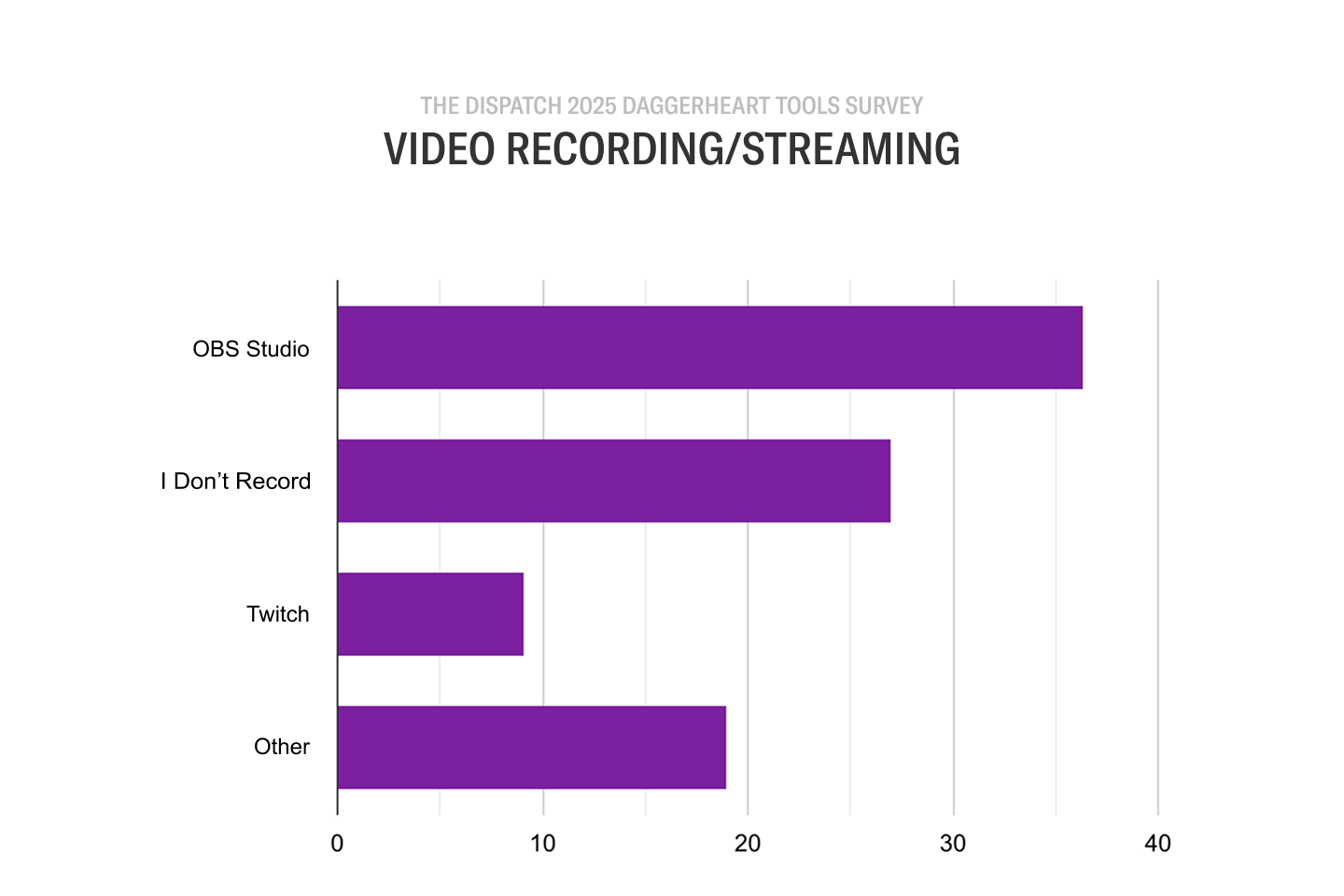
15. VIDEO RECORDING/STREAMING
- OBS Studio: 36.3%
- Twitch: 9.1%
- Other: 19.1%
Video recording and streaming largely remains a niche activity (only ~20% responded to the question), embraced primarily by high-frequency GMs with 10+ years experience mostly running online-only groups. The most common setup appears to be OBS + Discord + Spotify, followed by Twitch streamers, though at a much lower rate.
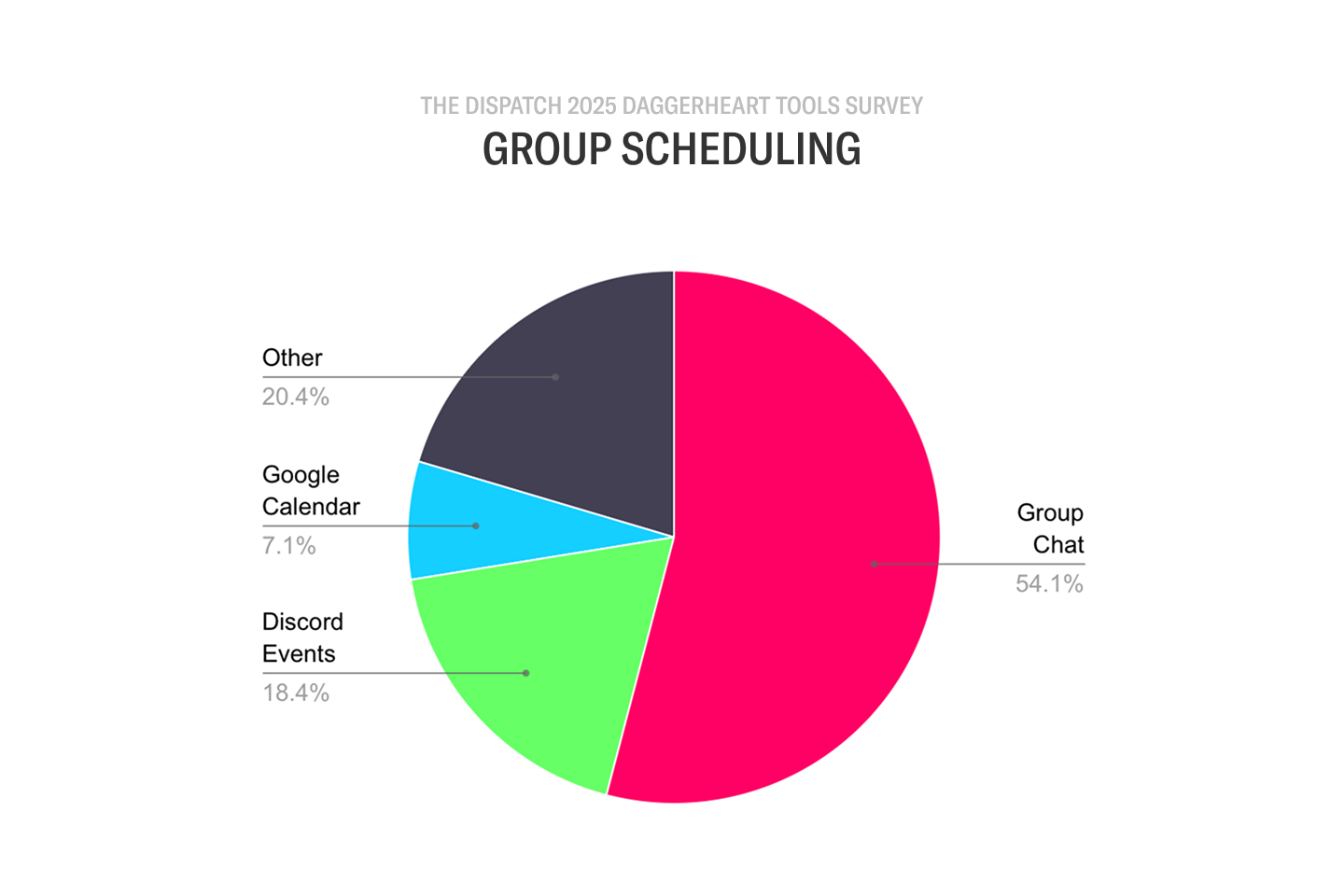
16. GROUP SCHEDULING
- Chat (WhatsApp, iMessage, etc): 54.1%
- Discord Events: 18.4%
- Google Calendar: 7.1%
- Other: 20.4%
Most GMs rely on group messaging like WhatsApp, iMessage, or Messenger. This appears across all experience levels but is most common among GMs with under 10 years of experience and those who play weekly or 2–3× per month. It also strongly correlates with in-person or hybrid play. In short: if your group sees each other regularly/chats daily, you probably don’t need scheduling tools.
More structured tools like Discord Events and Google Calendar show up primarily among online-first groups or GMs running multiple games per week. Discord Events is especially popular among GMs who’ve been running games for less than 5 years and play mostly or entirely online. (As with messaging apps, this slice of GMs is likely younger and digitally native.)
A small set of tools like ChronicleBot, Sesh.fyi, Calendly, and Doodleare scattered throughout the responses. These appear most often among online groups, likely looking for scheduling clarity across time zones.
ABOUT THIS SURVEY
This survey was conducted in September 2025 by The Dispatch, a community publication focused on Daggerheart and its growing ecosystem. The questionnaire was shared with Dispatch subscribers, which includes thousands of GMs and players actively engaged with the system. In total, over 200 Daggerheart GMs responded, with participation spanning the U.S, CAN/UK/AUS, Europe, and other regions.
The survey included a mix of multiple-choice, multi-select, and open-response questions across 16 categories. It collected both demographic and behavioral data—how often GMs run games, how long they’ve been playing, whether they play online or in person, etc—alongside tool usage across core areas like worldbuilding, statblocks, encounter planning, VTTs, maps, multimedia, and the like.
The goal of the project was to create a snapshot of how Daggerheart GMs are running their games during this early phase of the system’s growth. These findings provide a baseline we intend to revisit annually to track how habits, tools, and play patterns evolve over time.