The Cisco Kid
The Colossus of the Drylands writer had a hit with Pistolheart. Now he’s back with a bullet.

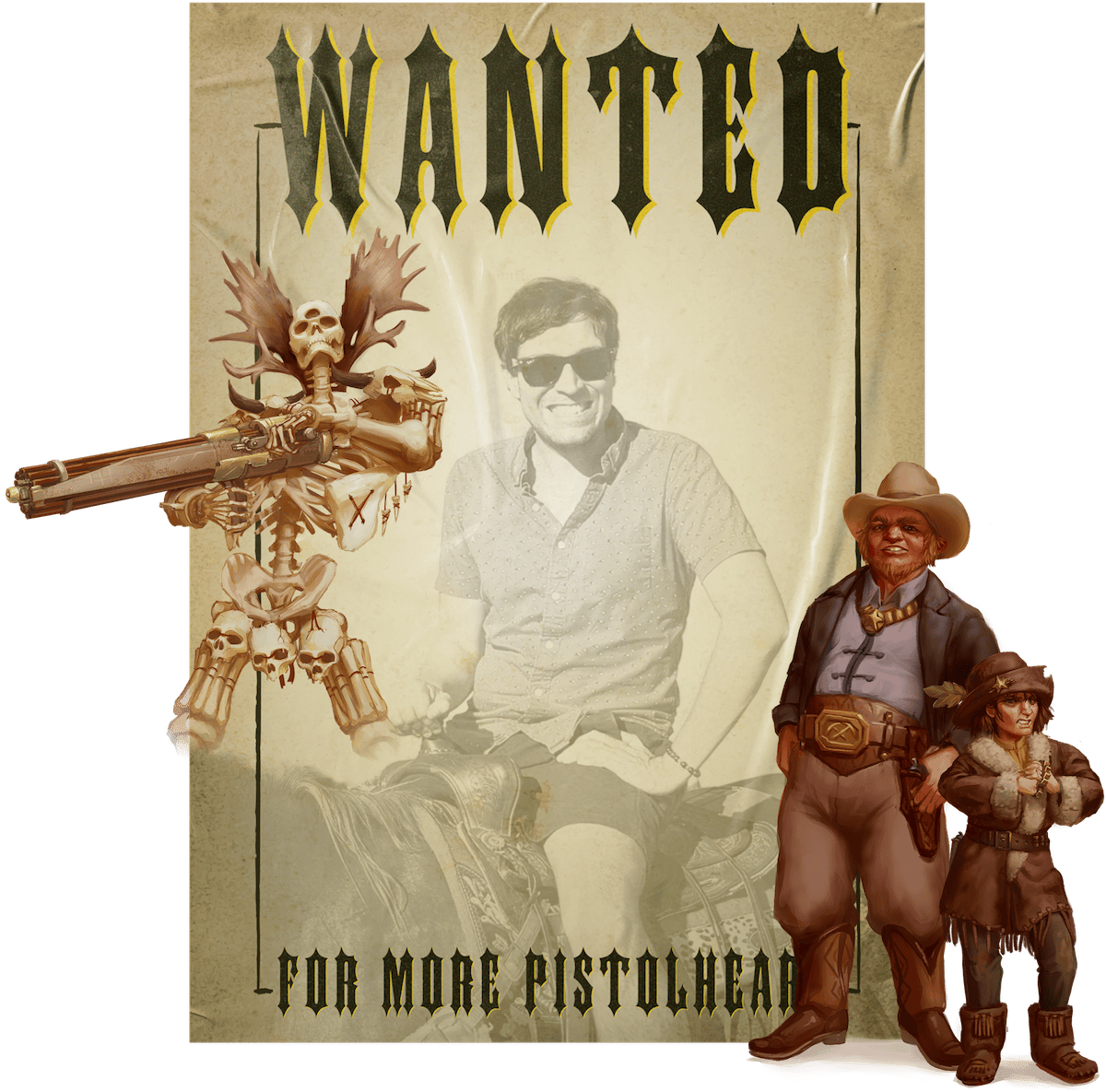
Carlos Cisco works in two fields that are notoriously bad at predicting their own future. In Hollywood and tabletop alike, you usually only know what mattered after the fact.
But Pistolheart, Cisco’s western supplement published last November, had the unmistakable feel of a hit: not just because it arrived at the right time, after Cisco helped write The Colossus of the Drylands for the core rulebook, but because it was so crisply, confidently made. It expanded the Drylands without feeling derivative, and showed how much room there is inside Daggerheart’s young ecosystem for a creator with a strong voice and quick draw.
With Volume 2 now on the way, I wanted to talk to Cisco about Westerns, screenwriting, game design, and what happens when a side road opens into a frontier. [Ed: Volume 2 is now available]
Carlos spoke to me from his home in Los Angeles. This interview has been edited for length and clarity.
My first western was High Plains Drifter. You?
Tombstone. I was 12 at a summer camp where we were going to the OK Corral as part of it. When we stayed in the motel overnight the camp counsellors showed us the movie.
“I’m your huckleberry”
I still love it. I still quote Curly all the time. "Well... Bye."
I’m a Tomorrow and Tomorrow and Tomorrow fan…
Oregon Trail. I loved that game.
Right?
I can't say for certain when exactly I first played it but it was all through elementary school.
Generation-defining.
If I really think about it, it's the first game I played with emergent storytelling. You'd name your family after all your friends and laugh with them when they died of dysentery or a stubbed toe. While the adventure wasn't randomized, your outcomes were. Probably what kept me coming back to it.
These aside, were you into Westerns as a genre?
I never really thought about them much growing up. But I did grow up in both Hawaii and New Mexico, both of which have a deeply rooted cowboy culture ingrained in their history. I grew up going to rodeos and living near ranches and cattle farms. I think a lot of my appreciation for the genre came later, especially realizing how much I took in by osmosis.
How does cowboy culture differ between those two states?
Hawaii had Paniolos. Arguably before the archetypical cowboy was even born. Paniolos came about in the 1700's when King Kamehameha brought Mexican vaqueros over to teach Hawaiians their cattle herding techniques. New Mexico is pretty similar to Texas in its embrace of the western aesthetic and culture, but we have less of that lone star attitude.
I’m curious what you think the genre offers us? If we use stories to explain our lives, what do we use the Western for?
It’s a complicated genre. Most Western media are piss poor representations of what and who were galloping around there.
Tell me about that.
Our film canon almost completely ignores the black cowboy. Which in and of itself was born as a derogatory way of referring to black cowhands, who were really the ones doing the lions share of the work.
To a lesser extent in terms of representation, latino people are often relegated to villain or minor supporting roles. And don't even get me started on how the genre has treated indigenous people.
Approaching it from a modern lens requires you to keep all that in mind, even if you're in a fantasy world with robot people and walking mushrooms.
And yet.
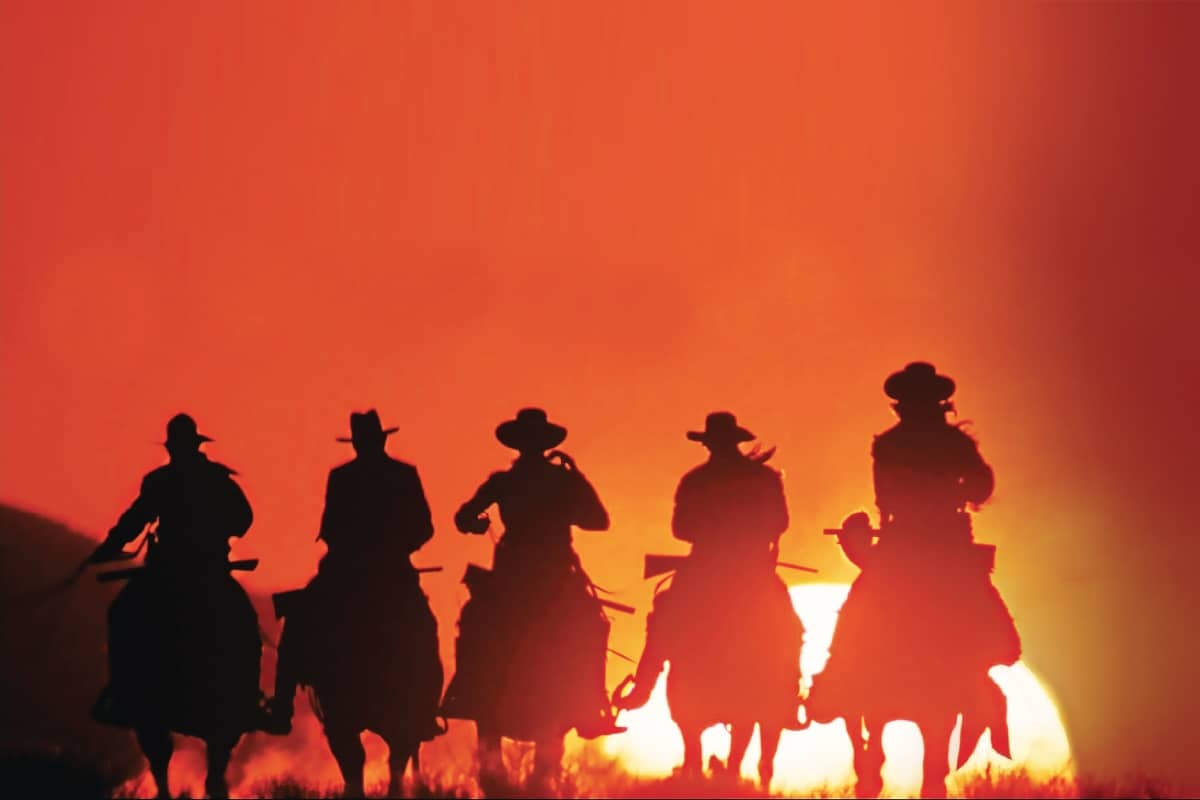
And yet. I do think there will always be an allure to the aesthetics of the genre. The hats, the revolver, the sparse but beautiful landscapes, horses, the idea of the undiscovered frontier, that buttery Texas drawl...
But it was a time drenched in darkness, blood, exploitation, and those that chose to make their way there were a different sort. I think it's a good genre for stories about desperate bids for survival, about fighting larger than life odds, and exploring (what will likely turn out not to be) undiscovered country.
In some ways it’s America’s answer to Europe’s medieval mythology: saloons, cowboys, and train robberies filling in for taverns, knights, and dragons.
And in the Drylands you can have all six.
So what genre brought you into TTRPGs if not Westerns?
Like many folks I came in through high fantasy. AD&D 2nd Edition in middle school. But once I hit high school I branched out into a lot more horror with the White Wolf games.
What did you learn from fantasy?
It doesn't ask a lot of you. Sure, there's tons of potential lore every GM wishes their players would engage more in... but the base fantasy setting is something we have culturally ingrained in us. We all have an idea of what a wizard is or what a knight looks like, even if we don't know any world details. Don't know the answer why something is the way it is? Magic or a god 9 times out of 10. That's a bit reductive, but I do think it's what makes it the most accessible genre of TTRPGs.
Curious how you see sci-fi, given your day job.
It feels much less accessible because it asks us to be able to separate what is real science from science fiction in real time while still absorbing the narrative. Even in the most meticulously crafted settings, fantasy as a genre is, perhaps, a less concerned with the how things work and more with the why, while I think sci-fi is the other way around. The why is all vibes. The how requires player knowledge, which is always on a dial.