Deconstructed: War Wizard
We're off to see the Wizard, the Wondrous Wizard of War!
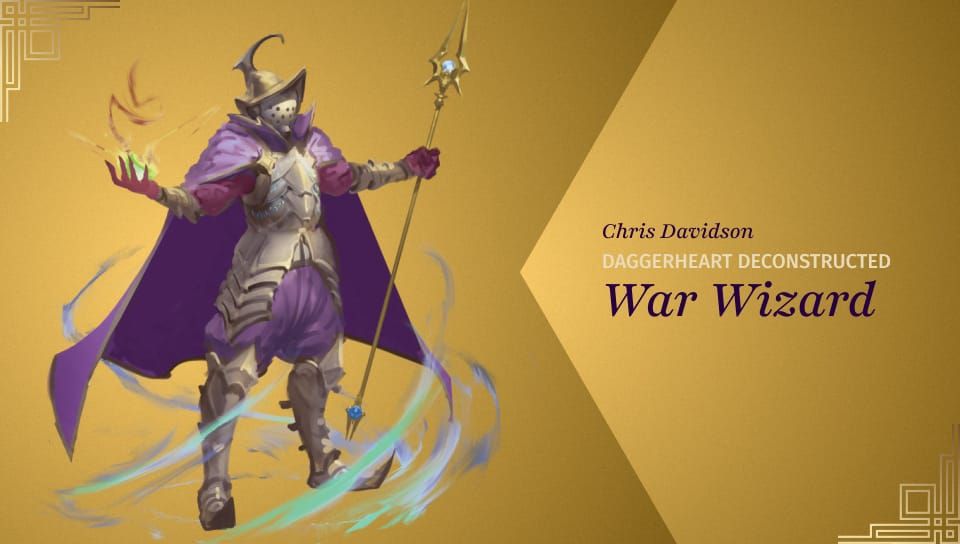
WAR NEVER CHANGES. It is a desperate fight for survival that requires cunning and perseverance. Students of war come in many shapes and sizes and our discussion today surrounds a strategist and their destructive well of power. These well-armored opponents are the archetypal example of a Ranged Adversary I pointed to in the core rules despite being a statistical outlier, just because I like them so much.
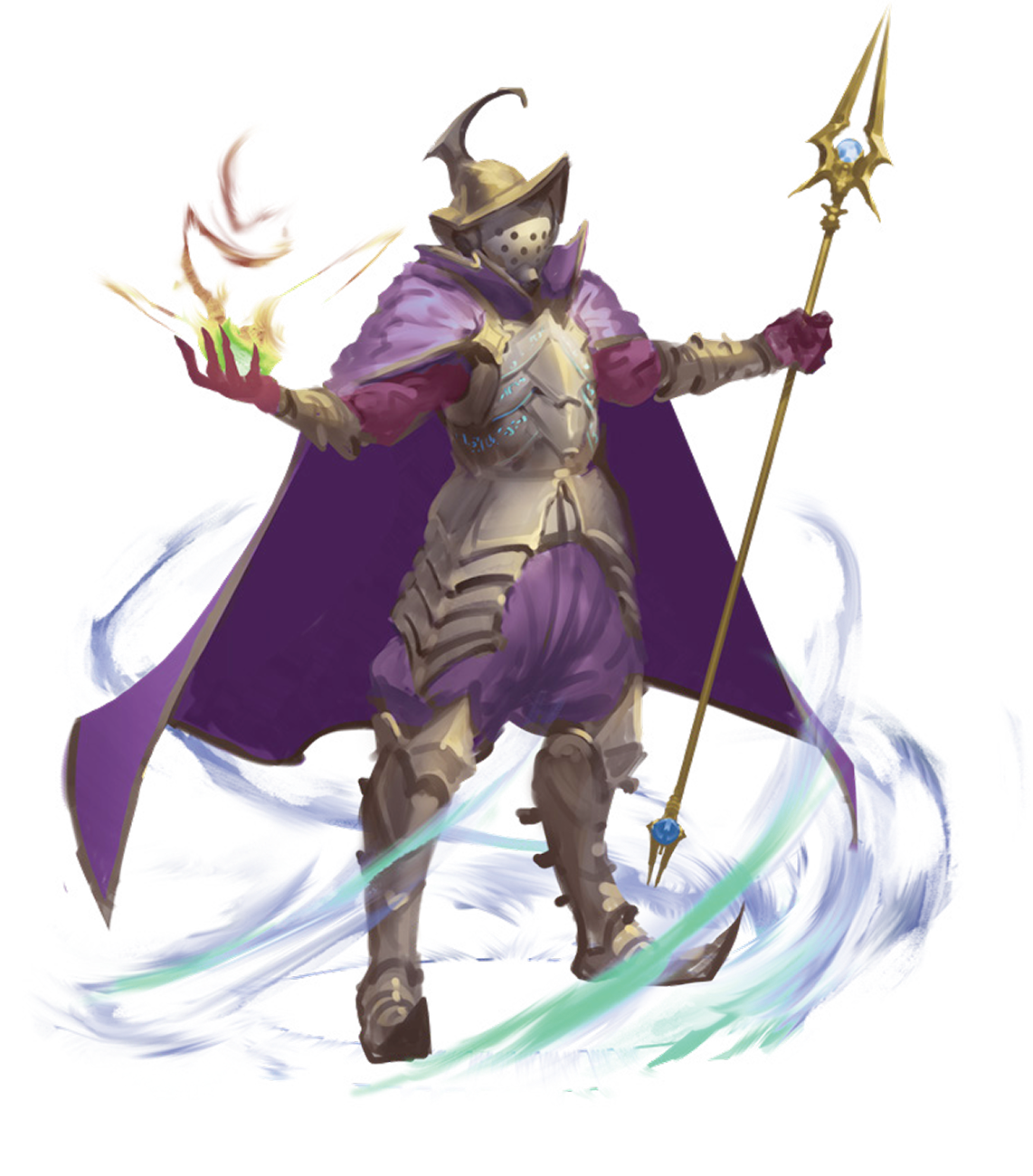
When I look at the War Wizard, I see a lieutenant who has studied the mystic and arcane for years at some far away kingdom’s academy, waiting for the day that they might stride onto the battlefield to support their nation’s cause. Their Fear moves can hit multiple targets and just when your PCs think you’ve got these master magicians cornered, they teleport away to safety and rain fire down upon them.
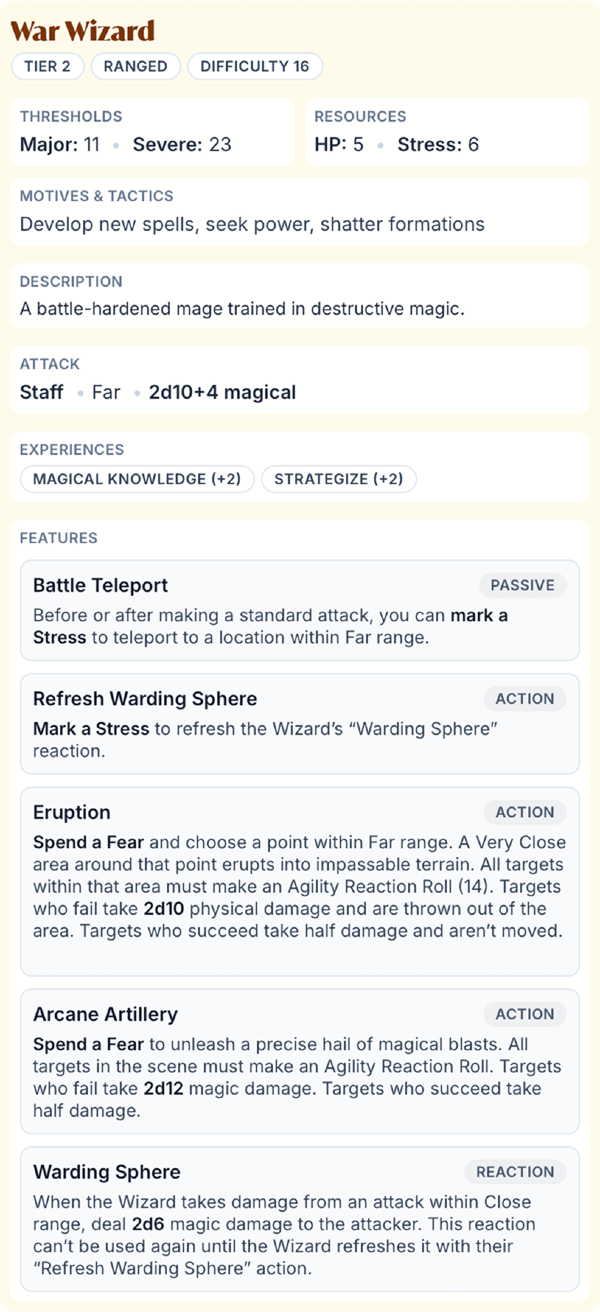
The War Wizard is an outlier for its type and tier in a lot of ways. It shares the highest difficulty in the tier with the Mortal hunter at 16. In addition, its Thresholds are up there with Leaders and Solos. Its HP is very good for a Ranged and has a high Stress to use for its more defensive features. For those just taking tier and type averages, this is one of those that would skew your spreadsheet. Battle-hardened might be underselling this Adversary a little, to say the least.
As we always do when reading the stat block, we should carefully consider how this Adversary acts in combat by looking at their Motives & Tactics and their Experiences. They attack at range (hence their type), they are employed to shatter formations with their multiple Area-of-Effect spells, and they have moderate experience in the STRATEGY of employing their battlefield effects. This means you should expect to play them as efficient back-line damage dealers that punish groups.
Their stat block is quite full, with two categories of features: Stress-based features, and Fear-based features. There is nothing on this Adversary’s stat block that doesn’t cost the GM something and when it comes time to spotlight them, you too must STRATEGIZE about the most optimal move. The situation on a battlefield changes rapidly and shooting everything isn’t always the best move.
Despite their extremely high stats, 5 HP is still a low number considering how the game's mechanics operate. It’s 2-3 successful attacks (I know I originally said two, my bad), with the three being the more likely outcome. To extend the time your Wizard is a threat, you need to make judicious use of Battle Teleport. Keep the Wizard as far away from the PCs as possible with as many complications between the two as possible. This could be across a stream, behind a wall of soldiers, on a parapet, anywhere they are difficult to get to, but within blasting distance.
Warding Sphere has two parts to it, and this is singular amongst the CRB’s Adversaries, predicating the reaction’s availability on having used an action and marked a Stress. We can safely assume that prior to a scuffle, the War Wizard would have had ample time to create this ward prior to joining the fray and does not need to start by refreshing it. However, if this fight comes as a surprise, they probably would start without it. Regardless of which you choose to do, I suggest you use a token on its stat block as a reminder of when it has its ward available.
[Author's Note from the Future: I wrote this before I ever saw The Wish Thief, which has a more streamlined version of this feature on the Darkfeather Arcanist called "Shadow Ward" that uses the token similarly to what I wrote above. I suggest you use that instead.]
When the party is grouped closely together, or there are objectives that need supporting (such as a hasty retreat), Eruption is a great option. While most GMs might narrate this as pillars of rock erupting from the ground it could be a forceful explosion or even a swirling torrent of razor-sharp ice that keeps the party at bay. You also get to decide what constitutes this impassable terrain. Remember, targets that succeed on the Reaction Roll aren’t moved, but a success shouldn’t put them in a more perilous position than those who failed. This move is designed to split the party up if they are in close range with each other, especially helpful against the Guardians and Seraphs who are the first to yell “I am your shield!”
“If a bullet has your name on it, then a grenade is addressed ‘to whom it may concern’.” That would mean Arcane Artillery is more of a mailing list (like the Dispatch!). The GM can spend a Fear to force all targets in the SCENE to make an Agility Reaction Roll. A literal interpretation of this might mean even hidden PCs would be targets given its range is a distinction that you don’t see often. This move is the anime missile barrage of lasers that are both precise and powerful. It is just about as hard a move as you might make when spotlighting an Adversary. This move is for after the party has been separated because it doesn’t matter where they go, they’re not escaping this arcane barrage.
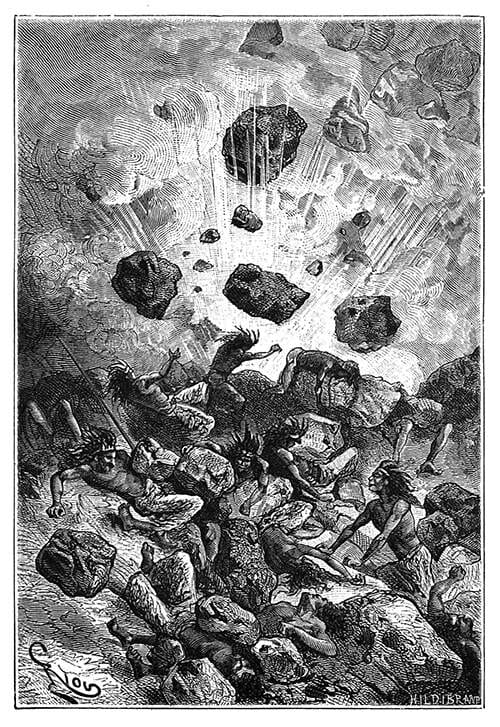
After rereading the stat block, I can confirm most of my original assessment. You need a larger battlefield to properly employ a Ranged Adversary like the War Wizard, as depicted in the Castle Siege/Pitched Battle. Always keep them moving whenever a PC is in Close range, punish groups with Eruption, and employ its devastating Arcane Artillery as a hard move. And most importantly, have a secondary objective on the battlefield that is a more immediate threat so that our “squishy Wizard” might live long enough to use all of its features.
Daggerheart Deconstructed is written by ENNIE Award-winning writer Chris Davidson, author of RightKnight's Guide to Making Custom Adversaries, one of the authors of Incredible Creatures, and Additional Writer for the Daggerheart Core Rule Book.