Living on a Prayer Dice
Eric Lazure quit his job for Daggerheart. Now, three days from the launch of his first Kickstarter, he’s testing just how far hope can carry him.
I noticed Eric Lazure the day he quit his job.
A legal editor by day and a TTRPG editor by night, Lazure decided his firm’s devotion to AI was just the push he needed to strike out on his own and, after thirty years playing modules, start publishing them.
His first product is Hope Springs Eternal, a five-Frame Daggerheart series brimming with drama, themes, and emotions—a collection so distinct that Daggerheart designer Mike Underwood included it in a recent roundup of Kickstarters that had caught their attention.
A lot of people talk about quitting their jobs to do the thing they always wanted to do. But it’s remarkable when they actually do it. I wanted to know more.
I reached Eric at his home in Montreal. This conversation has been edited for length and clarity.
How you feeling?
Nervous. A lot rides on the Kickstarter. I took a big risk to have most of the art and writing done and paid for before the campaign even starts.
Isn’t the first rule “Other People’s Money”?
I was hoping this would help convince the community of the seriousness of the project.
I can understand that.
I also left my full-time job as a legal editor to devote myself to this project and to continue editing TTRPGs.
Eric!
No pressure, but a successful Kickstarter would validate these decisions and encourage me to continue. I don't even want to think about the aftermath of an unsuccessful campaign!
Boldness aside, I have to think part of the decision to be mostly complete is stress management? Like, knowing you can deliver?
Mostly to be able to show art, to have a preview pdf during the campaign, to have potential backers confident that I will deliver quickly. Delivering a product is not a big source of stress. I’ve done it professionally. What I've not done is dive without a safety net, asking strangers to believe in me and to commit financially to a project.
You’ve burned the boats. No retreat.
Exactly. If the campaign does not fund, I will just sell the PDF and focus on TTRPG editing.
Let’s rewind. You quit your job as a legal editor to focus on TTRPGs.
My skills as a legal editor are ideal for TTRPGs.
How so?
TTRPG mechanics are very similar to a legal system and many principles of legal interpretation can be applied in TTRPGs. Commercial law is basically editing a text with both "setting" (the particular facts/context of the transaction) and "mechanics" (legal terms).
That’s a take I’ve never heard.
Editing complex books also helps me work on the structure and language of a TTRPG. And the publishing dimension is fundamental in order to engage a reader/player and have them understand the vision and rules (I am one of the few editors who loves editing in layout!).
You’re a Loreborne working for a bunch of Highbornes.
Exactly. So I started to offer my services when I saw designers promoting interesting projects. The designers of Lordsworn and Stoneburner gave me a chance and I quickly realized how amazing it was to combine work and passion. Word of mouth helped me find new projects, particularly Pandion Games' Substratum Protocol and Midnight Muscadines.
Pandion is quite narrative focused, like Darrington.
Yes! And seeing Andy [Boyd, Founder] resign from his job to devote himself to the company really helped cement my decision.
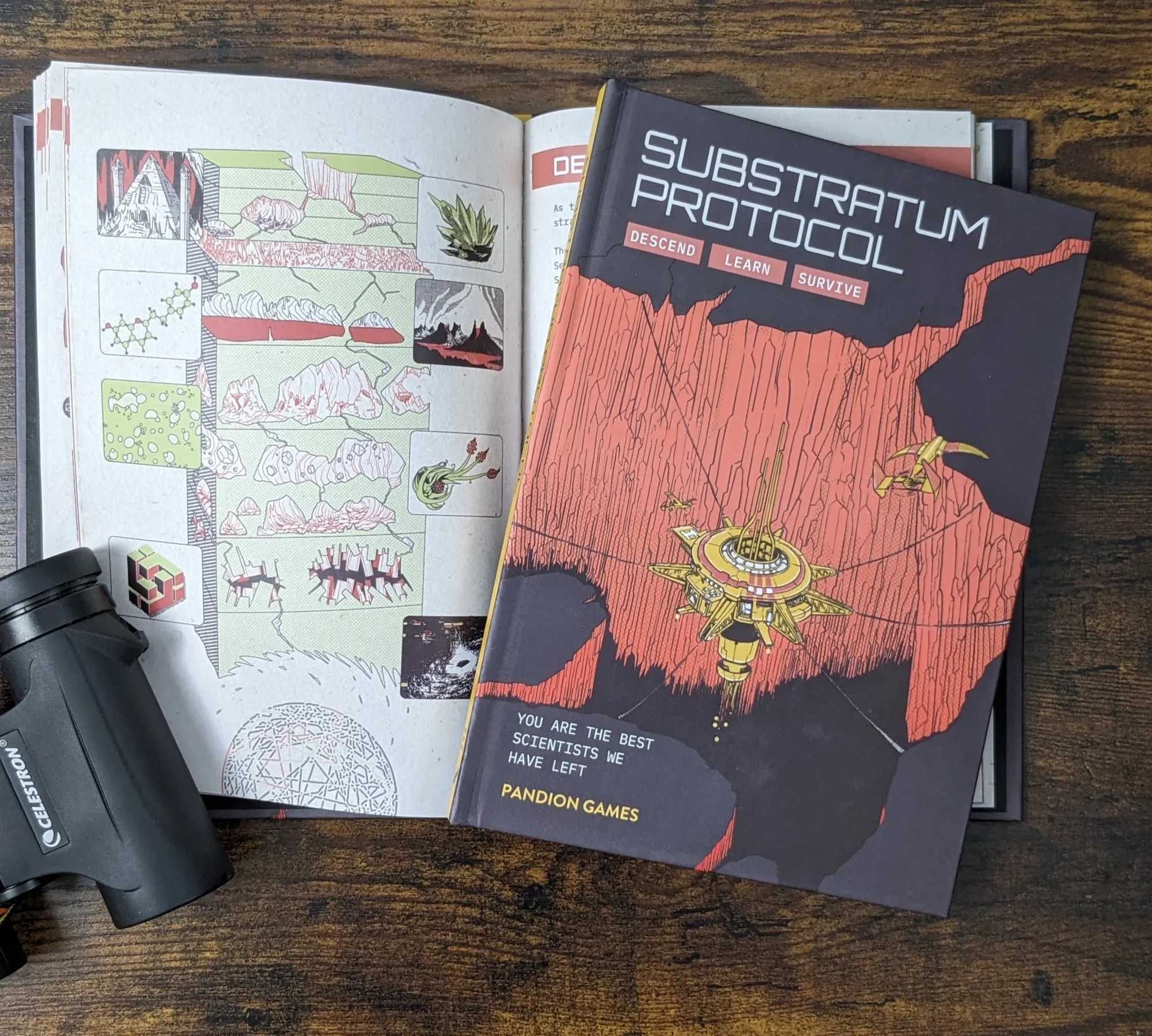
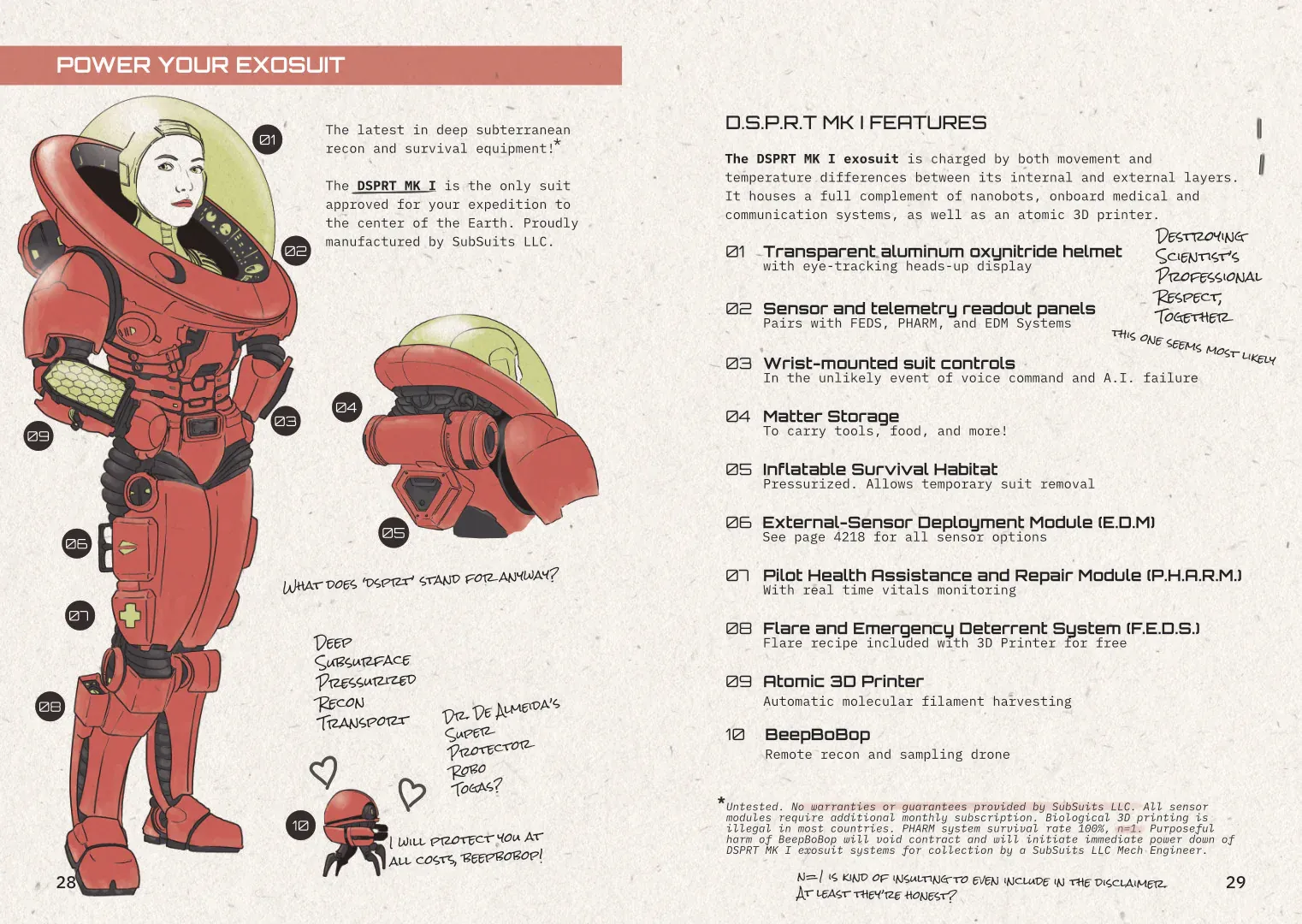
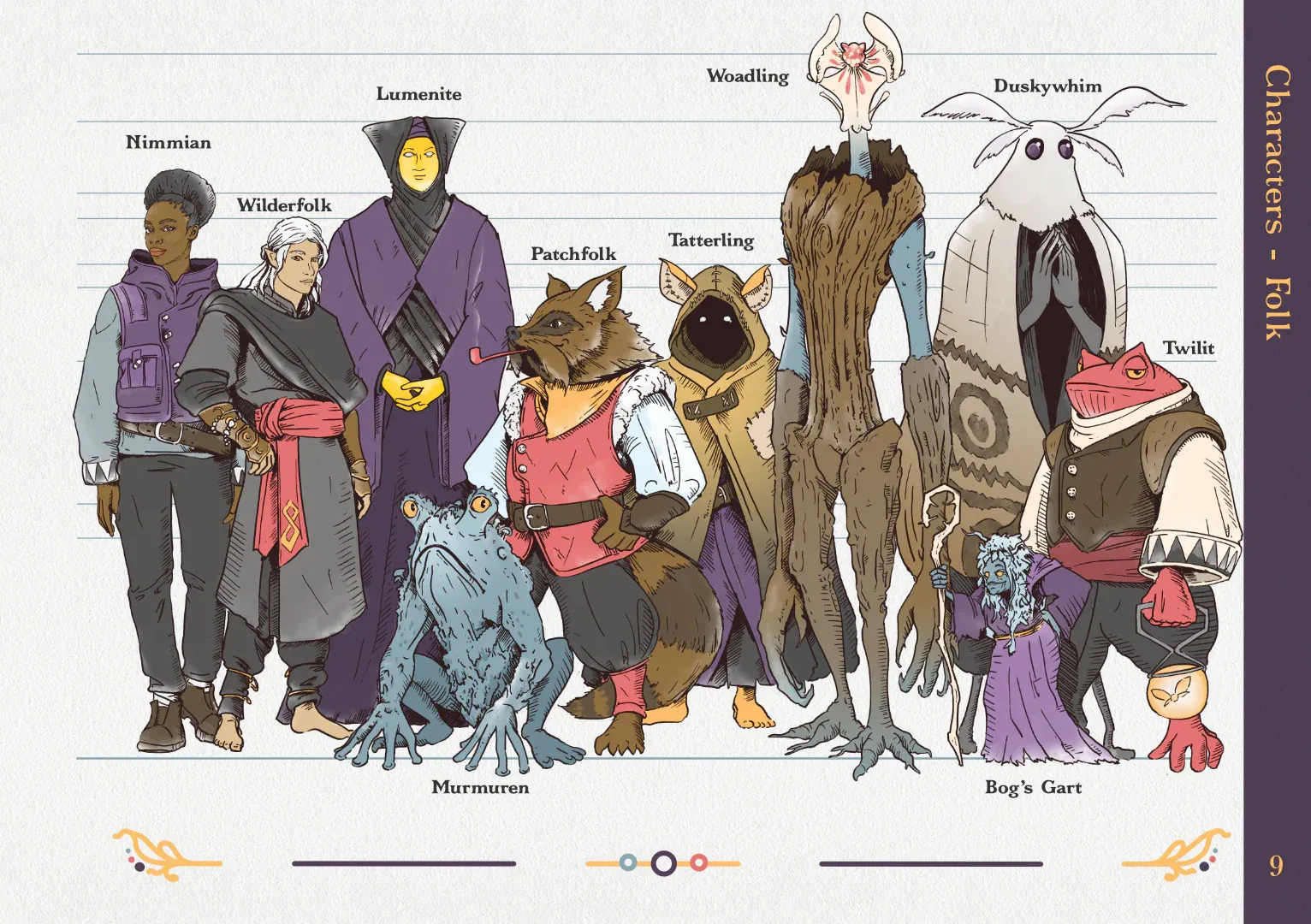
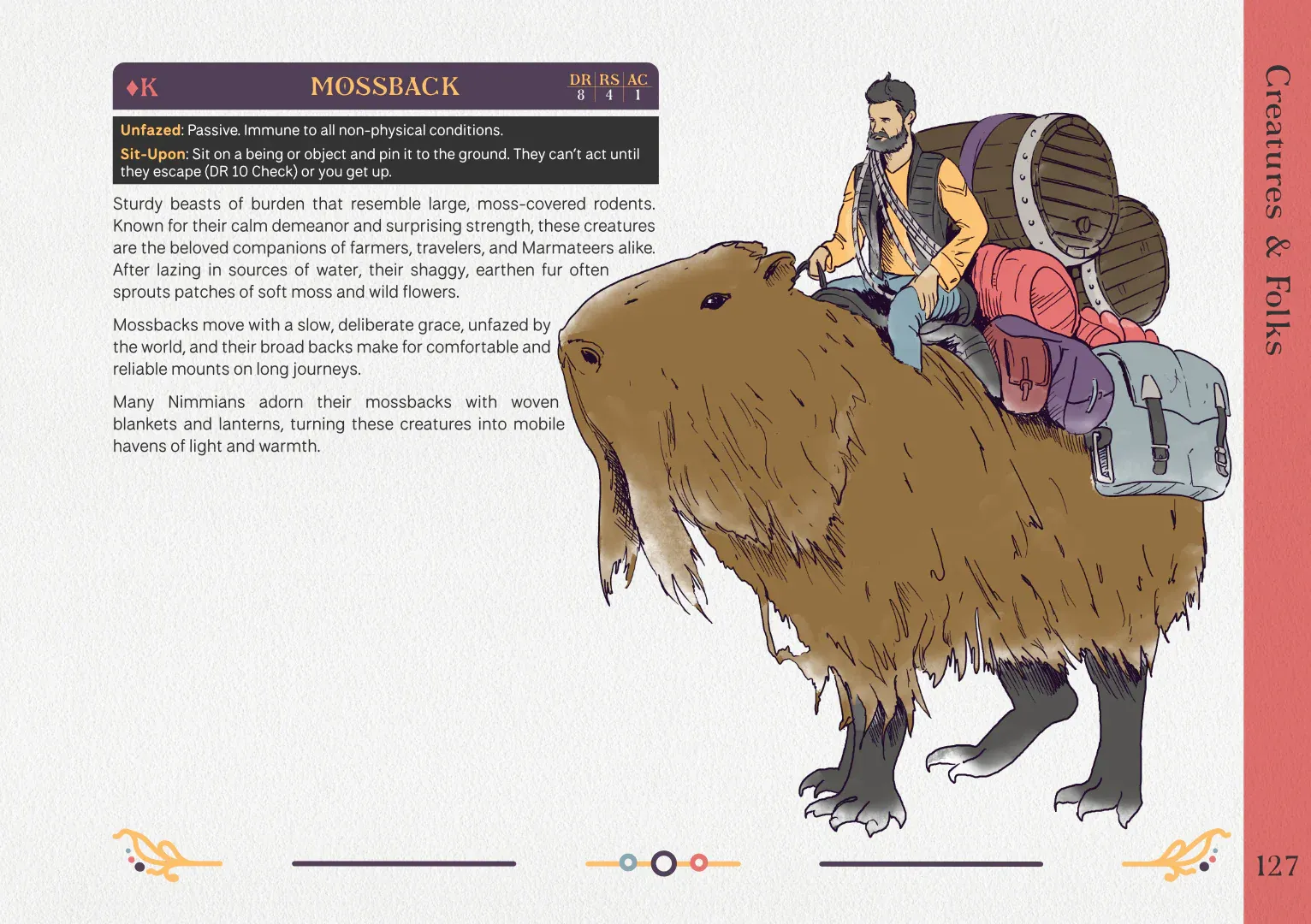
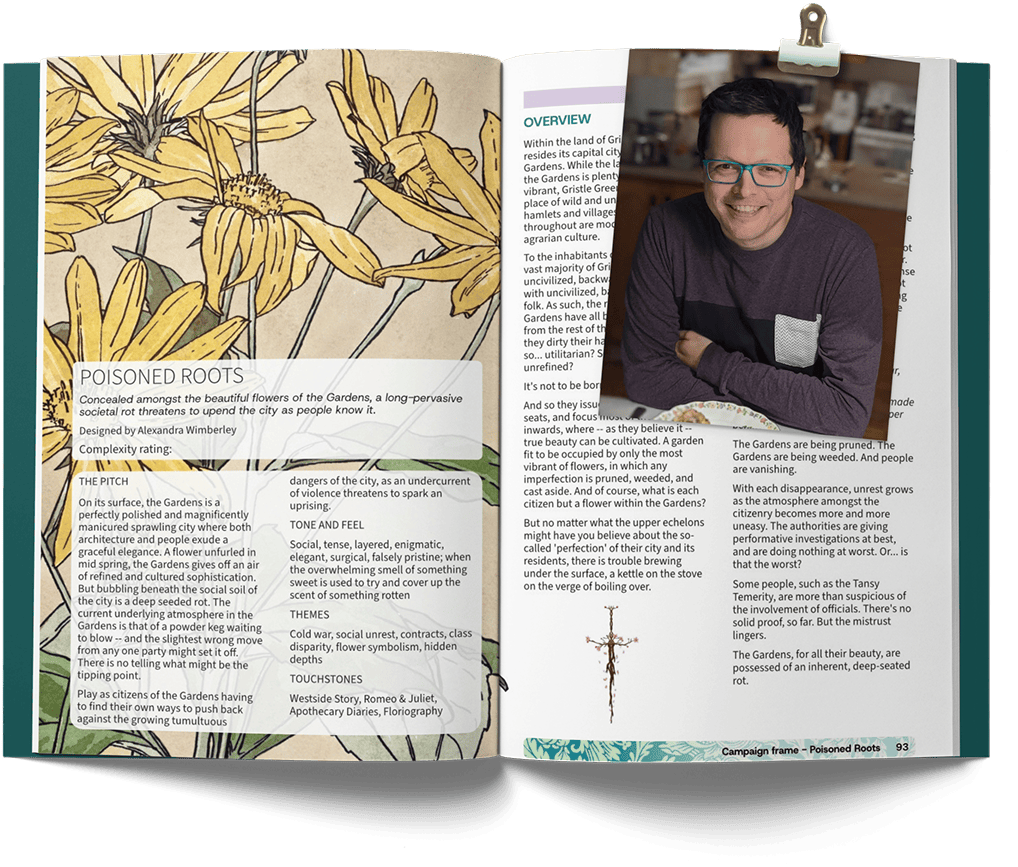
Spreads from Pandion Games's Substratum Protocol and Midnight Muscadines, two of Lazure's editing credits.
Your decision was to build a book of Frames called Hope Springs Eternal. Why hope?
I enjoy my classics and Alexander Pope's poem just came to me. It obviously resonates with Daggerheart's Hope mechanic, but I think it's also relevant in the strange times we live in.
These frames are delightfully allegorical. Reflective, too.
The vision from the start was to provide frames different from each other both in theme/setting and in gameplay/mechanics, and also different from the book's frames and the frames I saw in the community.
Can we dig in a bit?
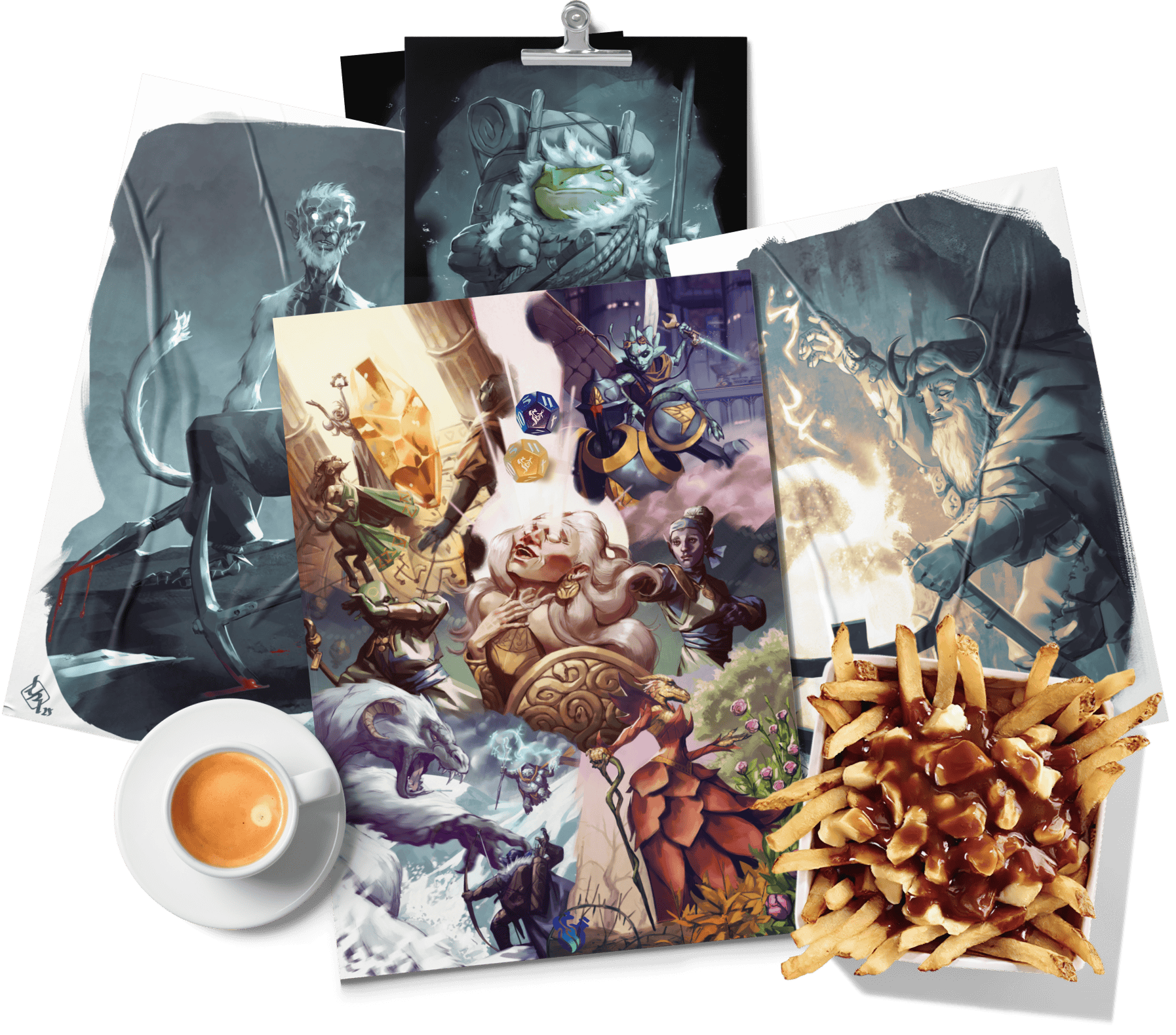
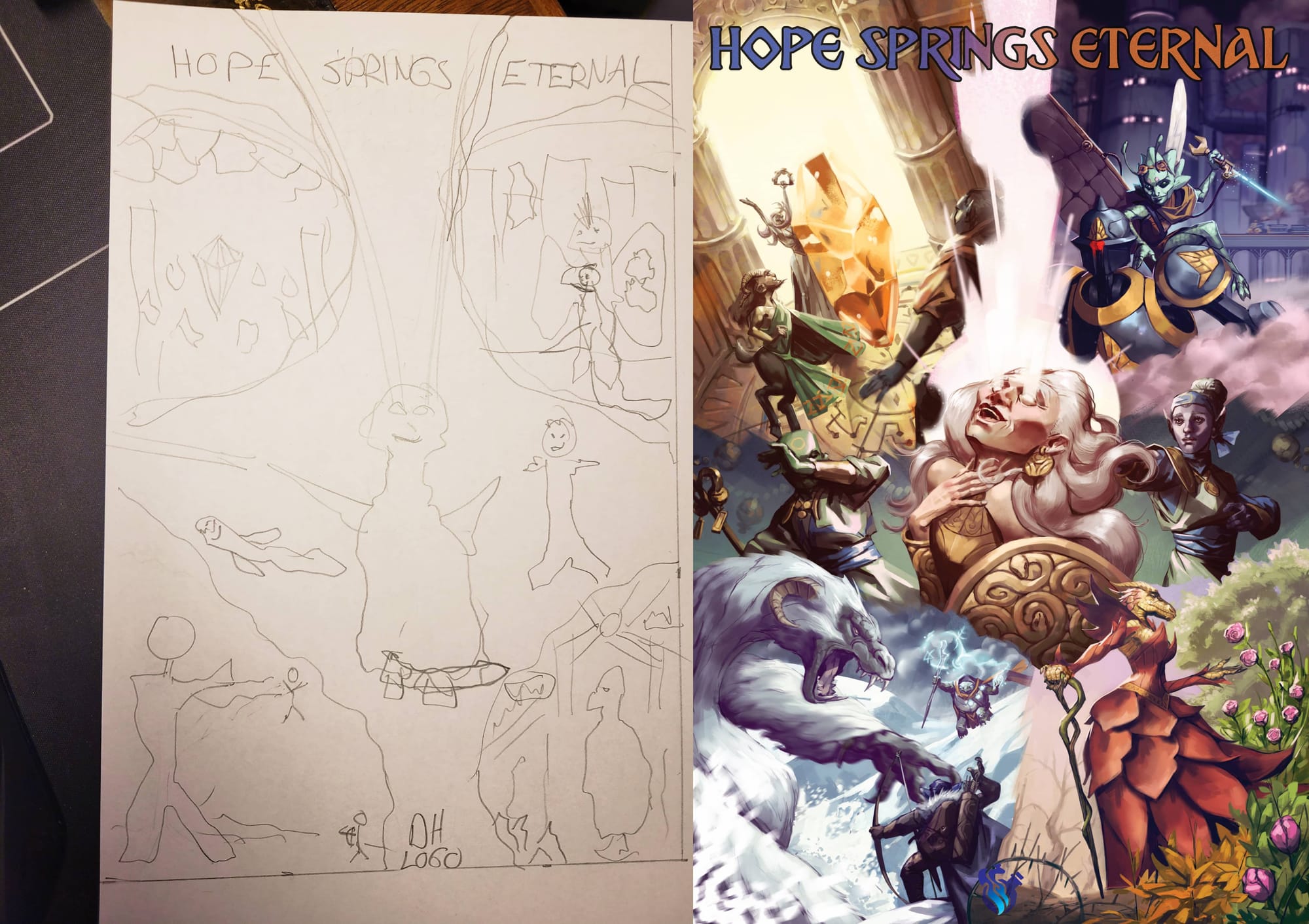
Sure. The cover illustration gives you a glimpse of the 5 frames. In order of complexity:
- The Eternal Song is about culture and society's need to evolve, with a classic adventuring party trying to make deeds worthy of song.
- Gutterpunk Rhapsody is about economy, with players being a gang of punks with nothing to lose in a dystopian megalopolis.
- The Ever Rime is about nature/survival and the need for community.
- The Final Curtain is about humanity, with the party accompanying a dying loved one, hoping to provide some peace and perhaps also find some.
- Poisoned Roots is about politics and oppression.
Roots sounds very timely.
It’s our most "controversial", as it asks players to avoid focusing on combat, to accept party splitting, flashbacks, and to focus on personal values, relationships, and terrible sacrifices for the greater good.
The mechanics reinforce the emotional dimension by having players identify, and eventually sacrifice, the persons, values and objects dearest to their characters. But once again, it will be up to players to determine what happens to their PCs after suffering losses. Will they turn to violence or madness? Will they despair? Will they try to find new sources of joy?
This has some C4, Brennan-vibes.
I’ve always loved classic tragedies. Stories of hubris or vengeance, tales exploring mortality, loss.
And now you have to market it.
And now I have to market it.
Take all that beauty and passion and madness and squeeze it into a comment box.
I think the key is working with others. Promoting my own work all the time would have been tedious, but it's a pleasure to showcase the work of my artists and writers. And when I feel less motivated to promote, I think about the work they are doing and how I want to do them justice. I still have no clue if my funding goal is attainable, but having a stretch goal with an increase to collaborator pay is also motivating.
How did you go about building the team?
I took notes when I saw an artist with an interesting style or someone discussing cool ideas for Daggerheart. That’s how I found Alexandra Wimberly and Graham M. Payne, as well as artists Héctor Rodriguez and Kalin Kandiev. Galen Pejeau is the only one I knew before the release of Daggerheart. We worked together on Stoneburner, Substratum Protocol, Songs and Sagas, and Midnight Muscadines.
Tell us a bit about working them. What was your process?
For the art, I put my trust in the artists. I took elements from each frame and asked them to choose ideas they found most inspiring. The options were left vague because Daggerheart encourages players to flavor almost everything and I didn't feel the need to have every piece match the writing perfectly. And sometimes the art submitted inspired us so much that we decided to change the writing.
For the cover, I knew I wanted to show the five frames and convey how their themes and overall feel were different. I submitted a "drawing" to Héctor and the rest is history!
And the writers?
We basically went straight into editing from their pitches, but needed to distinguish Frames from each other. For instance, we have two with a focus on a city and need to show players/backers how the experience of each would be different.
We also needed to build Frames that are truly Frames, and not just a setting in disguise. While there is a setting aspect in Frames, the most important elements are what players actually do, what stories/themes they engage with, and the mechanics that reinforce and encourage those actions and themes. Nailing this is what makes a Frame players will be excited to play.
Speaking of excitement [checks watch]…three days till launch.
I’m excited to show the Daggerheart community what we’ve been working on! Finally step up to the plate and have the ultimate responsibility for delivering a complete product.

OK, lightning round.
Ready.
By air or sea?
Air. I would get seasick on a long cruise.
The name of your Temple?
The Holy Place to Play TTRPGs with Friends and Forget Your Worries.
Who you’d like to sit between if you were on an episode of Critical Role?
I love Daggerheart, but still don't watch Critical Role, so I would say special guests Spenser Starke and Rowan, Rook & Decard's Grant Howitt.
The magical item you’d constantly use at home.
A Time Bubble allowing me to have more productive hours in a day.
Beast Feast: Poutine or Smoked Meat?
Poutine. And a classic one, not some fancy version!
Legendary Sword or Always Warm Socks?
Warm Socks: Quebec winters are rough!
Shag/Marry/Kill: Gobstalker, Cephilith Priest, Chimera
Kill the Cephilith (I know a restaurant where they make tapas with squid), shag the Chimera (I think it would be an experience to remember!), marry the Gobstalker (by process of elimination).
May you roll with Hope.
Thank you.