Deconstructed: Juvenile Flickerfly
A buzzing T2 terror that knows what your characters fear and uses it against them
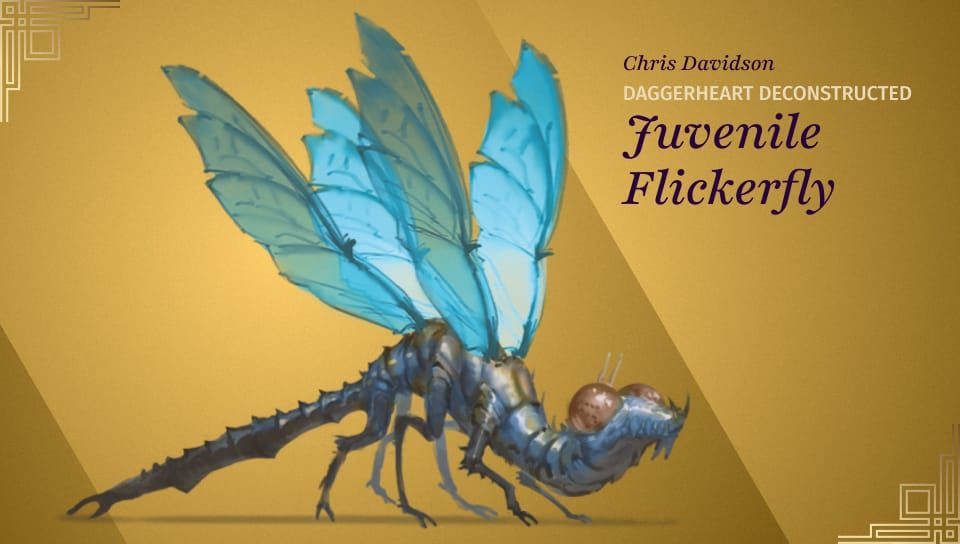
THE FLICKERFLY IS FAST, strong, accurate, and it has a powerful way to reach into the minds of those it fights, using that fear against them. It is the bane of any character who is stacking evasion and gives the GM an in-combat way to formulate story hooks and encourage character development.
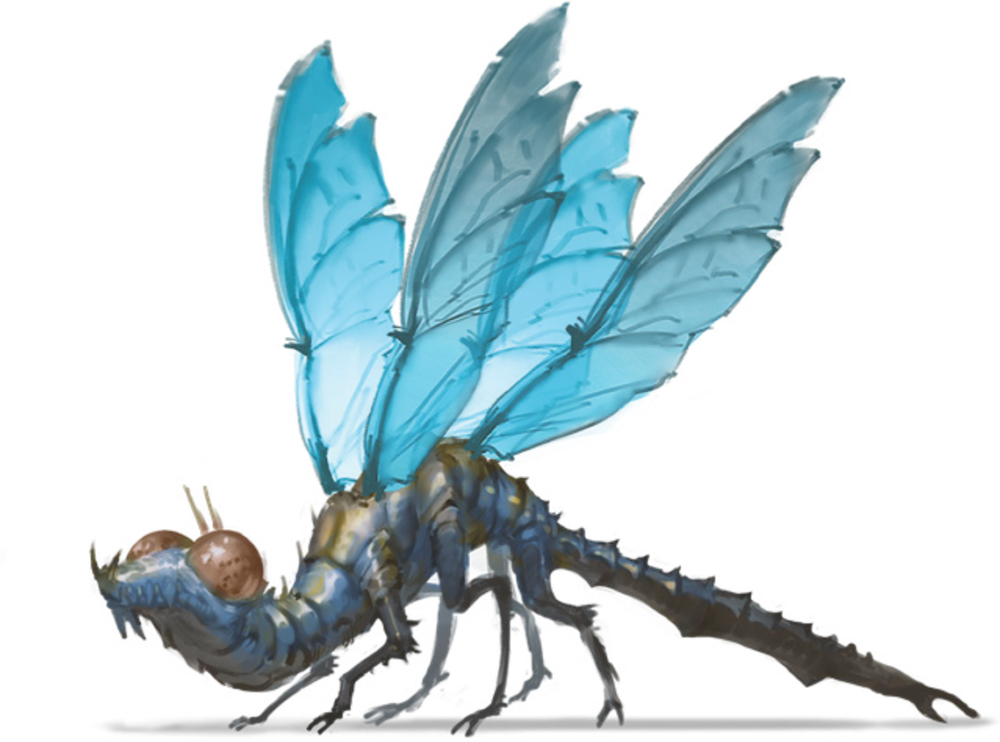
The Flickerfly is the Adversary that made me want to play Daggerheart. It was what brought me to a better understanding of what the game was trying to do. The Flickerfly is the gold standard to which I compare all the Adversaries I make to. But Why?
The Juvenile Flickerfly is easy to hit at a 14 Difficulty. That’s on the cusp of Tier 1 and 2. Its Thresholds are high. This tells us it's going to be taking 2 HP for most hits. With 10 HP, you can expect between 5 or 6 actions before it goes down if you leave it in range of melee characters.
It does moderately good damage on its standard attack, and might not need to be selective with a +3 to hit and its Peerless Accuracy passive. When we look across its features, the implication that the Flickerfly knows something that a character fears tells me that it has an intelligence high enough to understand and recreate that fear. Its motive of COLLECT SHINY THINGS is raven-like, and I think that’s a fair guiding star on how the Flickerfly should operate.
We can infer from its SWOOP tactic, and in its description, that the Flickerfly can, in fact, fly. So when it appears in the scene, the first thing it will do is swoop into Close range of everyone in the group and use its Mind Dance.
This is where things get interesting. When a PC fails this Reaction Roll, you can describe the display of lights as almost blinding, and a foreign mind drawing memories from their own. Then ask, “What is something your character fears?” Let them describe it and then rephrase it as a reflection in the Flickerfly’s crystalline wings. Keep note of who fails and what their fears are for two reasons. First, because those PCs have disadvantage on the Reaction Roll for Hallucinatory Breath; and second, because this is a story moment waiting in the wings. One you can capitalize on immediately because you gain a number of Fear based on the number of PCs that fail.
You can spend one Fear (hopefully you got two from the Mind Dance) immediately using Relentless to make a standard attack against the target that you feel is the “shiniest.” This might be the Guardian in plate armor, or it could be the Rogue with its flashy weapons, or even the Seraph with its glowing weapon. Whichever one you choose, describe it as having interest in that thing. The PCs might decide to distract the Flickerfly instead of fight, especially when you tell them their evasion is halved (if you’re lucky). After its initial attack, you can describe its movements as erratic, similar to a dragonfly’s. Because Daggerheart’s ranged attacks tend to be lower dice values, there is some likelihood their attacks will fall into Minor thresholds and will never be Severe.
The first time the Flickerfly takes damage, ask a player to narrate how they attack it, then build on their answer by describing its sharp breath from the damage and how it's starting to generate a gas from between its jaws. It might be iridescent and sparkling, or dark and menacing. Then roll a d6. This starts the countdown for its Hallucinatory Breath. You want this roll to be as low as possible. Hopefully, a 3 or lower.
While it waits for its breath to charge, it will stay in Far range of the PCs. It will attack pursuers but may not use Relentless to its fullest extent, waiting for an opportunity to strike. If all the PCs succeeded on the initial Mind Dance Reaction Roll, it will attempt it again until it has at least 2 PCs whose fears it knows. If only 1 PC is affected when its Hallucinatory Breath goes off, it might use that moment to retreat, especially if its HP is half or lower. It’s smart enough to HUNT them down later.
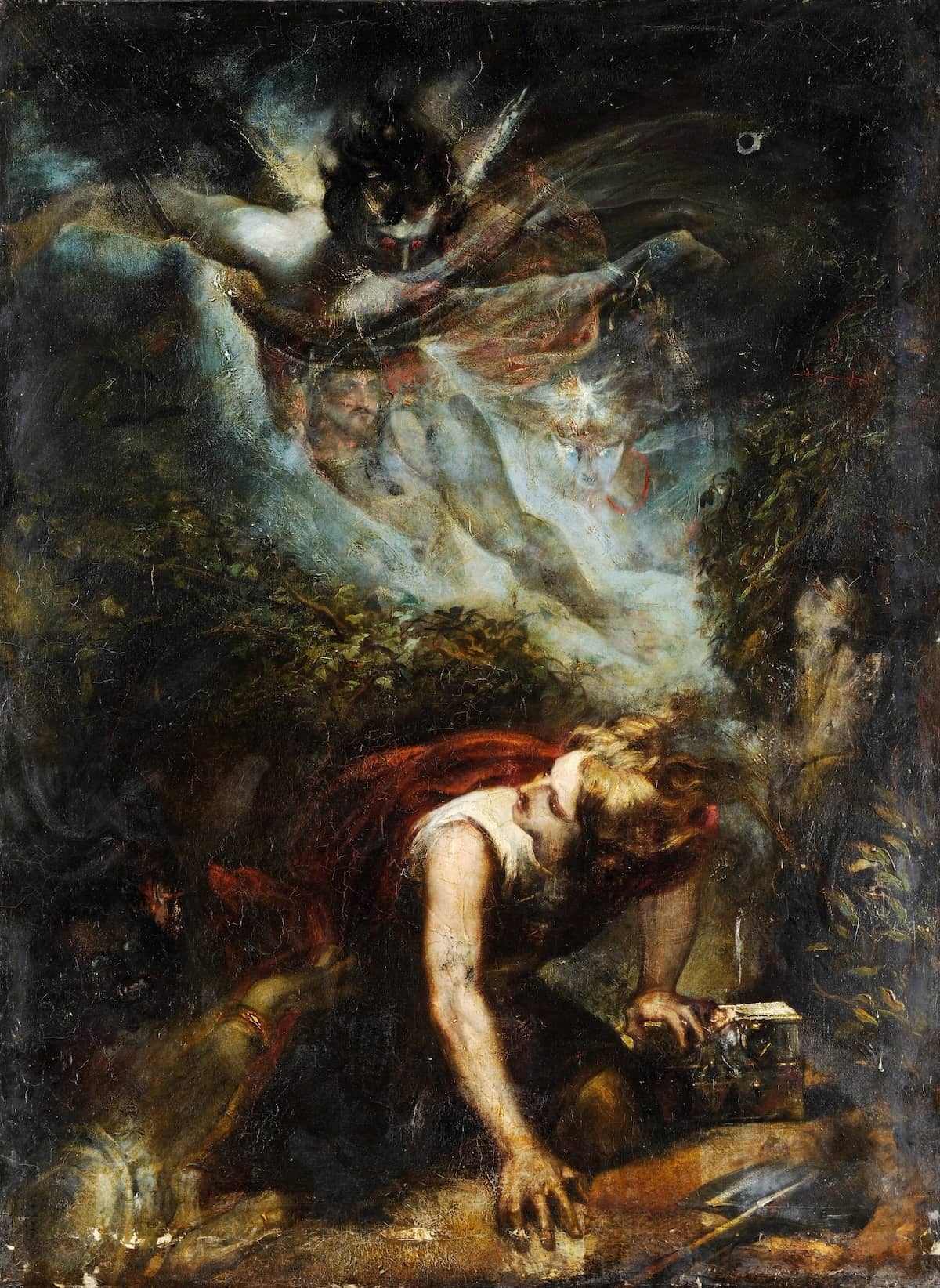
Once the Hallucinatory Breath reaction goes off, describe the fears of those who the Flickerfly knows, or ask your players how those fears manifest. While the party is grappling with their fears, the Flickerfly might swoop in again to try and steal a shiny trinket and be on its way, giving the party a choice to track it down or to continue on their way. But where does it go?
While the Flickerfly is a flavorful opponent, you might find playing it in this way, that it is not a dangerous one. Because of this, you might ask your PCs what failing the Flickerfly's breath attack does to them? How does it stress them out or make them feel hopeless? Walk down the origin of those fears and save them for later because those are hooks you can use. For example, what if the Flickerfly is the familiar of a forest hag, who now has leverage against them? Imagine a forest that was once quiet is now crawling with hallucinations of the PCs nightmares, taunting them. Not every fight needs to be a bag of HP and death brawl. Check out page 175 of the Core rules and keep the Narrative Function of the combat in mind.
Daggerheart Deconstructed is written by ENNIE Award-winning writer Chris Davidson, author of RightKnight's Guide to Making Custom Adversaries, one of the authors of Incredible Creatures, and Additional Writer for the Daggerheart Core Rule Book.