Deconstructed: Demon of Despair
A Tier 3 Adversary that preys on those who have lost all Hope.
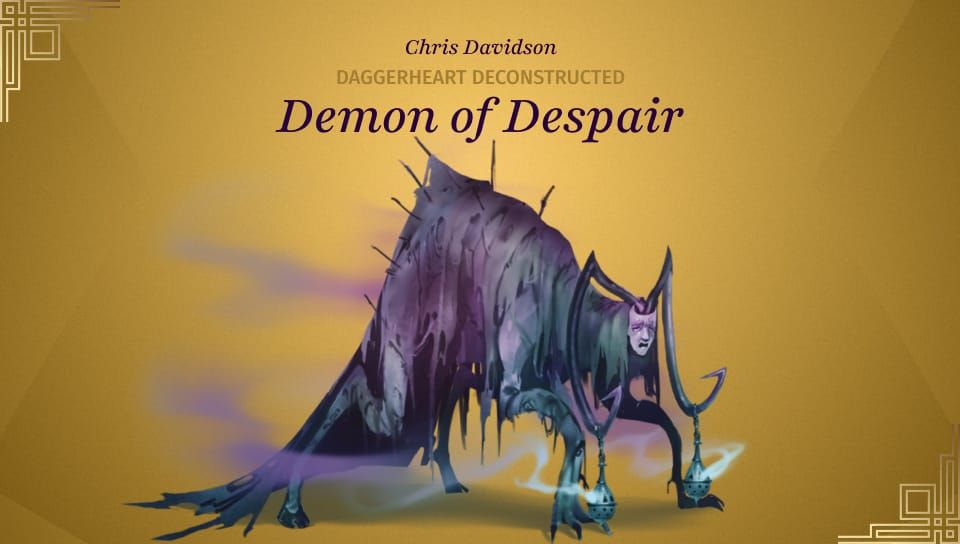
THE DEMONS IN TIER 3 are some of the most talked about adversaries in the book. They have evocative abilities that really hone in on what emotion they represent and give us a glimpse into the sort of cosmology that the designers created. It’s also a masterful use of non-standard features that Skulks can possess.
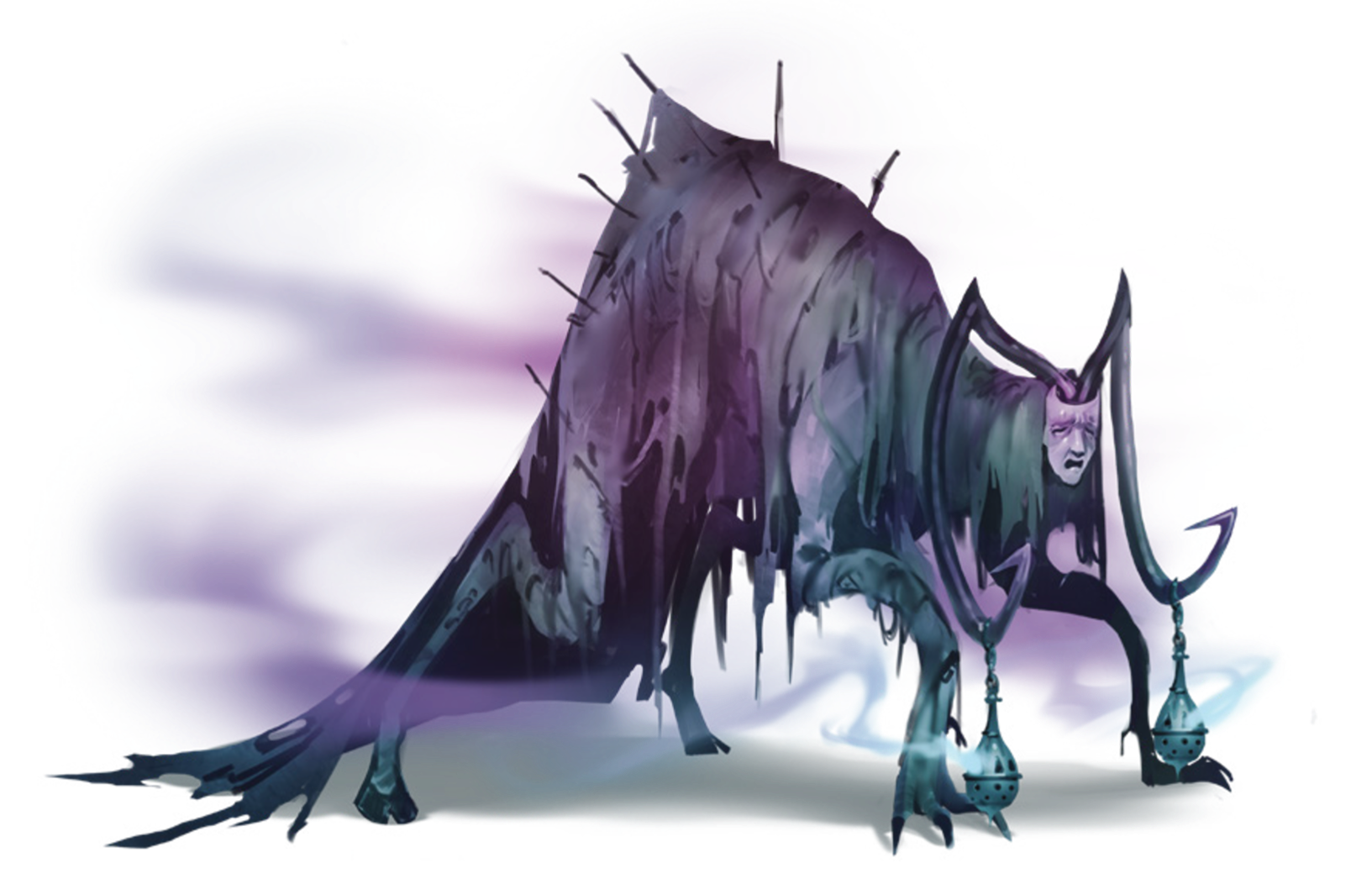
The Demon of Despair is full of flavor, and its features build on themselves in very interesting ways. It’s not going to hit hard, instead it is going to make PCs struggle to succeed. While that makes it excellent at supporting other Adversaries, it still has a wonderful (terrible?) ability to make the worst out of any situation.
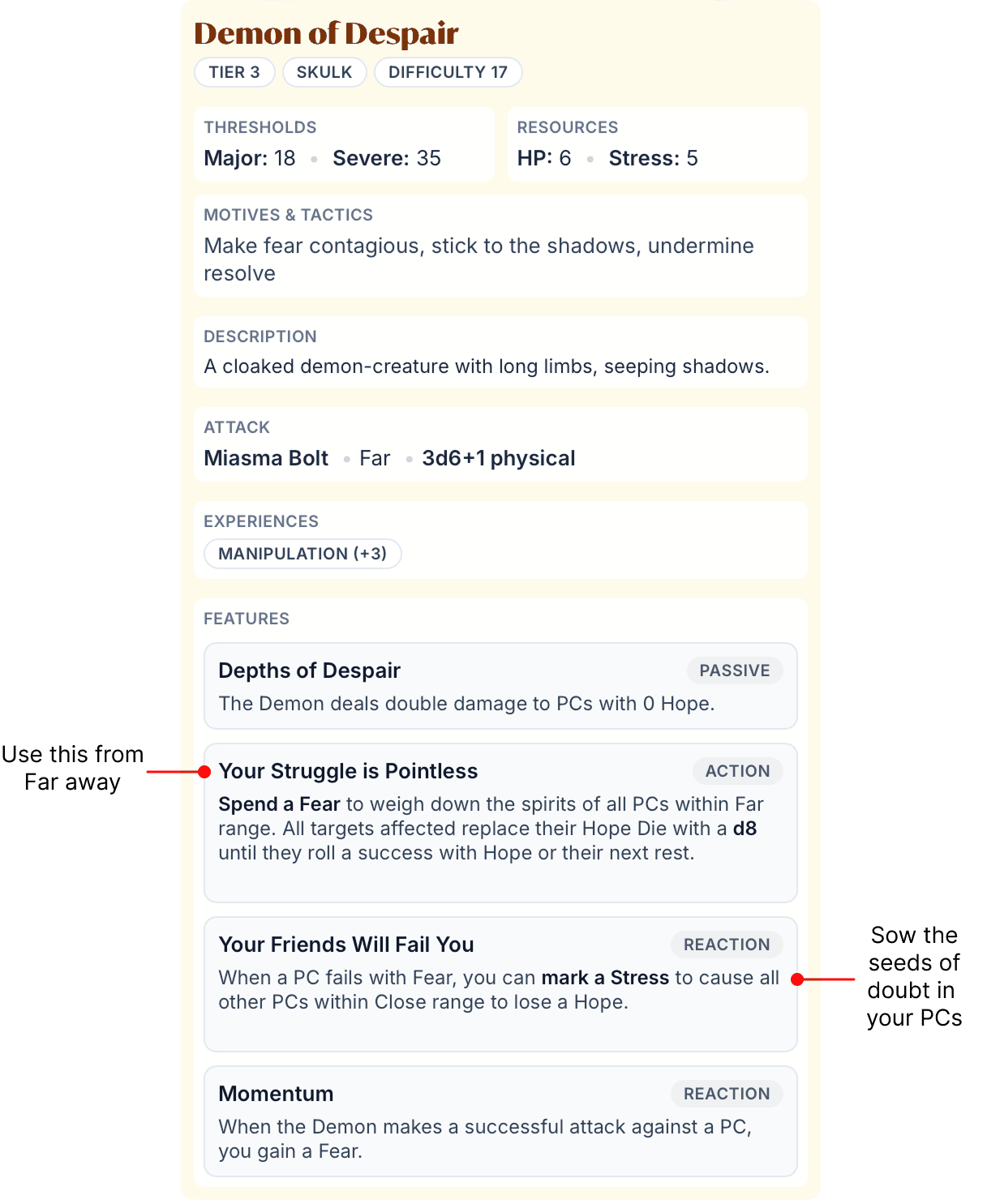
The Demons in Tier 3 tend toward higher stats and the Demon of Despair continues this trend, clocking in with the highest Difficulty in its type and Tier combo. It has a middling Major and a very high Severe Threshold. With six HP, it is going to hang around for at least three turns.
This particular Adversary does not have a lot of direct attack options. In fact, it only has its standard attack and one Fear action, which doesn’t do any damage. So how is this thing a threat if it’s not marking HP or shredding through armor?
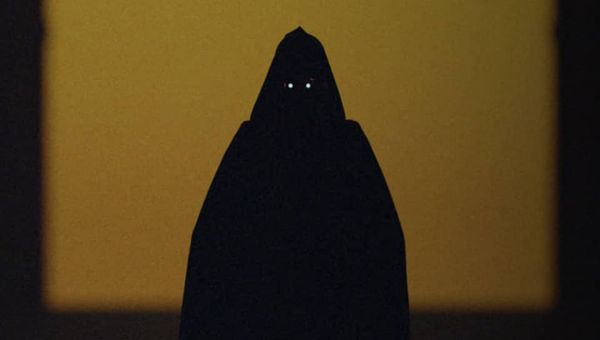
As a skulk, this adversary will not directly confront the PCs unless it has no other choice. In its description, this Adversary seeps shadows, it hides in them, and it wants to break the resolve of even the most stalwart heroes. Once it has done that, only then will it strike.
Start the encounter with the Demon making a proclamation that the PC’s are enduring hardship in vain, and that their efforts are pointless or some other dark or depressing statement. When the PCs respond back with bravado, spend a Fear and let them all know that they all feel terribly weighed down; that their arms and hearts are heavy. Then let them know that they are all rolling with a d8 for their Hope Die. A change like this to the core mechanic of the game does two things: It makes failure more likely by lowering the total a PC can roll from 24 to 20. It also means that rolls with Fear are more likely to occur, which means more times that the spotlight switches to you. The only way out of this spiral is to roll with Hope, which is, again, less likely. Though Orderborne have a way out of this by sticking to their convictions, which is a thoughtful touch.
Even without other Adversaries around, just searching for this Demon will have the party struggling. When a PC rolls that action roll with a d8 Hope die, searching for the tormentor, you might consider spending a Fear to add the Demon’s "Manipulation" experience to its Difficulty, making the total to succeed a 20. To put a finer point on things, you could even tell the PC the total they need to make. Perhaps the PC might spend a Hope to add an Experience or another PC offers to spend a Hope to help. All according to the Demon’s plan. While it would be great if the PC succeeded, spending Hope makes the Demon a much more powerful enemy.
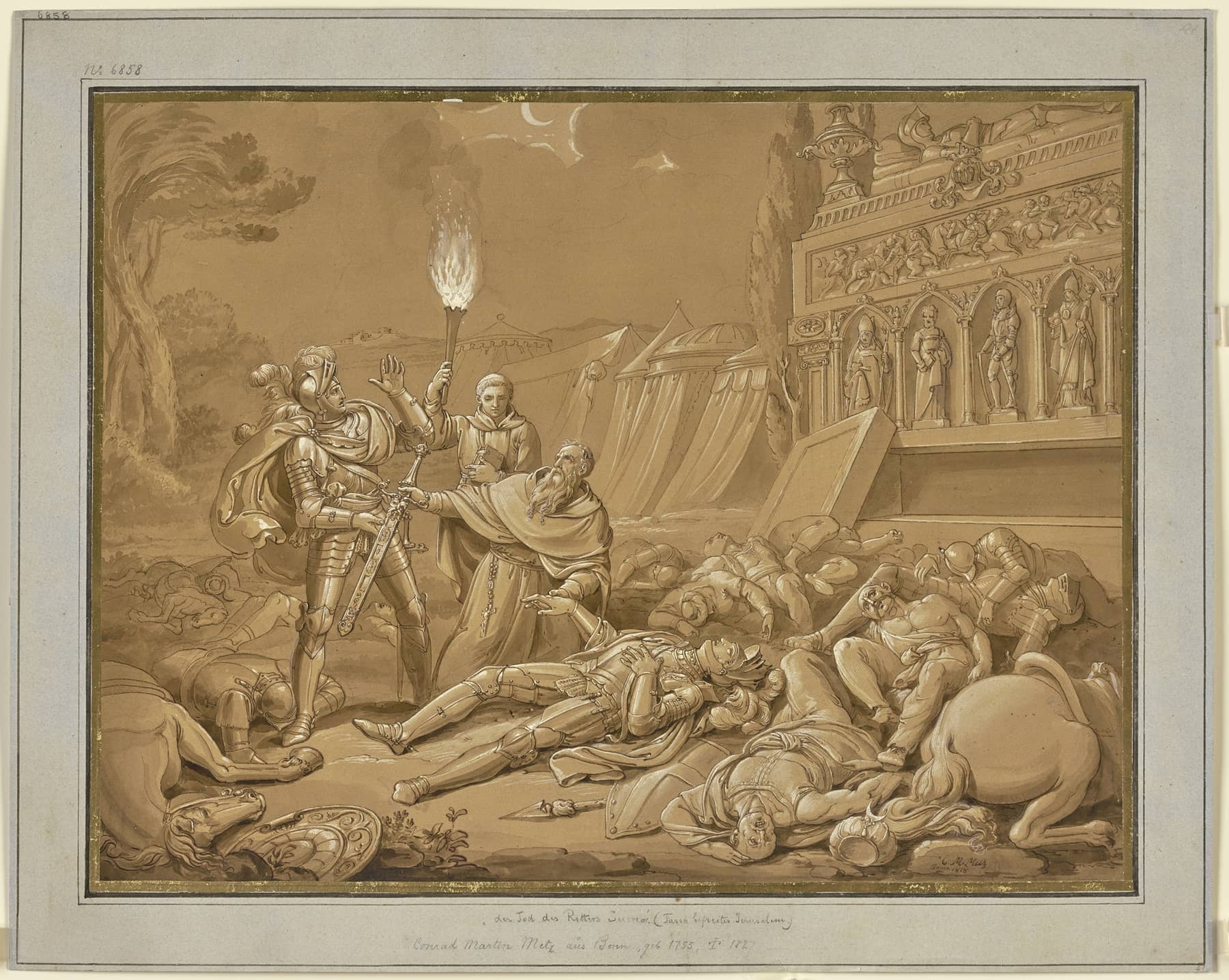
Should the roll fail with Fear, mark a Stress to have the PC’s meager torch reveal something in the environment. A terrifying sight, one that perhaps the Demon might have conjured. You might ask them to describe an image of betrayal or death. Maybe it's a beautiful, but horrifying picture like The Plague Of Epirus by Pierre Mignard or a painting like the one in the Royal Chapel of Castlevania: Symphony of the Night. You know the one. That’s when the “Your Friends Will Fail You” Reaction comes into play. Build on their description, potentially inserting the PC being surrounded by their dead allies...or worse yet, alone. Now the party starts to lose Hope; maybe figuratively, maybe literally.
A Demon of Despair would know who is still somewhat hopeful and those who have lost themselves to despair and in that moment, it would lash out from the shadows to strike. Players will often crow triumphantly that they can't lose Hope they don't have, which is a great time to ask them how that manifests in their character's demeanor or actions. This poor, Hopeless soul is who we want to target, preferably from as far away as possible. Because of Depths of Despair, the Demon does double damage to a PC that has lost all Hope. After resolving the damage, you might ask that PC about a secret sadness they harbor or regret they’ve recently encountered and once they’ve narrated that difficulty, you slide a Fear into your pile for the next adversary you spotlight.
You might consider using the Demon of Despair in mid-to-late Tier 2 as a Solo by giving it Relentless (2) and 3 more HP. This encounter wouldn’t be a dangerous one. Rather, it could be positioned as a way to herald other demons and showcase their powers over emotion. I also want to caution you away from using all the Demons in Tier 3 in one combat encounter, despite how they are presented together in the book. Each one has so much flavor that they really deserve their own stage as part of a greater story. That many features that manipulate the game's core play loop can be difficult to keep track of in the moment. Instead, consider reflavoring other Adversaries or make your own, that capitalize on targets having no hope. Pairing it with an Adversary with Terrifying (like the Head Vampire) will cause the party to struggle to generate Hope, so be aware of those interactions when including this Demon in your encounters, but know that these are intended interactions.
Daggerheart Deconstructed is written by ENNIE Award-winning writer Chris Davidson, author of RightKnight's Guide to Making Custom Adversaries, one of the authors of Incredible Creatures, and Additional Writer for the Daggerheart Core Rule Book.