Deconstructed: Sallowlands Episode 1
GO WEST, YOUNG ONE. There may you find salvation from this hell on earth.
[Ed: Video starts at boss encounter]
MATT MERCER RETURNS to the GM chair and with his return we are brought back to the Halcyon Domain. This land of darkness and shadow devours hope and shows us Fear. This time, though, we are in the bed of a dried out lake, rather than the jungles of Aveidoora.
After traversing through the dark woods and out into the salt-strewn wastes, the major bout in this episode saw the introduction of new characters; some of which are using finalized material from Hope & Fear and a newly released update to the Bloodhunter.
After introducing three of the characters, Matt used a traversal to describe the Rustsaw Woods, painting the scene and using it as a reminder that in the Age of Umbra everything is dangerous. If running a staggered introduction like this at your table, an impromptu traversal is a perfect opportunity to take a cue from the Wish Thief and have one character describe an obstacle and another, newly introduced character describe how they attempt to overcome that obstacle.
As the traversals took shape they amassed resources for both sides of the table. If you, as a GM, know that a conflict is coming, doing a traversal beforehand can allow the table to stock up on some narrative fuel for later. Would I do two (or three) back-to-back? Probably not. But after the first traversal, Matt described the subsequent countdowns for each Environment and how they work. It is important to let your players know what special rules you are introducing so they know what to do. Doubly so for newer players. You don't have to explain that after the third time you've rolled a Fear, you fight a giant bird. They'll find that out on their own.
During the first countdown in the Crust of the Lake Tomb, they were given ample forewarning [Sudden Rumble] of something taking place nearby, a hook to draw the final two characters to the table, and to give Laura a jump scare or two. Matt already knew how he was going to introduce Alphonse and had prepped a few stat blocks to use. The most important of those blocks represented a tall, dangerous man named Endroth, the Inevitable.
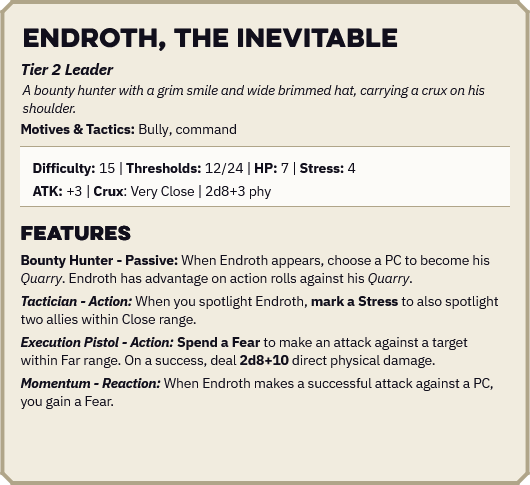
Endroth shares striking similarities to the Tier 1 Leader, the Jagged Knife Lieutenant. Tactician is an obvious giveaway, and they share Momentum as well. Where they differ is that Endroth did not summon lackeys, and traded Coup de Grace's added Stress mark for direct damage in the Execution Pistol.
Matt used most of Endroth's spotlights to give his other Adversaries (more on them below) the spotlight. It's a trade off that's mostly useful if you're low on Fear or want to preserve what you have since it's a spotlight and a Stress instead of an extra Fear.
Endroth's Execution Pistol, when combined with his Momentum, makes the move Fear neutral if he succeeds on the roll. Fear neutral means you spend a Fear only to gain it back because of Momentum or a similar feature. This design choice was one that Matt made pretty often with his Adversaries in Season 1 because it allowed him to dish out more damage—an important part of the story's harsh environment. But it can, when pushed too far, frustrate players who are engaged and waiting for an opportunity to play. I would reserve these features for more poignant moments in the narrative.
As for the other Adversaries, at least two of them share the "Ambush Tactics" feature, which probably reads something similar to the following:
Ambush Tactics - Passive: When this Adversary makes a standard attack and an ally is within Melee range of their target, they deal an extra d6 damage, and you gain a Fear.
In addition, the purple-haired Adversary had a pair of moves that made them out to be somewhere between a Jagged Knife Kneebreaker (with Hold Them Down) and an Assassin Poisoner (with Fumigation/Smoke Bomb).
The Sniper had a feature called Deadly Shot that probably looked like this:
Deadly Shot - Passive: When the Sniper succeeds on a standard attack against a Vulnerable target, they can mark a Stress to deal 3d6+7 physical damage instead of their standard damage.
For me, there's just one too many gates to this feature. Marking a Stress on a target with a temporary condition to gain what is essentially double damage feels a little excessive.
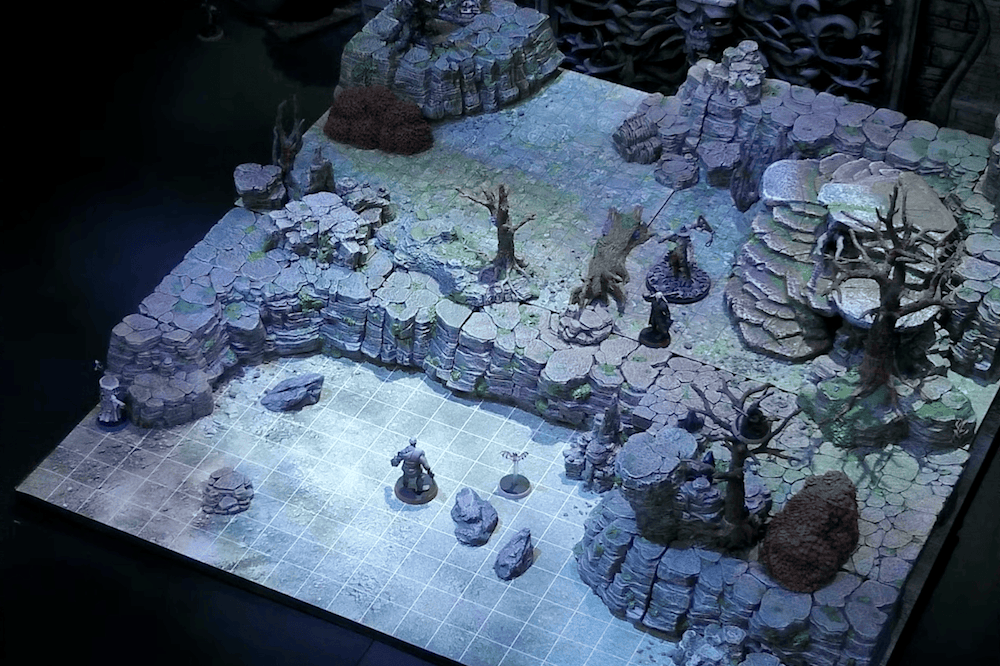
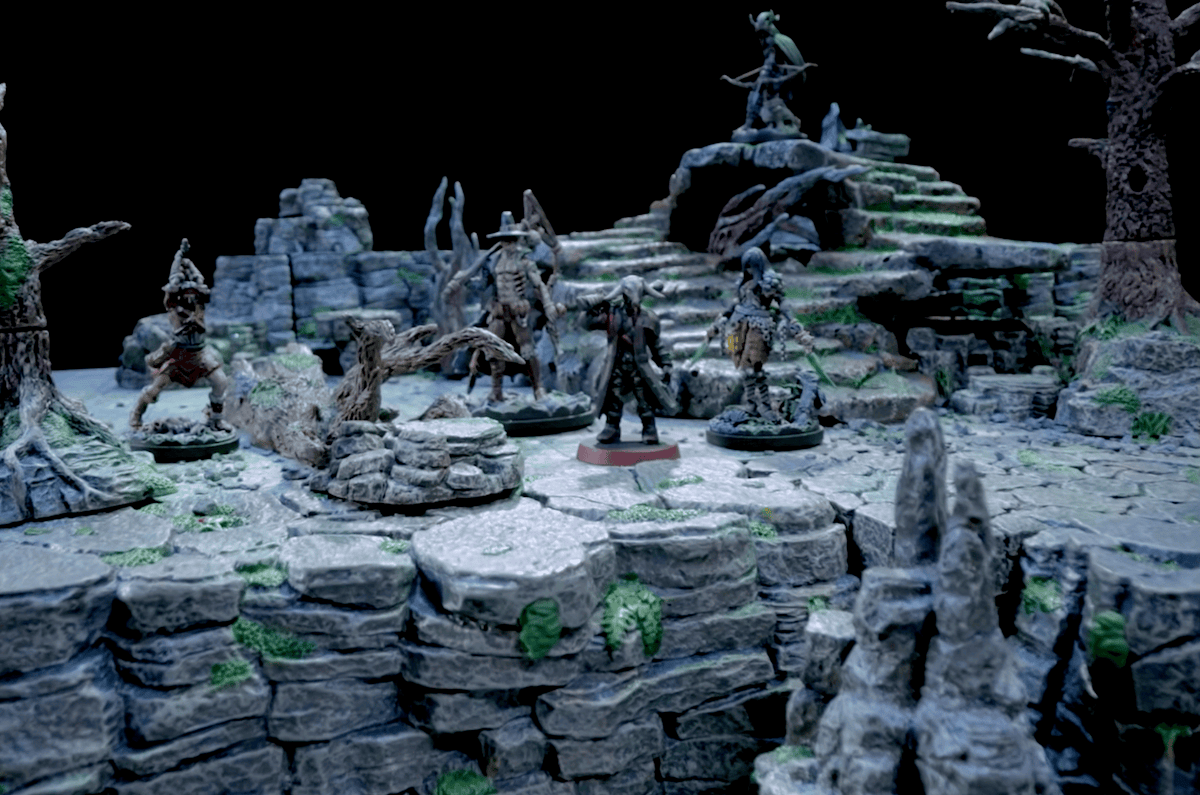
It was a good introductory fight, with Mercy taking the lion's share of the damage and Matt got the opportunity to display several features from each unit. The party put a lot of pressure on Endroth quickly and continuously, which forced Matt to withdraw him from the fight, but not before doing significant damage to Alphonse and Mercy. Matt painted a narrative target on Endroth's back during his introduction, one that encouraged the PCs to focus him down. Let this be a lesson to you: if you want your Leader to stay alive, they need to lead from the back. Leaders don't have enough HP to tank more than 4 hits and if the PCs roll well, you won't have a Leader for long.
The second combat was much more emotional and we didn't get to see a lot of what the Tatchra had to offer, but Caguama's actions play to one of the most overlooked player principles of Age of Umbra: "Remember That Not All Darkness Is Evil." The Tatchra was a tragic figure and it was a great moment of courage. Sometimes, conflict doesn't mean combat. It's important to remember that, even in these dark spaces.
(PS: If you're looking to bring Endroth or the Tatchra (or the others, if the scale is any indication) to your table, you can find those mini among the several "boutique horrors" on offer at Kingdom Death.)
Daggerheart Deconstructed is written by ENNIE Award-winning writer Chris Davidson, author of RightKnight's Guide to Making Custom Adversaries, one of the authors of Incredible Creatures, and Additional Writer for the Daggerheart Core Rule Book.