Vol 30: ENNIES & Enigmas
Awards, actual plays, and final days. An exclusive Environment, improvised encounters, and a vandal named Randall. Then, Summoners and sailors, Obsidian Adversaries, and the fundamentals of fear. Plus: a free map, Bloodborne weapons, and ocean adventures.
SPOTLIGHT
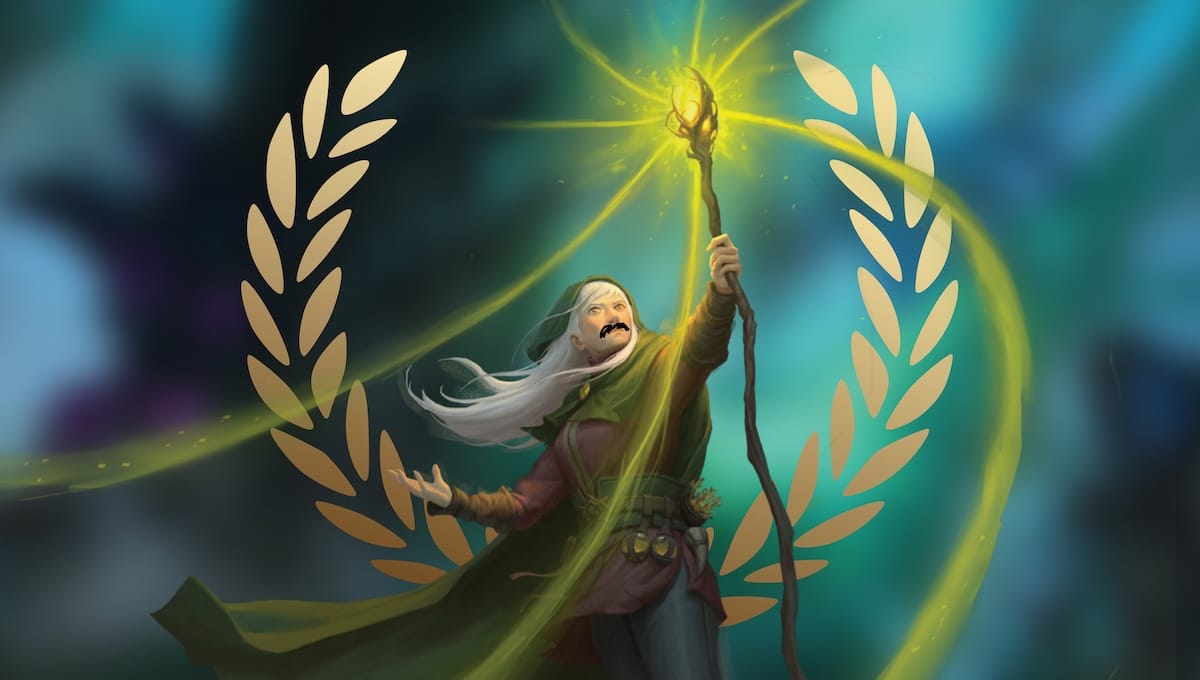
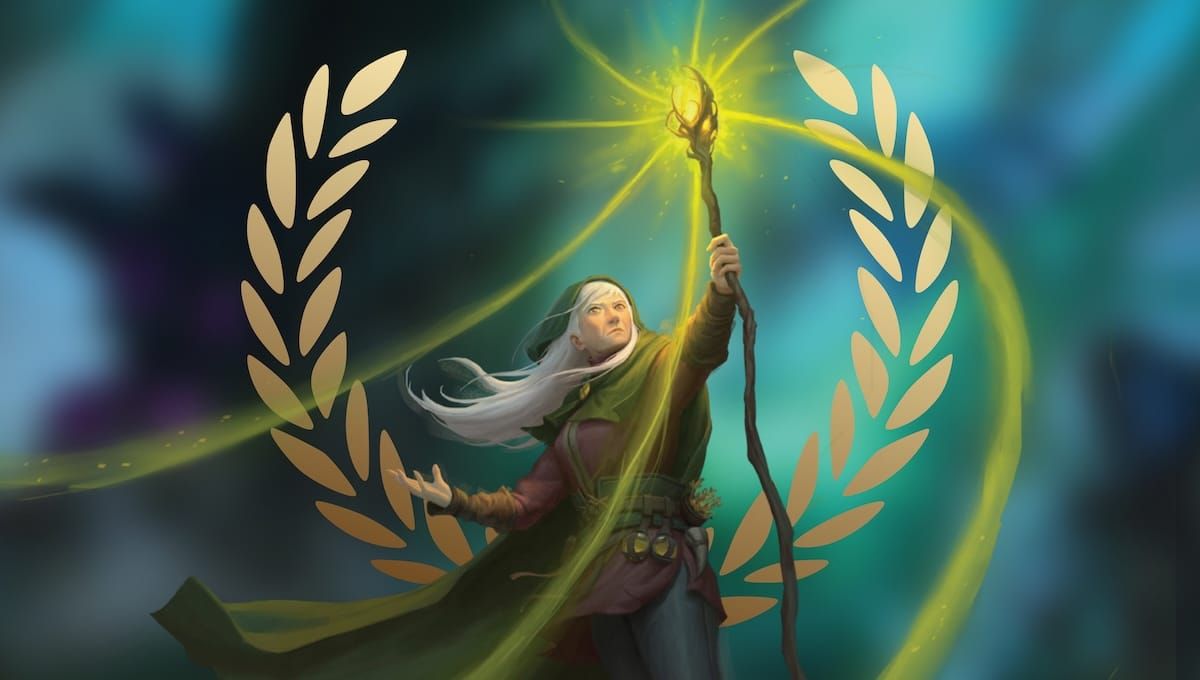
When you cover the output of artists—be they filmmakers, musicians, writers, or, in our case, game designers—one thing you track over time is their particular brand of energy. Spielberg is earnest. Swift is industrious. McCarthy is austere. And Darrington? This is the Darrington crew. Scrappy, inventive, and irreverent in a way that is kinetic. It's to that energy—and their many ENNIE noms—we tip our hats (and wiggle our moustaches).
NEWS & RELEASES
The Shining
The ENNIES—the Oscars of the TTRPG community—nominated Daggerheart for Product of the Year, Best Game, Best Rules, Best Free Game (Sablewood Messengers), and Best Streaming Content (Get Your Sheet Together). Voting is now open to the public.
Designated Drivers
How's My Driving, the Daggerheart horror hack that spawned the hit AP of 2026, is also nominated for an ENNIE. Not that Jack, Cameron, and Gina are trying to gin up votes—but Jack has promised to turn this mock-up into a real product should they win.
Sallowbrand
Age of Umbra: Sallowlands premiered on Thursday and with it, partnerships with Alchemy and DriveThruRPG & Demiplane that include S1 character pre-gens, S2 environmental artwork, and a hi-res map from cartographer Marco Bernardini. Alchemy has all these assets already integrated into their system, while Daggerheart's download site also includes S1 Adversaries.
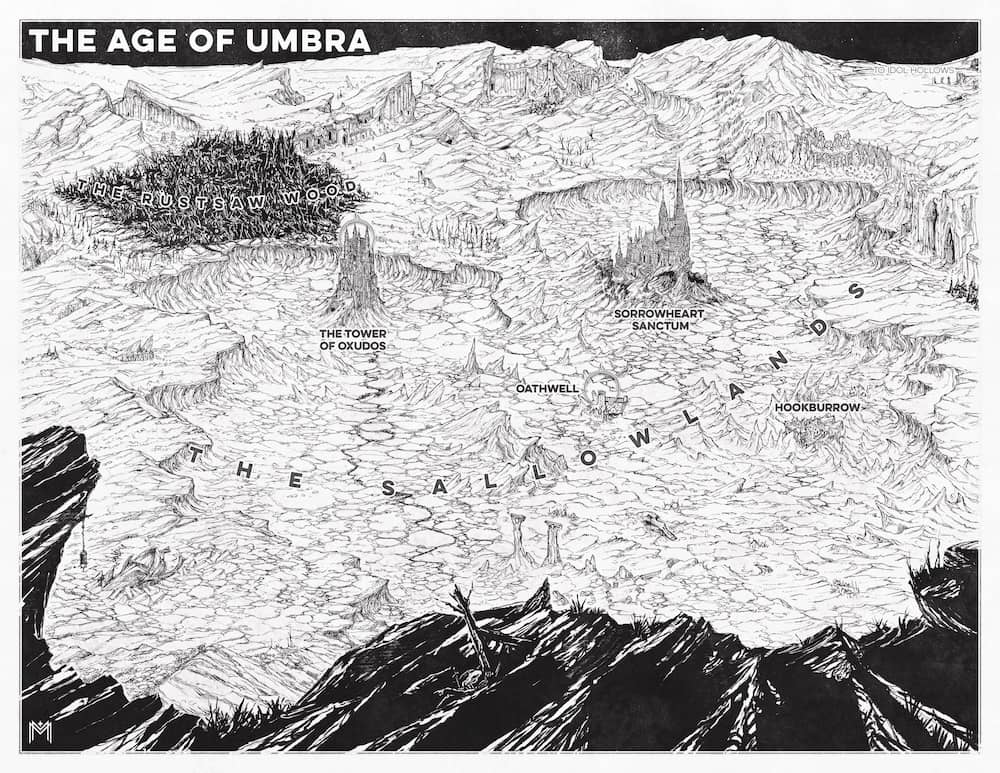
[Ed: If you're curious about the mechanics of Age of Umbra and how Matt GM's Daggerheart, look for Adversary Designer Chris Davidson's special Deconstructed series starting this Wednesday.]
Heart of Darkness
If watching dark, ritualistic games isn't quite enough for you, why not play dark ritualistic games with the new Summoner or updated Blood Hunter Classes? Courtesy of Darrington's Depraved Designers™, you can boil the blood of your victims while summoning Death Knights to murder their allies. Bonus: The D3 sit with Mademoiselle Rezendes to explain their dark deeds.
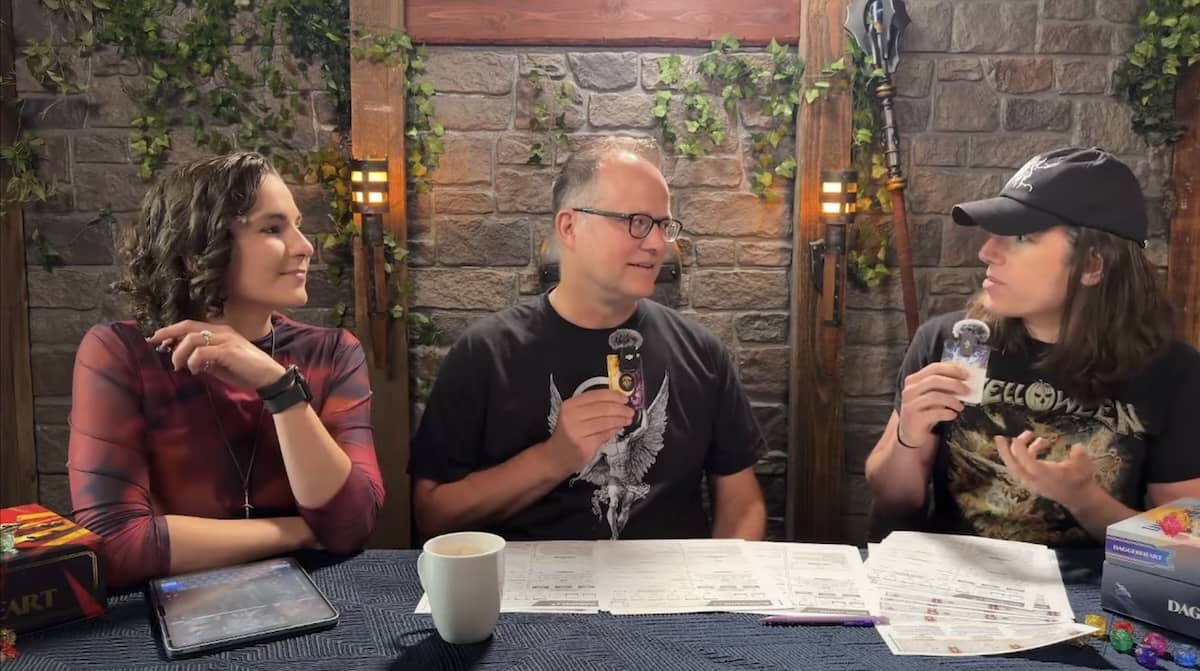
(PS: While R&S couldn't be in Burbank for the stream, here they are speaking at a Designers Workshop in Germany.)
Adventuring Party
News broke this week that game designer Carlos Cisco has joined Mike Underwood on Dungeons of Drakkenheim, along with Daggerheart editors Scott Fitzgerald Gray, Sadie Lowry, and Sebastian Yūe. All five of these folks are also ENNIE nominated.
European Communion
Whatever crises have affected global shipping lanes—be it for raw materials or finished goods—it hasn't stopped the Germans and French from producing Daggerheart in their native tongue. Trotz allem! Vive la resistance! Bonus: Rounding out the EU is a Spanish and Portuguese FreshCutGrass-ish tool.
AP A-Z
Daggerheart dot org has added a roster of actual plays to their site, joining Heart of Daggers and Reddit to ensure no ear goes unturned.
Girls Just Wanna Have Fun
Guys are overrated, yeah? Spend some time with the ladies.
DISCUSSIONS
All the Right Moves
A player asked: “Can I move after attacking without spending action economy on it?” to which OrphicSolopsism replied “Moving after an action? No. Moving as part of an action? Yes.” KTheOneTrueKing added further context: “Moving and making an action roll are not, technically, separate actions. It’s all part of the spotlight. It’s not like D&D where you have a hard coded “action, bonus action, movement” economy.”
Ready, Steady, Stop!
Hot on the heels of “it’s not like D&D” comes a proposal for a catalogue of readied actions to replace standard action rolls, built largely on the misunderstanding that players will lose their ability to attack should an Adversary claim the spotlight. Worth visiting the comments if you occasionally struggle with “who should go next?”
Warrior's Welp
“I’m not saying I want to nerf my Warrior’s Opportunity Attack. But, just for a moment, let’s pretend maybe I do. How would I go about that?”
The Departed
Last edition's question "can I just kill the guy?" has a retort: you thought you killed him, but he's playing dead and definitely plans to stab you when you turn your back.
VIBE CHECK


One way we gauge Daggerheart's momentum and reach is the frequency of which high-quality PC art surfaces from the community. A year ago, maybe once a month. Now? We had seven pieces from this week alone, finally settling on this duo from TTRPG and book illustrator Jojo.
🎯 GM TIPS
Class-Specific Death Moves
"What if your character had a Class-specific Death Move?" is a question to which "absolutely!" and "of course!" are the only reasonable responses.
Rob Jon has several suggestions—from a Rogue who disappears until the GM re-introduces them for a final, pivotal moment later in the campaign, to a Druid who transforms into an animal that disappears into the wilderness forever—but this is a flexible concept that can be easily customized to your PCs/campaign.
Hacking Improvised Encounters

"To quickly improvise an encounter, budget 6 HP per PC, and try to keep the number of monsters equal to or lower than the number of characters."
That's Elizabeth from Patchwork Paladin with advice to help clear your stress from worrying about Battle Points, Environments, Adversary Types… they can be a bit much when all you need are some heavies to block the road, foil the plan, or generally turn the place upside down.
Casting your NPCs
Daði's back with Burbank advice: think of your NPCs like a television cast. Background extras, day players, guest stars, recurring guests, series regulars, and celebrity cameos. Their role tells you how much of them you actually need to prep.
An extra may need nothing. A day player needs one good line, a useful fact, maybe a face the players will remember. Save the tangled motives and tragic childhoods for the series regulars with a real chance of making it to next season. Mostly, avoid writing biographies for people whose sole job is to point toward the tavern.
🤔 KNOWLEDGE CHECK
WHEREIN WE ASK the community for pearls of wisdom. This week, James Parkes on how to ratchet up the tension in a game.
"Tension is about perceived threat. During session 0, I will [ask about] players immediate, short term, and long term concerns. [That way], if they are looking for something, the answer might be found with someone/something they're trying to avoid.
Case in point: I ran a session where the party were looking for a smuggler to get them out [of trouble]. They found one, but said smuggler happened to be the party Rogue’s ex—and they parted on sour terms. [This] immediately created multiple layers of tension, as they hadn’t managed to shake off [pursuers], were on a time limit, and the Sorcerer [wanted] the Rogue to apologise, which the Rogue definitely didn’t want to do.
Really, it's about having enough prep done to improvise. Ask pointed questions during character creation to get ammunition, and don't be scared to use it, as the players will always give you more."
🍺 HOMEBREW
Randall the Vandal

Watch the video to fully appreciate Bard &Raven's four-legged mischievous menace. Having watched ourselves, we now want a campy explainer video for every Adversary.
MORE:
🌎 CAMPAIGN FRAME
Atlas of Adventure

Word on the street (aka BSKY) was that Monster Mike was readying a book of Environments called Atlas of Adventure to complement his Adversary tome Menagerie of Mayhem.
Using our charm spell (aka nicely worded text messages), we managed to beguile Mike into sharing the volume's cover and an exclusive Environment statblock—and boy howdy this book is gonna rip.
To all you Rita Vrataski fans...

🎨 CRAFTY
Character Study
Jay Ledbetter from Jaybird Games shared this faction leader spread from their upcoming FEAR ME! supplement. Impressive information design. "The goal is to present a complete view of a villain for your games on a single spread, with everything from backstory to plot countdowns to lieutenants and more!"

Class Keys
Somewhat related to Rob Jon's Class-specific Death Moves is Rise Up Comus's post on keying a dungeon with Class-specific descriptions. Natch, RUC is focused on D&D, but the idea is easily transferable to your Daggerheart campaign/module/map.
MORE:
🛠️ TOOLS & RESOURCES

Until we get rules of the sea from Darrington’s design team, here’s Sail, Swab, Scurvy to help you plan your ocean adventures. Built for Cairn, but character-driven and extensible. Slips right in to port. (See also: Fear the Tides)
The Roundup:
- ANutandAStone built a free browser-based app for custom Adversaries that exports to Obsidian.
- There are already fillable character sheets for the new Summoner Class thanks to rarebitt.
- Funnybush built an iOS character sheet manager.
- Sly Flourish is Kickstarting Rise of the Lazy Gamemaster (obscenely overfunded), so here's a reminder of Lazy Resources.
- How shall a 1260s knight be armed? Alex the History Guy has a video.
INSPO


It's not clear if Chinese concept artist Zp Zhang intended their portfolio to show the devolution of a society, from Gilded Age to ghoulish decay. But arranged just so, it's a marvellous bit of worldbuilding that can inspire your campaign to go in either direction—fighting against the forces of entropy to build an empire, or watching one slough into the mire.
STORYTELLING
Fear Factor

Let's start an examination of "when does fear actually kick in?" with the summary from Chris Csont's post "I'm in Danger."
- Is Pepsi okay? When you can't offer your characters actual safety and security, what might feed their sense of security and prevent them from acting? What gives them that sensation of control or calm that sets up the rug pull to come?
- What (or who) they think they know. People acquire fears through experience and learning. Are there ways to take something a character has learned not to be afraid of and twist that expectation? Are there other fears a character might hold that distract them from the real danger of a situation?
- Fear is a process. Thinking about the chemical reactions and parts of the body that react when someone experiences fear, it's not like flipping a switch. When does a character start to have their Spidey Sense kick in that something is wrong? How will that change their behavior and make it harder for them to stay in control of a situation, or at least appear calm?
On their own, these make for smart questions to ask yourself when turning up the heat on your PCs. But his whole post includes great examples from amazing movies that punctuate the moment people slip from safe to sorry.
ETC