Deconstructed: Glass Snake
A see-through T1 predator that's not as transparent as it might seem.
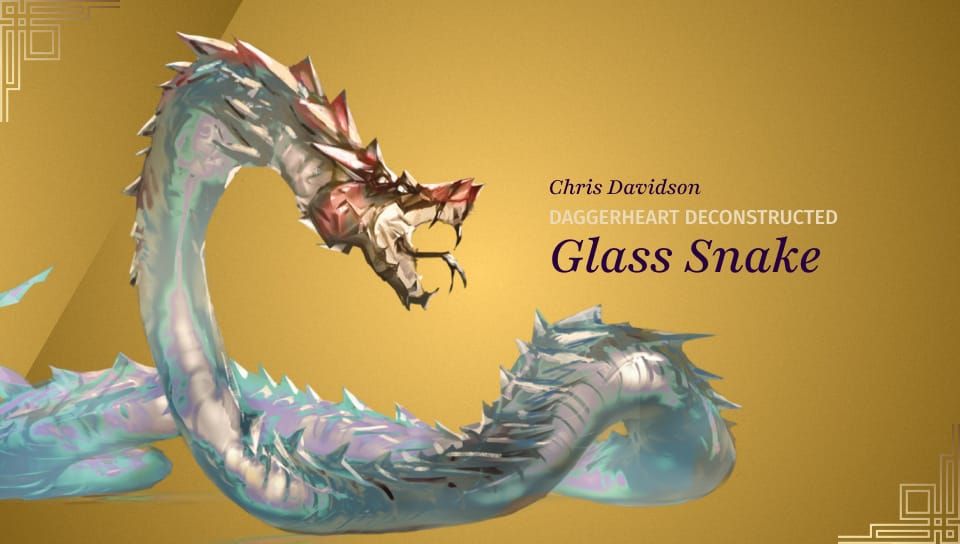
LET'S TALK ABOUT the Glass Snake. It’s been in the game since the early stages of the playtest and was one of the first pieces of art displayed for the Adversaries. It actually has some lore that still exists from the v1.3 playtest.
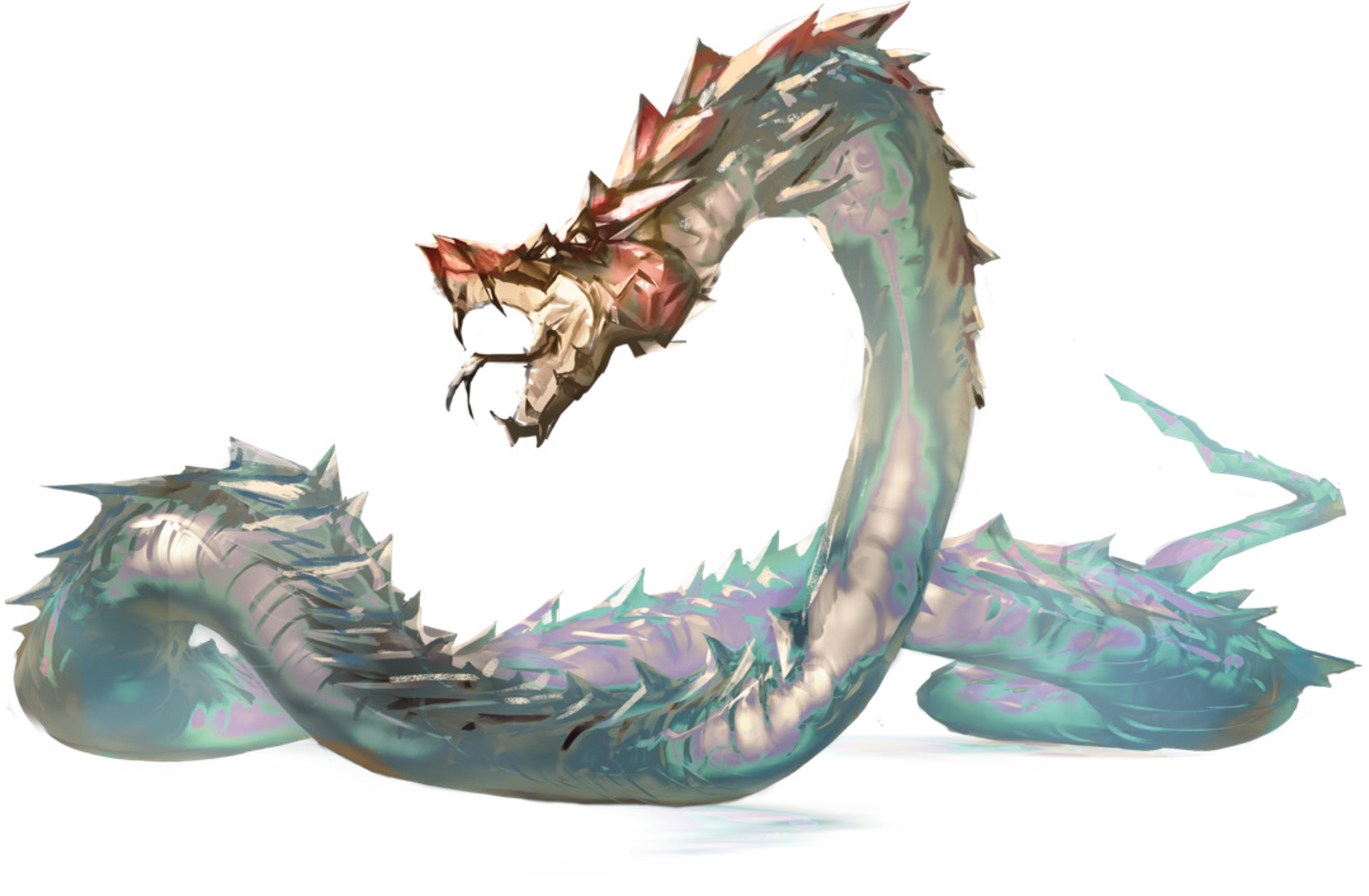
This Adversary's stat block has a few things that might confuse the casual GM. It is a Standard that primarily does ranged Area of Effect (AoE) attacks and it has a feature that can be read a few ways.
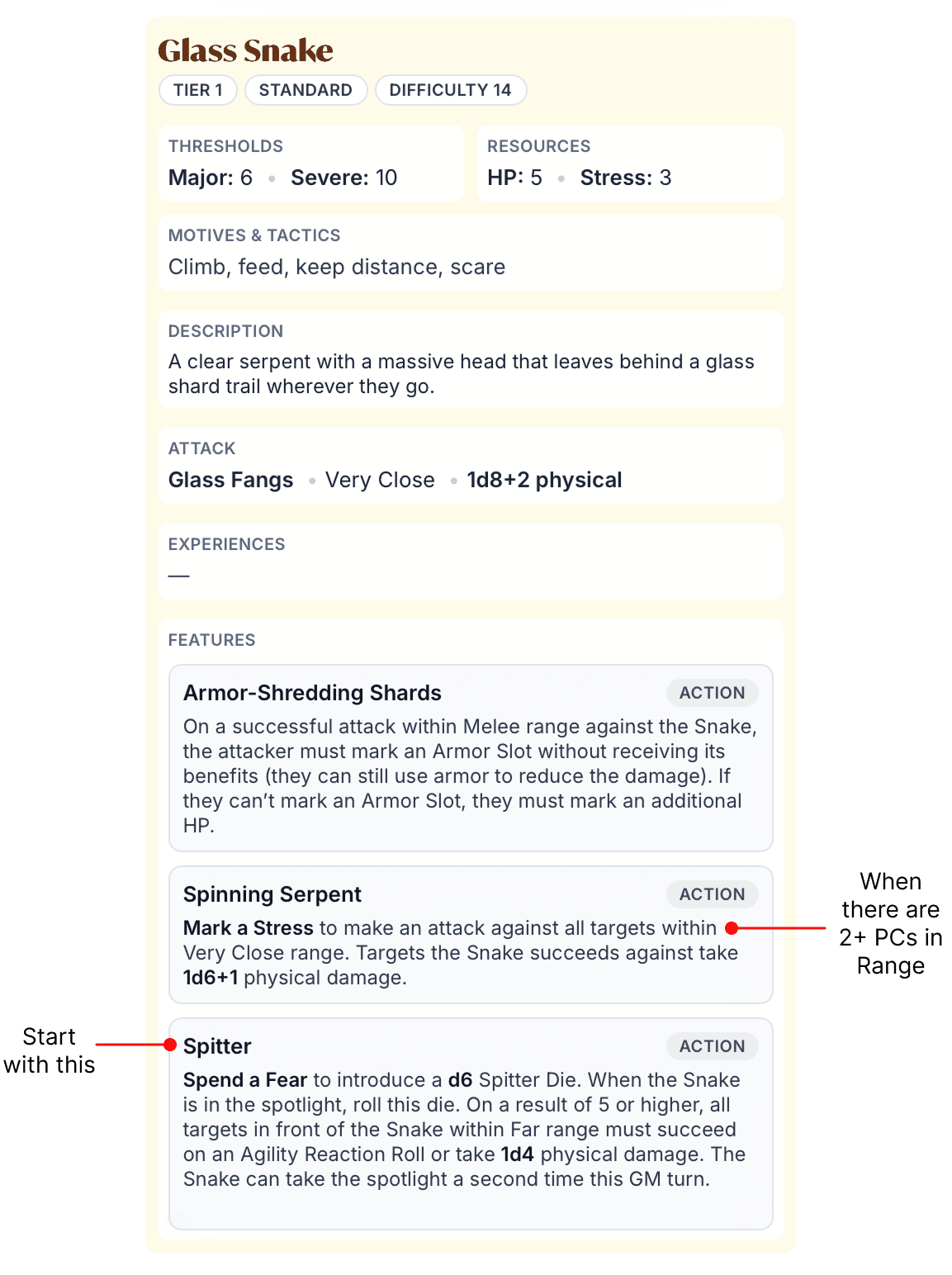
The Glass Snake can be confusing if it’s the first Standard you see in the book. Its Motives & Tactics say that it wants to “keep distance” and all its attacks are Very Close or further. So why isn’t it a Ranged Adversary or a even a Skulk? Mostly, it's because of its stats.
The stats of an Adversary are dependent on their type. Its thresholds are low, but still higher than most Ranged. Its HP is 5, which is higher than a Ranged or Skulk at this tier. Its Difficulty is 14, which is on the higher end in general for this Tier (the max being 15). Most of its attacks will do between 4-6 damage so it's lower than a Ranged but that is balanced by its two AoE features. It also fills the role of an Adversary trying to delay or distract PCs from their goal, which is a hallmark of Standards. Between its stats, tactics, and its type, we can surmise that the Glass Snake is a quick skirmisher—a glass canon, if you will.
Their only listed motivation is to FEED. Everything else in that section is how they go about it. I find it more than a little curious that they have CLIMB listed instead of SWIM as a tactic, despite the fact that the Glass Snake is called out specifically in the Raging River Environment. Perhaps you can call it a different breed of Glass Snake that it swims instead of climbs.
When we look at its features, we should start at the bottom with the SPITTER ACTION. Firstly, we should look there, because this is the Glass Snake’s opening salvo. But also because it has some very unclear language. Let's look at the last sentence to see where it might trip a GM up.
“The Snake can take the spotlight a second time this GM turn.” This, when taken as part of the whole, can mean a few things and is open to interpretation. I read it like this: The GM spends a Fear to introduce the Spitter Die and then you can, at your discretion, spotlight the Glass Snake a second time this GM turn. On that next Spotlight (and any subsequent ones), you start by rolling the d6 to see if the Spitter action goes off. I won't go into the construction of rules based on clauses or any alternative interpretations of the feature, so the rest of my assessment is based on the feature functioning like this. Disagreements surrounding the rules are a table-to-table difference, with the GM being the one responsible for interpreting those rules.
The Glass Snake takes the Spitter action while in Far range if possible. Remember that the Glass Snake is transparent (or in some cases, like stained glass), so you can describe seeing shards of glass churning at the base of its neck as it prepares to spit. If you’re using maps and minis, consider placing the d6 you’re rolling for the Spitter Die next to the token representing the Glass Snake. This will help remind you to roll the die before spotlighting it.
Once the Spitter Die is in play, the Glass Snake would move to keep all the PCs within its Far range. Because of its size, it might find that smaller PCs are more appetizing and go for them first when using its Glass Fangs. When more than one PC is in Very Close range when you spotlight it, check the Spitter Die. If it doesn’t go off, it would use its Spinning Serpent move. If it does, then it would move to a Far range on its spotlight.
When the Glass Snake is alone, it poses little threat, but imagine if it were the pet of some wild druid or mad mage. The Glass Snake also makes an excellent companion for a Giant Beastmaster at Tier 2 with its higher Difficulty. Maybe it might have once been a statue in an old wizard’s tower, brought to life along with some other reflavored animal Adversaries like a Bear and a Giant Scorpion. You might, on these sorts of occasions, borrow its Armor-Shredding Shards feature to put on these other Adversaries to make your players feel like they’re walking on broken glass!
Daggerheart Deconstructed is written by ENNIE Award-winning writer Chris Davidson, author of RightKnight's Guide to Making Custom Adversaries, one of the authors of Incredible Creatures, and Additional Writer for the Daggerheart Core Rule Book.