Transformations

On the path to Critical Role, the one constant in Rob Hebert's life was change.
Transformations
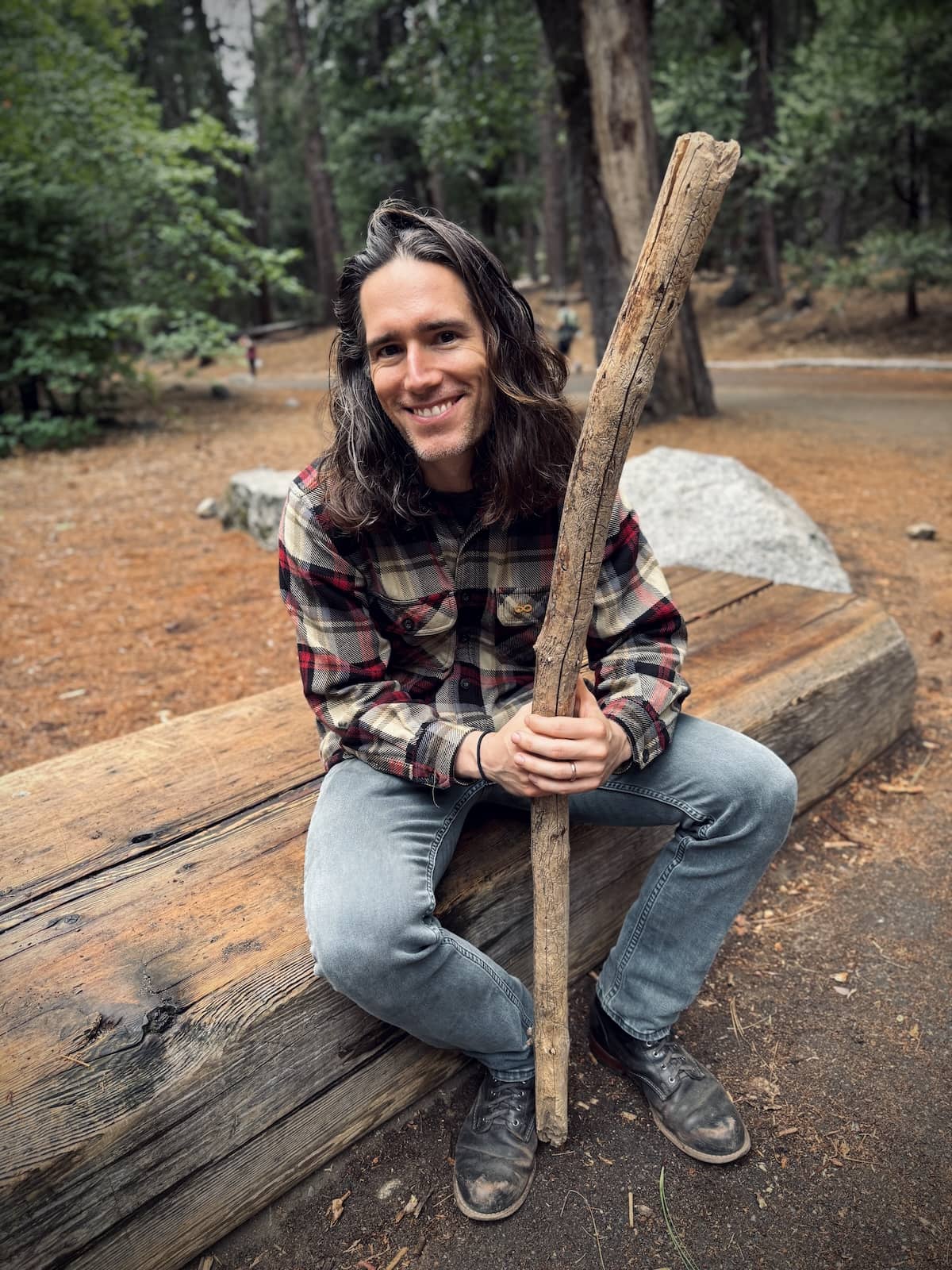
Hebert in Yosemite National Park, California.

Before Daggerheart: Hope & Fear, before helping shape the system's newest Classes and its savvy Transformation system, Rob Hebert spent years moving between worlds: law school and screenwriting, production meetings and convention halls, podcast studios and late-night homebrew sessions. Like many designers of his generation, he built a career sideways, assembling it from freelance gigs, creative risks, and a few lucky rolls of the die.

That winding road turns out to be well-suited to Daggerheart, a game obsessed with drama, emotional momentum, and transformation in all its forms. In this conversation, Hebert talks about how years spent balancing legal contracts, screenwriting, and art prepared him for the writers room inside Critical Role’s publishing arm. 

Along the way, he discusses rebuilding the game's Assassin class from scratch, why Transformations had to become its own system, and shares an exclusive glimpse from the upcoming Daggerheart: Hope & Fear release.

We reached Hebert at his home in Los Angeles. This interview has been lightly edited for length.  

Aside from asking where to find the bathrooms and how many snacks you can take from the kitchen—what was the first thing you asked when you joined the team?

To see everything from the Core Rulebook's development that ended up on the cutting room floor. I think you can learn a lot about a game or its designers' sensibilities by figuring out what didn't work (or just doesn't fit) and why. We actually reassessed some of that stuff and rebuilt it for Hope & Fear.

What were some of the things you learned?

I think the most important thing I learned was that the design always needs to come back to the player experience. There were some very elegant and interesting mechanics, from very early in Core's development, that just didn't lead to the kinds of choices and experiences Daggerheart thrives on, so they had to go. 

Anything come to mind?

On Hope & Fear, when I first started working on the Assassin class, I had some big ideas (and preconceived notions) about how we could give a player the feeling of being Ezio Auditore or Corvo Attano—and while these were mechanically balanced and used some interesting tech, they weren't delivering emotionally or experientially. As a result, we completely rebuilt the Assassin from scratch, and it became my favorite of the new classes.

I want to talk more about Daggerheart, but let’s back up. I’m fascinated by your background: writer and designer, but also a head of production and financial analyst. Tell me a bit about your journey. Were you making games back in high school? Learning Excel? What's young Rob’s origin story?

I was really into card and board games from a very early age. I vividly remember getting the Uncanny X-Men Alert board game for Christmas when I was 8 years old. It came with 18 figurines, and I would design my own (terrible) skirmish games using different dice and cards. When I was a little older, I randomly found a copy of the West End Games DC Universe Roleplaying Game at Books-a-Million, and the idea of being able to procedurally generate actual stories about superheroes using math and dice set something off in my brain. I made my first decent homebrew TTRPG (which was embarrassingly enough based on Gundam Wing) shortly after that and ran it for some internet friends for about a year—but I never really understood that "tabletop designer" was an actual full-time job, so game design remained a hobby for me throughout college and law school.

When I moved to Los Angeles for a job as a screen writer, the RPG community was a good way to make friends. I started going to local cons, and that's where I plugged into the local designer community. My first paid gig in the RPG industry was actually as an illustrator. I was playing in a game with designer Christopher Grey (Highcaster, Temples & Tombs, Great American Novel), and he saw me drawing all the PCs at the table. He offered me the artist gig on Happiest Apocalypse on Earth, and that made me realize I could make my own stuff and just... put it out there for people to play. 
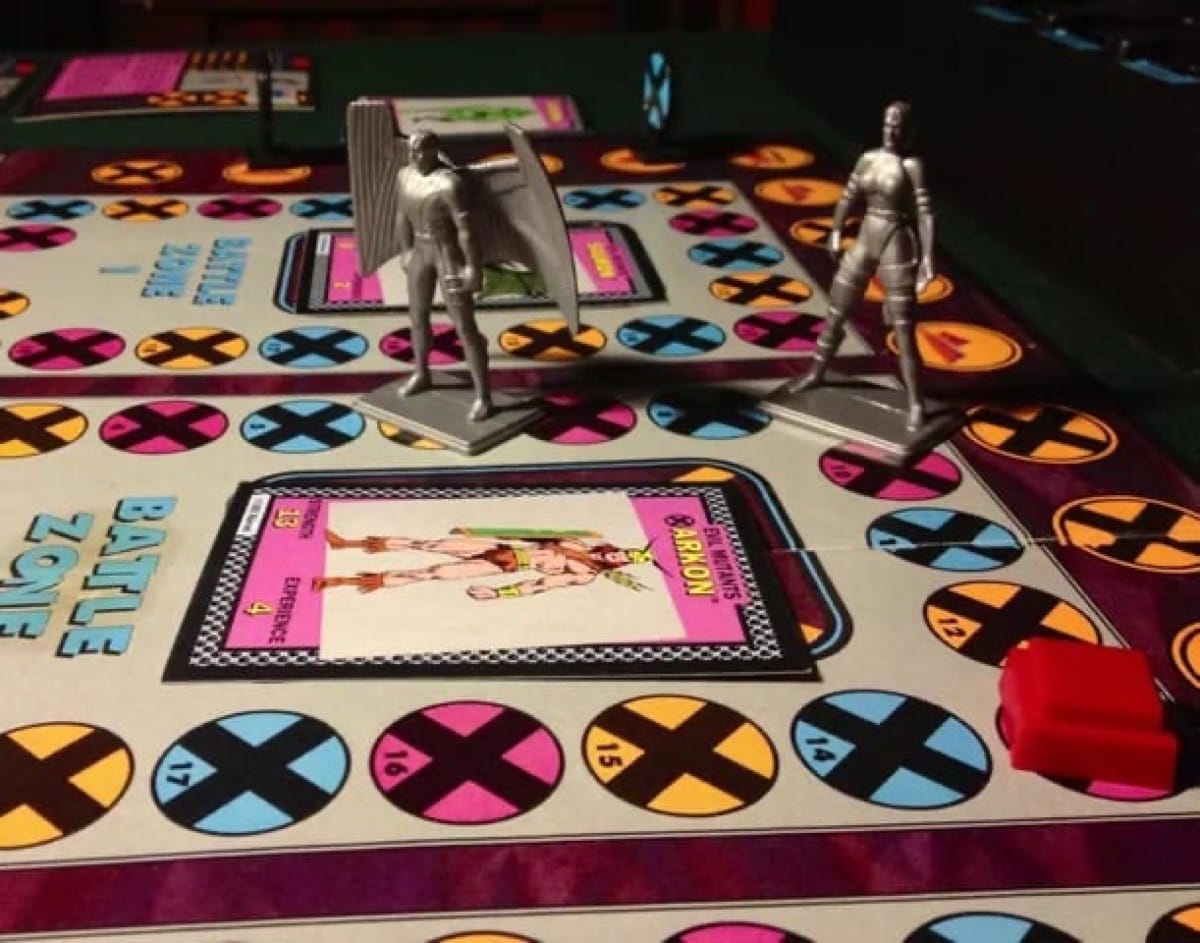
Uncanny X-Men Alert, 1992. "I still have that game in a closet at my parents' house!"

Law school…screenwriter. Did you exit uni disenchanted with law? Was it the safe foundation to allow for a bet on the arts?

Yeah, I definitely went to law school with the goal of having “safe” job prospects—and if you squint, you can see why contracts, regulations, and policy papers would appeal to a game designer. But then I graduated into a really poor labor market for law grads, and it didn't feel especially safe anymore. 

I had continued to write all throughout law school, and I sold a script through a screenwriting contest soon after graduating. It wasn't a lot of money, but it gave me a lot more confidence in myself as a creative. So I decided that, if I passed the California bar, I would move out here, get an entry level legal position, and keep creating stuff in my off hours. I did that for a few years: sold some scripts that never went anywhere, did some paid rewrites, all the standard "baby writer" stuff.
During that time, I did a lot of things, including starting a company called Terrible People LLC with my friend Jack—essentially so we could run a Kickstarter campaign for a party game we created called A Terrible Time. That Kickstarter campaign wasn't exactly a smash success, but it limped across the finish line and became my first published game. I learned a ton about game design, crowdfunding, and manufacturing—plus, it justified going to conventions outside the L.A. area, where I met lots of other designers, manufacturers, and games industry professionals. Jack and I continued to run events (think corporate retreats and that sort of thing) under the Terrible People flag for a few years, though it never progressed past side gig status.

This all, uh... sounds pretty chaotic! But I think the bottom line is that I've always spread my attention and effort across different projects, because you just never know which ones will turn into anything. I spent a lot of my 20s and 30s just saying "yes" to everything, for better or worse, and the skills I developed or connections I made often took years to come back around. I've drawn comics, written screenplays, published games, and produced comedy podcasts—all while writing contracts, tutoring people for the LSAT, working at a fancy wine shop, and doing a hundred other random things. Now that I think about it, that's actually a pretty common story for creative industry folks, especially in Los Angeles.

Terrible Time Party Game, 2013.

You get hired to do art on Happiest Apocalypse. What’s the journey from there to Darrington?

Happiest Apocalypse drops in Q1 2018 and gets nominated for a few ENnies, so again it's like "Hey, maybe I'm good at this!" 

I also learn that good art is something a lot of indie designers really want and need, because it acts as a signal of professionalism and polish to prospective gamers. At this point, indie games (especially PbtA or PbtA-adjacent projects) are having a real moment, along with the rise of online RPG communities, crowdfunding, digital distribution, and the zine culture resurgence. The entire landscape of ttrpg publishing is just completely transformed by the late teens, and that leads to a huge uptick in solo designers or small teams getting to experiment and publish on really small budgets.

Throughout this period I'm just marinating in the indie ttrpg space, reading and running whatever I can get my hands on and attending smaller, more RPG-focused cons, such as Big Bad and Gamex. I get really into Games on Demand at this point—and through that, started engaging with the LA gamers meetups and online cons.

This is also when I start publishing my own games through itch.io as Nerdy Paper Games. Because I do all the design, art, and layout myself, publishing on itch is essentially free for me, so I make all my games PWYW. That gets them in more people's hands, and that in turn acts like a business card for my art. So during this time, I'm designing my own games, playtesting them at cons or in my home game, and getting paid art gigs from other indie designers or small press publishers. At this point, I'm working full-time for a small podcast company in production and business development, spending my off-hours making and playing games, and using my meager art income to pay for my indie rpg hobby.

During this time, I'm also part of numerous online communities, including a California-based design collective called F58. This was a regular salon-style online meetup for designers, and I'm pretty sure this is when I first met Spenser. This was before Spenser was well-known beyond indie game sickos like me. But we both worked in production, had a lot of the same sensibilities, and wanted to make similar games, so we hit it off quickly and would regularly playtest each other's designs back when it was really, really hard to get anybody to play our games. I played a super-early version of Alice Is Missing back in 2019, and then Alice became a big hit. Spenser, of course, became a full-time game designer at that point, but we would still regularly meet up and play each other's games. [Correction! Spenser and I met up through a mutual friend who runs the local board game meetup, and only started the F58 salons afterward.]

In 2020, the pandemic hit and made everything weird, including tabletop gaming. Obviously, face-to-face conventions were canceled, and everyone played mostly online. But the pandemic also led to a huge growth spurt for podcasting, the industry I was still actually working in. So for most of 2020 and 2021, I was focused on that, although I was still designing games and running them online.

Then in late 2021, Spenser hit me up to ask if I was available for a paid playtest GM gig on a new game that he was developing for Darrington Press. I said yes, and Spenser ran the very earliest iteration of what would become Daggerheart for Ivan Van Norman and myself—making Ivan and myself the very first people to play Daggerheart. After that, I did a couple of mini-campaigns with NDA'd players, which made me the first person besides Spenser to run Daggerheart.

The game was very, very different in that early iteration, but the bones were absolutely there. After each session or arc, I would write up my notes and we'd discuss them together. Spenser was great about listening to my feedback and implementing really good changes to the system.

You'd have to confirm with Spenser, but I believe Daggerheart dev got put on temporary hold in 2022 so Spenser could work on Candela Obscura (which I believe is when Rowan Hall comes fully into the picture as a dev). Candela drops in Q2 2023, and Spenser and Rowan jump back into Daggerheart. At this point, my wife and I are about to have a baby, so I'm unavailable for the rest of 2023 and about half of 2024.

Towards the end of 2024, Darrington is in the second round of open beta. In a moment of serendipity, I'm cleaning out my home office and I find a box containing all the cards from the very first Daggerheart playtest that I ran. I text Spenser to say, "you know, these belong in a museum..." and he comes over to my house to pick them up. 

It had been a while since we'd had a chance to really catch up, and I think we talked for like 3 hours on my porch. He asked if I was available to do more work on Daggerheart, and I said absolutely. I had been downsized in May 2024 when the company I worked for closed their LA studio, and was doing contract work to pay the bills, so I jumped at the chance to work on something fun and creatively fulfilling.

Playtest material, 2024.

Fast forward to January 2025, and Spenser reaches out to ask if I'd be interested in writing the Daggerheart SRD. It made sense, because it had to align with the CGL, so my legal background in licensing and IP was helpful—plus I'd been around for Daggerheart's entire dev cycle.

After I wrote the SRD, Darrington re-upped my contract to come in and do some dev work in the leadup to Daggerheart's true launch. They must have liked what I did, because they kept renewing my freelance contract up through the beginning of 2026.

When Darrington posted a job listing for an in-house designer, I had to apply and interview like everyone else, although I obviously had the benefit of having worked with the team for a year. And now I'm a full-time designer for Critical Role, which just blows my mind every single day.

Game designers who are quants is something I see regularly. But less regular is someone who loves nested logic AND is a talented artist. Looking at your artwork got me wondering where your games and campaigns start. Is it the scenario? Or a sketch? Is something you want others to feel hibernating inside an illustration, or are you ever the screenwriter/analyst thinking of structure and purpose? Or are you bouncing between all of it all the time?

I'm almost always "structure first" in my designs. I'm a forever GM, so my primary frame of reference when I critique a game (even my own) is "how easy would this be to run at the table?" And I tend to think that, at the table, it's easier to improvise cool things on top of a solid structure than it is to take cool things that have been created in advance and put them into a structure. 

That's probably partly due to how my brain is wired: I find it easy to hyper-focus on (or create) details, so I might just need more of that external support for the super-structure of a session or a campaign. A good illustration of that is Space Bounty Blues, which has dead simple character creation and core resolution systems so it can spend its entire complexity budget on teaching people how a jazz session is structured.

And my GM style is definitely "GM-as-showrunner." Sometimes I'm directing a scene and calling out camera angles, and sometimes I feel like I'm in a writers' room and all the players are pitching ideas for the coolest thing that could happen next. It's all very zoomed out and "above the table." So I think structure is probably the most determinative aspect of play in my sessions.

That being said, sometimes I do start with a specific image or idea that I just can't shake, and then I try to figure out what its container has to be. With Escape from Demon Castle Dracula, I started with the concept of procedurally generating a dungeon with a deck of cards, and the mechanics grew out of that.

It's not intentionally Iggy Pop, but it's impossible to overstate how influential the Crow franchise (film and comic) was on my teenage brain—and not only was James O'Barr's Eric Draven heavily influenced by Iggy visually, the man played Curve in City of Angels! So I wouldn't be surprised if that was a subconscious pull.

As you’ve grown in your career, I’m curious if you’re aware of a Rob Hebert voice or aesthetic. Looking at your games, I see someone who’s smart, nimble, and a bit whimsical. What do you see? And now that you’re in a writer’s room, what’s an Hebert pitch? What is Spenser or Jeremy going to get when the floor is yours?

That's very kind of you to say. I do think my work has a consistent voice, which I’ve grown into more deliberately over time.

At a high level, my games try to be fast to onboard, structurally clear, and built for momentum. I’m usually designing for experiences that are “here for a good time, not a long time,” but still deliver a complete emotional arc. I want players to feel like they went somewhere—that they got a hook, a pivot, and a payoff, even in a short session.

A big part of that is the moments I’m chasing. I love unexpected turns and big hero beats, but I try to build systems that naturally lead players there in a way that feels earned. When it works, the mechanics kind of disappear and the group feels like they’re watching something unfold together.

Tonally, I’d describe my work as emotionally sincere but lighthearted. I don’t try to force meaning or depth. If something serious or emotional happens, it’s because the players brought it there—and ideally the system supported it without getting in the way.

From a design philosophy standpoint, my non-negotiables are clarity, simplicity, and resilience. I care a lot about whether something can be understood and used immediately at the table. I’ll cut something clever if it risks confusion or slows the game down. To me, the written text is the delivery system—if a rule doesn’t communicate cleanly on the page, it’s probably not done yet.

Scenes from a life: a super secret HQ whiteboard, a super scary laptop.

A simple example is my work on Hope & Fear. When designing adversaries, I recognized that a stat block doesn’t need to capture everything an enemy can do, or else it becomes long and unwieldy. So I just focused on the one or two things about the adversary that were most unique or iconic, and I stripped away anything that didn’t serve that purpose. What’s left is something very focused, easy to run, and hopefully a little expressive—I like sneaking in touches of personality in the descriptions, motives & tactics, or experiences, just to give the GM something to latch onto.

In a writer’s room, that usually translates into me being a person who distills disparate ideas into a clean, usable pitch. I like taking a lot of input and finding the simplest version that still delivers the intended experience. I’m not trying to reinvent systems, I’m trying to make something that fits the tools we already have and actually plays well at the table. It doesn’t come instantly though; for most meetings, I’m taking notes the whole time. And then I go into my bubble and see which ideas “write out.” Then I come back with a relatively lean and polished pitch in some sort of written document, and hope that the pitch sells itself on the page.

So if I had to describe my designer “style,” I think it’s something clean, intentional, and immediately playable—focused on delivering a strong player experience without friction.

Curious if there are any favourite touches from H&F.

I'm particularly proud of the Fowlbear (a grizzly bear with a goose head) and its "Dread Honk" ability, a Tier 2 "dungeon crawl in a box" environment, and the hex map generation and hex crawl rules from one of the campaign frames. I also got to sneak a few Children of Bodom and Disney Renaissance deep cut references into the final manuscript.

Has the H&F process been for you more like jazz—one player riffing with several others, let’s take this where it goes—or like classical music, where you’re orchestrating everyone into a whole?

It's most like being in a writers room. Spenser is essentially the showrunner of Daggerheart, and he would assign different tasks to me, Rowan, or himself like they were episodes in a season of tv. But in a writers room, you're also figuring out the season structure or breaking stories as a group, and you can go to the other writers if you need help with a particularly tricky bit. H&F worked in a very similar manner. We'd discuss what needed to be done as a group, then Spenser would assign tasks. We'd each go ideate on our own, or spitball in really informal meetings, then write up our pitches and share lots of stuff all at once. Then each of us would get feedback from the others on what we'd created. We could also lean on one another to talk things out or tackle a particularly tricky concept together. So it was a cycle of solo work, review, revision, and all-team collaboration. 

Let’s talk for a bit about Transformations.

Rowan deserves the lion's share of the credit for Transformations—both the initial concept and how great they turned out in the end—but I can certainly talk about part of the team's process for developing them. 

We all knew early on that Transformations wouldn't be a class or subclass, because those are basically your job or occupation. They're what you DO, not what you ARE. And we didn't want Transformations occupying the same lane as Domains, because those are more like fundamental forces, energies, or aspects of the universe. It felt too big, conceptually and mechanically, for something like "you're a ghost now" to compete with something like Midnight or Splendor.

We experimented with some Community-adjacent designs for Transformations, but it never felt right. On a conceptual level, becoming a vampire or a werewolf doesn't change where you grew up. And it seemed like, if gaining a Transformation fundamentally altered your nature and how you interacted with the world, it needed to have a beefier mechanical effect than what communities generally offer.

Ancestries, on the other hand, are primarily physiological (and sometimes magical) in nature, and they have an ever-present effect on how you live in the world, so making Transformations "Ancestry-adjacent" made sense. But it couldn't replace your ancestry, because we wanted to make it clear you could be a clank vampire, or a fungril vampire, or a mixed-ancestry vampire. We concluded that it had to "feel" like an ancestry, but it couldn't replace them. We also realized that, if this was going to be an entirely new dimension to a character, it couldn't be overly complex. So the challenge was "how do you boil down being an [insert Halloween monster here] into a single card? How do we make it powerful without breaking the balance?

Spreads from the upcoming Daggerheart: Hope & Fear expansion book, 2026.

The thing that made it click was coupling a beefy signature advantage with a hefty price tag. So we had to ask ourselves "what is THE most integral aspect of this creature?" For vampires, it was the hunger / feeding cycle. For werewolves it was giving in to that atavistic, uncontrollable aspect of yourself. And so on with the others.

One tough line to walk was how much lore we wanted to incorporate into the Transformations. Daggerheart is intentionally very, very light on worldbuilding, but lore is a huge part of these sorts of mythological creatures. There are so many different versions of vampires or demigods throughout different cultures and pieces of media; which ones does Daggeheart have? Can Daggerheart accommodate all of them? If not, which ones aren't "Daggerheart" enough? What does the existence of ghosts say about the Mortal Realm in Daggerheart's cosmology? These were the sorts of questions we really had to grapple with as we determined what was "integral" about each Transformation's player fantasy. We had very long discussions (and even a few arguments) about whether vampires needed to have fangs, whether werewolves had to have any association with the moon, whether there's a difference between a ghost and a specter, whether you can become a demigod or are just "born that way," and a million other things. But I'm really proud of how we eventually threaded those needles.

And these weren't always "Transformations"! We went through literally dozens of names, but none of them worked. There was actually a time when we just referred to them all internally as "vampire cards" because the vampire was the first one we got into a playtestable state.

Transformations are done. Hope & Fear is mostly behind you. You’re working on new things now, as you will be next year and the one after that. How do you think about adding to the system while also trying to preserve its “lean” philosophy? 

One phrase that gets thrown around the office a lot is "simplify to win." When we make something new, we first look at the tools we already have in the core rulebook to see if any of them can do the job, because every time you add a new mechanic (and not merely a new implementation of an established mechanic) you're going to lose some people. Every extra line of text has the potential to be someone's limit where they say "nah, I'm not reading all that."

We also have a lot of space restrictions we have to abide by. Some are obvious: there's only so much room on a card or a sheet of paper, in your hand, or on the table. Some are less obvious or even self-imposed: we won't let a stat block break across columns, or add more Experiences than what's already on the character sheet. We have internal documentation listing out a lot of these things, and we're always adding to it. But ultimately, it comes down to playtesting. When playtesters express confusion or use a new mechanic incorrectly, we know we need to strip away the excess.

Lightning round.

Sounds fun!

HB pencil, Wacom tablet, or sable brush?

HB pencil, unless a Blackwing 602 is available. 

Whereas, notwithstanding, or hereinafter?

Whereas.

Sennheiser MKH 416 or Røde NT1?

Sennheiser.

Shapeshifting Katari or Ribbet demigod?

Ribbet, always.

Lunch with Marisha or dinner with Matt?

Dinner with Matt, because I can have a Negroni and not feel bad about it.

Shag, marry, kill: Vampire, Werewolf, Ghost.

Shag vampire, marry ghost, kill werewolf (too unpredictable).

Re-animated corpse or microwave dinner?

Kill the reanimated, marry the corpse, shag the microwave dinner.

Thank you sir.

Thank you so much, this has been great.