Vol 36: Thanks and...
A tour down memory lane, and a parting note.
PROLOGUE
👋 Henry here. As we inch towards the end of the year, I’m taking the advice of Hosidax and have assembled a Daggerheart + Dispatch retrospective. What did happen in the last 18 months?
For this Volume, I’ve selected my favourite entries from each department since Volume One and added personal notes along the way. Hopefully, in the span of a few thousand pixels, it conjures up the spirit of the people and ideas that have made this such a remarkable and fascinating community.
Stick around for the Epilogue, too. Some news.
SPOTLIGHT

The Spotlight has featured dozens of amazing people, but possibly none so amazing as Madame Rezendes. Darrington was always going to have a hit on their hands with Daggerheart, but the efficiency with which it spread, and the emotional undercurrent that supports it, belongs to Elise. Startups are peculiar creatures. Their chaotic energy often produces cultures that are either detached but methodical or buoyant but ineffective. Impossibly, Elise and her team managed to broker a middle ground between those extremes, wrangling Hollywood egos and marketplace absurdities into a series of coordinated launches and support that captivated the TTRPG community and gave Daggerheart a running start in a crowded race. As we noted in Vol 17, it’s clear Elise is smart and tough, but her interview with Todd Kenreck reveals the sincerity, humanity, and empathy with which she serves the community. May we all Ishmael our white whales.
NEWS & RELEASES
DARRINGTON
Vol. 2 · Camera Ready
Daggerheart lead designers Spenser Starke and Rowan Hall spent an hour with the lads from Total Party Skill, dishing on the game, homebrewing tantalizing spells and weapons, and generally carrying on as the affable chaos goblins we’ve come to expect. What I didn’t expect was to hear about the failed RPG that led to Daggerheart, and how the game’s inspiration is a movie camera. [This was the first time I heard R&S talk about the game. What smarties.] Vol 2
Vol. 6 · An Affair to Remember
GenCon is over, but not the vibes. Enjoy some Darrington BTS featuring the CR crew, and a photo dump from Rowan Hall. [They're all just blokes doing their best to make something great. It really is that simple.] Vol. 6
Vol. 7 · Heartbroken
Yes, they’re going with D&D. No, they’re not abandoning Daggerheart. In fact, Mercer is now free to DM several DH campaigns and show off the system’s versatility, rather than anchor it to one multi-year slog. [It felt stupid to remind people of this, but my God, there are stupid people out there.] Vol. 7
Vol. 12 · All in the Family
The AMA—ostensibly about the Kickstarter—turned into a 90-minute visit with the Darrington team. Game designers Spenser Starke and Rowan Hall and producers Rezendes and Brooke Eyler were joined by Matt Mercer and Travis Willingham in an always festive, sometimes chaotic conversation that touched on new products, game design and philosophy, play styles, and cheese. More specifically, the Cheese Maker domain—coming soon to a hot dog near you. [I can no longer eat dairy, which makes me want a Cheese domain that much more.] Vol. 12
Vol. 20 · GM²
Variety, the 120-year old Hollywood tabloid that documented the most influential industry in the world, saw fit to host a conversation between two people famous for being GMs solely because they’re GMs. Wild. And overdue. [Matt and Brennan are just as gobsmacked to be there as we are to be watching them.] Vol. 20
Vol. 30 · The Shining
The ENNIES—the Oscars of the TTRPG community—nominated Daggerheart for Product of the Year, Best Game, Best Rules, Best Free Game (Sablewood Messengers), and Best Streaming Content (Get Your Sheet Together). Voting is now open to the public. [ENNIE winners are decided by popular vote, so it was a foregone conclusion that the Critter community would get the gold for their besties. But the initial noms are made by peers. Whatever flaws you feel Daggerheart has, the TTRPG brain trust considered them and still felt this Burbankian invention was both intriguing and worthwhile.] Vol. 30
COMMUNITY
Vol. 5 · Foundry Forged
The Foundryborne team released an impressive v1.0 of Daggerheart for Foundry VTT last night. Features include the Hope/Fear dice system, an inline SRD compendium, custom character sheets, countdowns, Fear trac… err, why are you still reading this? Get the package! Your players are waiting. [The Foundryborne journey was not to Mordor, Moria, or even Rivendell. But it was certainly through the Dark Forest where, for a time, it looked like the branches were going to squeeze the life out of these weary adventurers. But, after breakfast (then second breakfast, and possibly elevenses) they finally arrived.] Vol. 5
Vol. 8 · Split Personality
Bonus Reaction is splitting his 65k sub YouTube channel in two: the original D&D channel and a new channel devoted entirely to Daggerheart. Go subscribe. [Props to Phil, who stuck with his channel and grew it into one of the more popular and reputable Daggerheart outlets—unlike the grifters and gadflies.] Vol. 8
Vol. 20 · Final Girls
Olympic Medalist Laurie Hernandez joins Gina Susanna and Gnome Anne for the sensational one-shot “How’s My Driving?” (pictured up top), a Daggerheart hack of DNGN CLUB’s roadside horror game and billed as “a bonding trip to see the Red Hot Chili Peppers quickly devolves into a Thelma & Louise slasher nightmare.” [The second I finished the livestream I wrote, "How’s My Driving is to Daggerheart APs what Paranormal Activity was to Blumhouse: a signal of something transformative in the genre." Cameron, Gina, and Jack genuinely advanced the state of the AP art, and I can't wait to watch HMD when Zach Cregger eventually turns it into a film.] Vol. 20
Vol. 21 · Tools of the Dark Trade
Having just released adventure module Blind Faith, Adversary designer Chris Davidson is back with The Gothic Horror Toolkit, a book with dozens of Adversaries, Environments, encounters, and equipment inspired by Ravenloft, Castlevania, and Vampire Hunter. Adventurer—may the night break before you do. [It was shortly after Chris published GHT that I pitched him Daggerheart Deconstructed and made a friend and a partner. I'm grateful to the community for connecting us, to Spenser for including his ideas in the CRB, and to our wives for putting up with the long hours we invest in the hobby.] Vol. 21
Vol. 23 · Commission Impossible
If you didn’t think they were in it to win it, Heart of Daggers is going as far as to commission 150 character portraits for all Daggerheart classes and subclasses displayed on the platform. This is on top of their original 2,000+ icons and images for the Homebrew Vault. WTF is in the lager down under? [Weirdly, we never had Matt in the Spotlight, despite HoD appearing in our pages more than any other tool and the community placing it at the top of the 2026 Daggerheart survey. But kudos to him. On a shoestring budget, he and the team have turned the platform into a powerhouse and a shining example of the talent that Darrington attracts.] Vol. 23
Vol. 26 · Animator Accolade
Rob Jon, the Aardman of Advice, hit 5k followers on YouTube. That’s a big number for a dedicated Daggerheart channel, but unsurprising given Rob’s exquisite craft and humble demeanour. Kudos, sir. [Rob is an astounding get for any TTRPG system. His beautiful videos are as educational as they are entertaining and have helped Daggerheart GMs and players learn the system faster than any actual play, con, or LGS event. It's been a joy to watch RJL grow into the preeminent Daggertube channel.] Vol. 26
Vol. 26 · We Be Three
The sub is three! Here’s Lord & Saviour, Hosidax, reflecting on r/daggerheart:
“It's been so amazing to see how Daggerheart has changed the way people are approaching role playing games. Everyday we get questions from people new to the game and new to TTRPGs (we call them "Tadpoles"). It's apparent from those questions how this game has expanded the way people play and how they think about RPGs.” [It's Nov 26 as I write this, aka American Thanksgiving. An hour ago, well into the time you'd be basting a turkey and stressing the fuck out over the guest seating chart, Elise took the time to thank Hosidax and their motley crew of moderators for the (often) thankless hours they put into curating one of the best TTRPG subs on the planet. That she risked charring her bird tells you how earnest and well-deserved the compliment is.] Vol. 26
VIBE CHECK

🎯 GM TIPS
Vol. 8 · The Benefits of Guilds
In response to the question “What have you removed or replaced in the core rules?”, u/ModulusG added this intriguing hack: “Guilds and Renown. I want rewards for exploring and investigating, and a reward that wasn’t monetary. Guilds have different actions that grant them Renown, and each community is associated with a Guild (players can choose one or make their own). As you gain levels of Renown in the Guild you gain additional downtime actions in a city. [Like all good drama, ModulusG's advice feels surprising yet inevitable once you consider how much it enriches the lives of your characters, especially those involved in urban adventures.] Vol. 8
Vol. 11 · How to Use Travel Environments
The CRB gives you environments as set-pieces, but Mike Underwood highlights how they can also frame travel. He suggests thinking in two modes: generic environments that are skeletal and reusable (like “Haunted Woods”), and specific environments that are richly detailed for a single scene (like “Burning Heart of the Woods”).
For long journeys, that distinction matters. A generic traversal environment gives you a flexible countdown with a few hazards—bad weather, resource drain, opportunistic foes—so travel feels tense without over-prep. A specific traversal environment adds evocative details (mirages, oases, punishing heat) that make the journey itself memorable and unique. Either way, the goal is the same: keep travel from becoming a string of repeated rolls, and make the road feel like it costs something before the destination. [Mike always has good advice.] Vol. 11
Vol. 16 · GM Exploration Moves
“Mister Rogers explains Daggerheart” (aka Rob Jon’s Lair) is back with another tutorial, this time exploring GM moves for Exploration. Excellent, as always. [Show, don't tell.] Vol. 16
Vol. 13 · Making Scenes Matter
While everyone’s talking about the death of Thjazi Fang, I’d like to talk about the death of Logan Roy, the brutal Roy family patriarch in Succession. Or rather, I’d like to point you to director Mark Mylod’s scene breakdown of the event. Go watch it now and come back after.
What struck me about Mylod’s choices is how they sound like ones a GM might make when structuring a social encounter, environmental trigger, or story climax. First, there is the use of irony to create surprise: the death of Logan Roy happens at a wedding. Then, the use of irony to be cruel but poignant: his death is a thousand miles away, on an airplane, far from his children, robbing them of any possible closure in their complicated relationships. Next, there is the creative decision not to tell the actors about the death. They expect to be filming a wedding, only to be handed a cell phone and hear the terrible news.
From there, Mylod unpacks several technical choices that GMs should consider when “blocking” scenes—among them, how he places NPCs in key locations to cluster his actors and intensify the drama, then breaks them apart to show them alone and forlorn. He has the cameras chase the actors, not the actors perform to camera. He cuts in and out of scenes just a little late or too soon, keeping us one step behind and at a breathless pace.
While technical, all his choices reinforce the tone of the series (“an ecstasy of nihilism,” as the showrunner once quipped)—a note for us as we consider how we want people to feel at the end of a scene, session, or campaign.
Finally, he recognizes that his role is to take pleasure in agonizing and breaking his characters. It sounds counterintuitive—we’re all here to play, right? But only through struggle do we experience catharsis, which is the whole point of dramatic role play. [This was a long entry in the original edition and takes up an outrageous amount of space in this retrospective. But I stand by it: being a good GM is being a good director—and there are few better directors to learn from than Mylod.] Vol. 13
Vol. 15 · How to GM a LotR Battle
Can Peter Jackson teach you to be a better Daggerheart GM? Derik Malenda thinks so. The Knights of Last Call streamer uses Jackson’s Lord of the Rings—specifically the Amon Hen fight, where Aragorn defends Frodo at the Seat of Seeing against the Orc horde—to illustrate GM moves that, while mechanically correct, also serve the story and heighten the player characters’ drama. I expected to watch only a couple of minutes of this stream but found myself nodding, taking notes, and genuinely enjoying his improvised tutorial. Malenda uses the scene to pinpoint the mix of rules, timing, and theatrics that can sharpen a GM’s instincts and, ultimately, enrich the table. Highly recommended for GMs at any experience level. [Malenda's use of LotR is genuinely useful. I wish all fantasy films had a TTRPG talk track.] Vol. 15
Vol. 18 · Medieval Combat
The YouTube algorithm decided it was time to introduce me to Dequitem, a non-choreographed fighter whose spare, un-scored videos are a window into the realities of medieval combat. Take a look at this scenario where four peasants wind up on the wrong side of a local knight. The power, momentum, and unassailability of an armoured combatant is as shocking as the fight is brief, erratic, and lethal. (There’s a rapier duel with men in pantaloons and blouses if you’re looking for something more swashbuck-ly.)
Dequitem’s catalog demonstrates dozens of different fighting styles, weapon choices, and strategies that can inform how you characterize an encounter, and offer insights to your players as they circle each other in combat. While we’re all here to play medieval superheroes, sometimes our fate hangs on the mechanics of two soup cans fighting in the shadow of a castle. [There's a magical frog on the cover of the CRB and one of the most requested subclasses is a blood hunter. Realism is not top of mind for most Daggerheart tables—but for those where it is, Dequitem is required viewing.] Vol. 18
Vol. 23 · How to Pace Your Games
Whether you’re playing Daggerheart or watching Die Hard, the invisible hand that keeps your attention is pacing. Pacing isn’t necessarily just “speed things up” (although dude—no one cares about all that lore), it’s about not wasting time and cutting to the things that matter. That’s the core message of Val’s video, and she offers a few important tips about when to know it’s time to change scenes and how to change them. Plus, knives and dolls. [I wrote elsewhere that one of the small joys of this beat is watching young filmmakers come into their own. Val is at the top of the list: an oddball teacher who has grown into a screwball savant at the forefront of her hobby.] Vol. 23
Vol. 30 · Class-Specific Death Moves
"What if your character had a Class-specific Death Move?" is a question to which "absolutely!" and "of course!" are the only reasonable responses. Rob Jon has several suggestions—from a Rogue who disappears until the GM re-introduces them for a final, pivotal moment later in the campaign, to a Druid who transforms into an animal that disappears into the wilderness forever—but this is a flexible concept that can be easily customized to your PCs/campaign. [This video wasn't as buzzy as most of Rob's, possibly because not enough characters are dying in Daggerheart. Wait until Jack builds an OSR skin for the game and folks start dropping like flies. Then you'll appreciate the genius of this idea.] Vol. 30
🍺 HOMEBREW
Vol. 17 · Jolene, Eldritch Horror
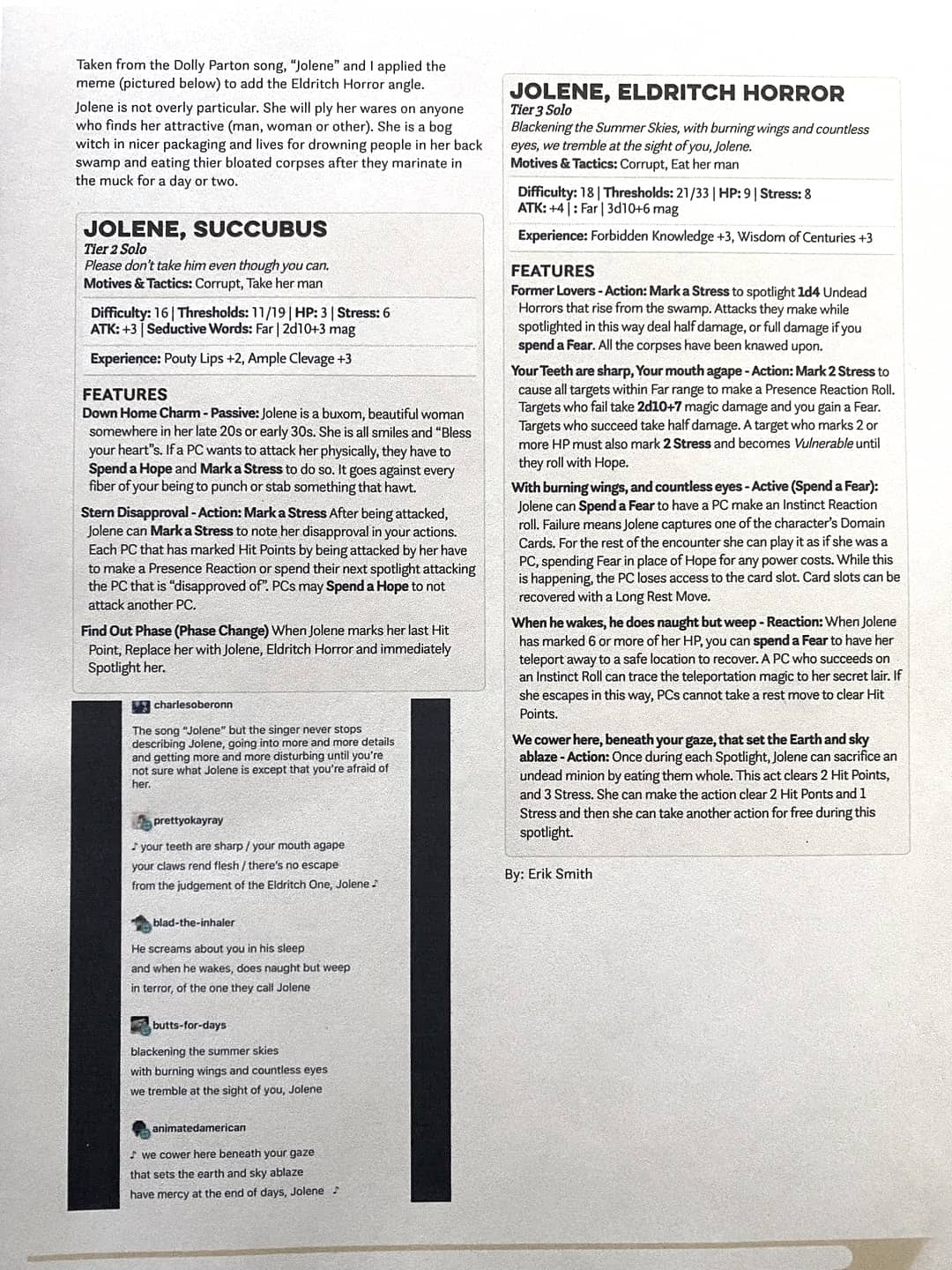
Blackening the summer skies with burning wings and countless eyes comes Jolene, Eldritch Horror. Dolly Parton may not have imagined her antagonist as a bog witch, but thanks to Tumblr and Erik Smith, we have a transformational Adversary, appearing first as a buxom woman aiming to steal your man, then mutating into a Tier 3 Solo who rips and rends before drowning you in a swamp and eating your bloated corpse.
Thumbing through Parton’s discography, all those sing-song yarns now seem sinister and to hide atrocities. “I Am Always Waiting," “Bubbling Over," “I’ll Never Forget.”? Even the perky “9 to 5” makes me wonder if she was just singing about chopping trolls in half. [RIP Dolly.] Vol. 17
Vol. 26 · Fey Cocaine
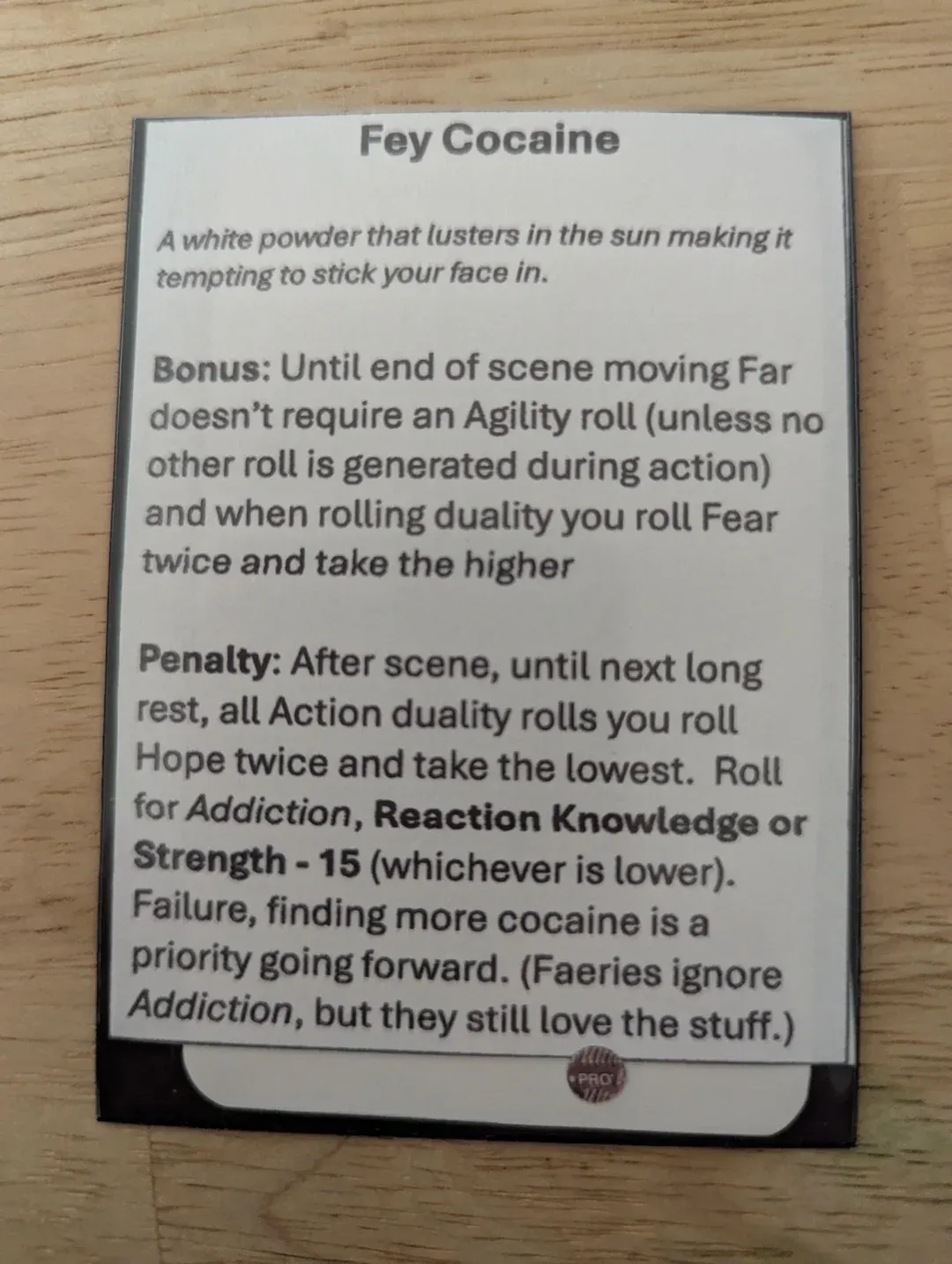
PrudentBat writes: "My party's Faery Druid decided while everyone was taking a long rest that she would wander into the swamp with the Galapa Guardian as a coconspirator to find cocaine. I was like "What?!?" and this now where my 'yes and' has led to. Does anyone else have this kind of stuff going on in their campaigns?"
The only thing better than imagining Faery and Galapa trying to score coke in the bog is Sinisterly coining the term "Feyntanyl." [What's Hollywood come to when faerie coke doesn't make it into the CRB?] Vol. 26
Vol. 30 · Randall the Vandal
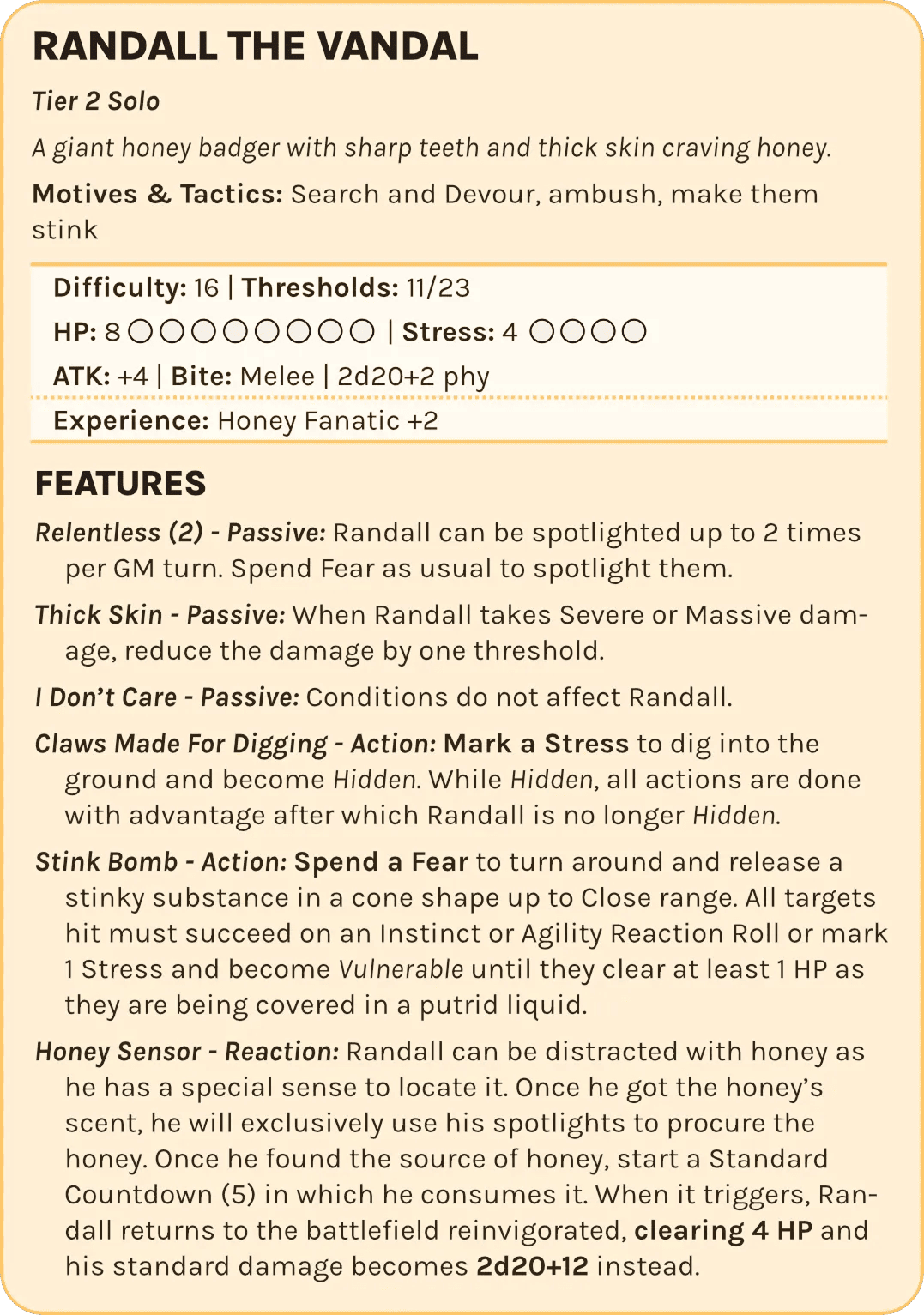
Watch the video to fully appreciate Bard &Raven's four-legged mischievous menace. Having watched ourselves, we now want a campy explainer video for every Adversary. [Honey badger don't give a shit.] Vol. 30
Vol. 18 · One-Shot Madlibs
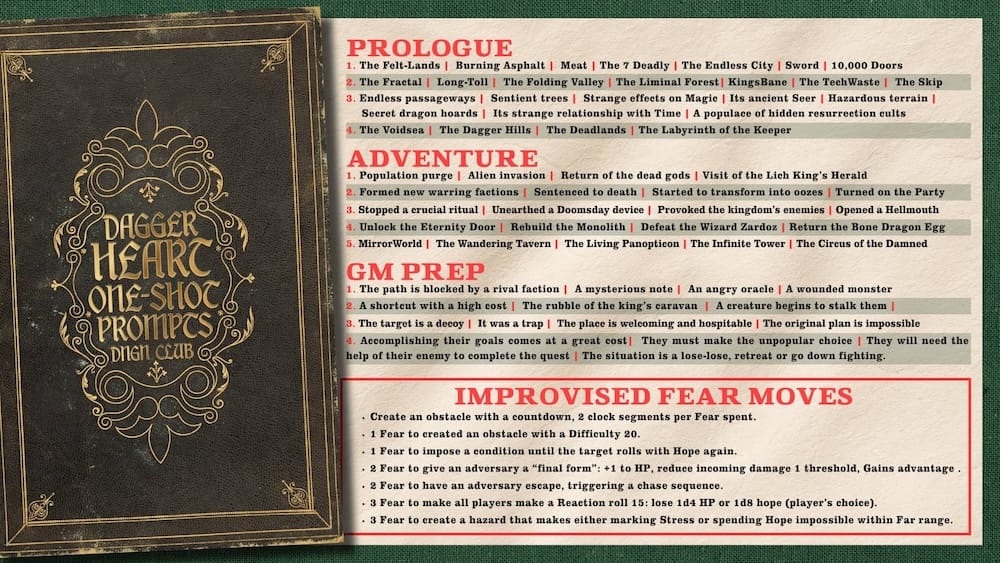
The Bureau of Chronological Affairs’ Jack Panic is back with an inventive one-sheet for one-shots. I was particularly drawn to the Improvised Fear Moves (as was Mike Underwood), a table that is utilitarian (roll and grab) and inspirational (you can modify it endlessly). I could see this structure making its way into the CRB and 3P modules given the flexibility it offers designers and GMs who prefer improvisation over structure.
Panic has a few other goodies he’s been adding to his Daggerheart collection, including a Doomspiral spell, a dual countdown Environment called Enter Evil, a mech suit Environment titled Heavy Metal, and the Weather Wizard, a simple tool for adjusting the weather while travelling. [These early missives from Jack were like tremors before the sandworm rose.] Vol. 18
🌎 CAMPAIGN BOOK
Vol. 14 · Pistolheart announcement
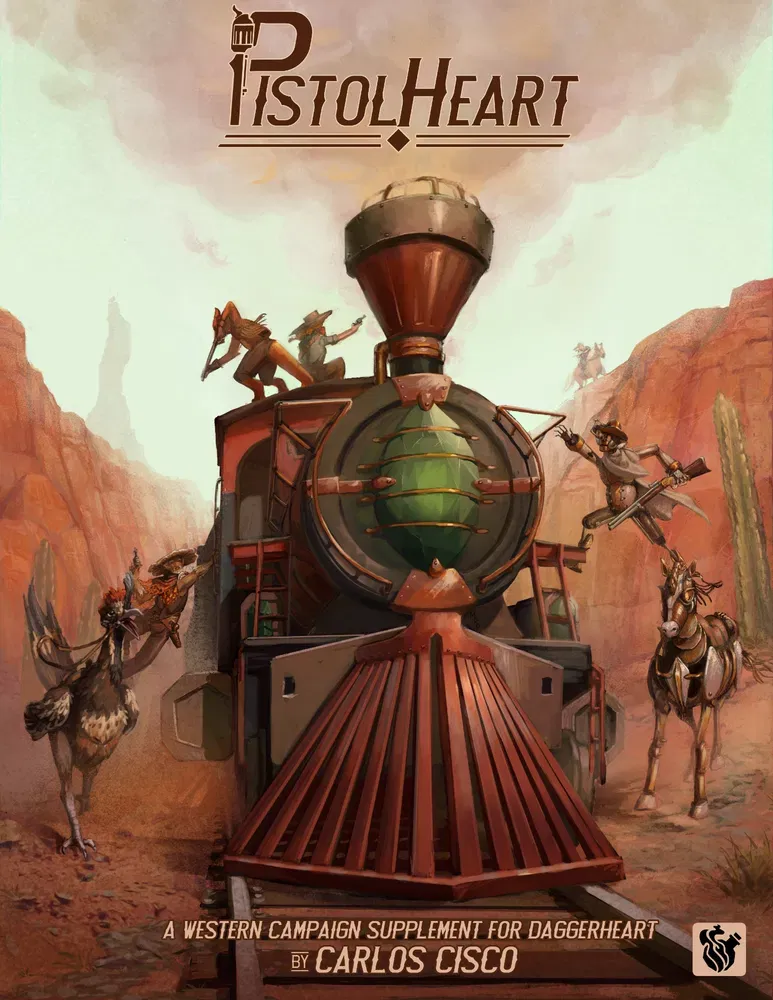
Colossus of the Drylands writer (and Star Trek: Discovery alum) Carlos Cisco announced his next project, Pistol Heart—a western-themed campaign in four volumes. The first includes five new subclasses, expanded firearm options, and two western environments (including the train chase teased on the cover). Later volumes will add more subclasses, adversaries, and eventually a full Western horror campaign frame with locations, NPCs, factions, and items. Cisco plans to start small and build each release into a larger, highly polished setting for gunslingers and outlaws alike. [A humble start for what has become the system's first bona fide 3P brand. A flawless shot from an expert gunslinger.] Vol. 14
Vol. 15 · Bureau of Chronological Affairs
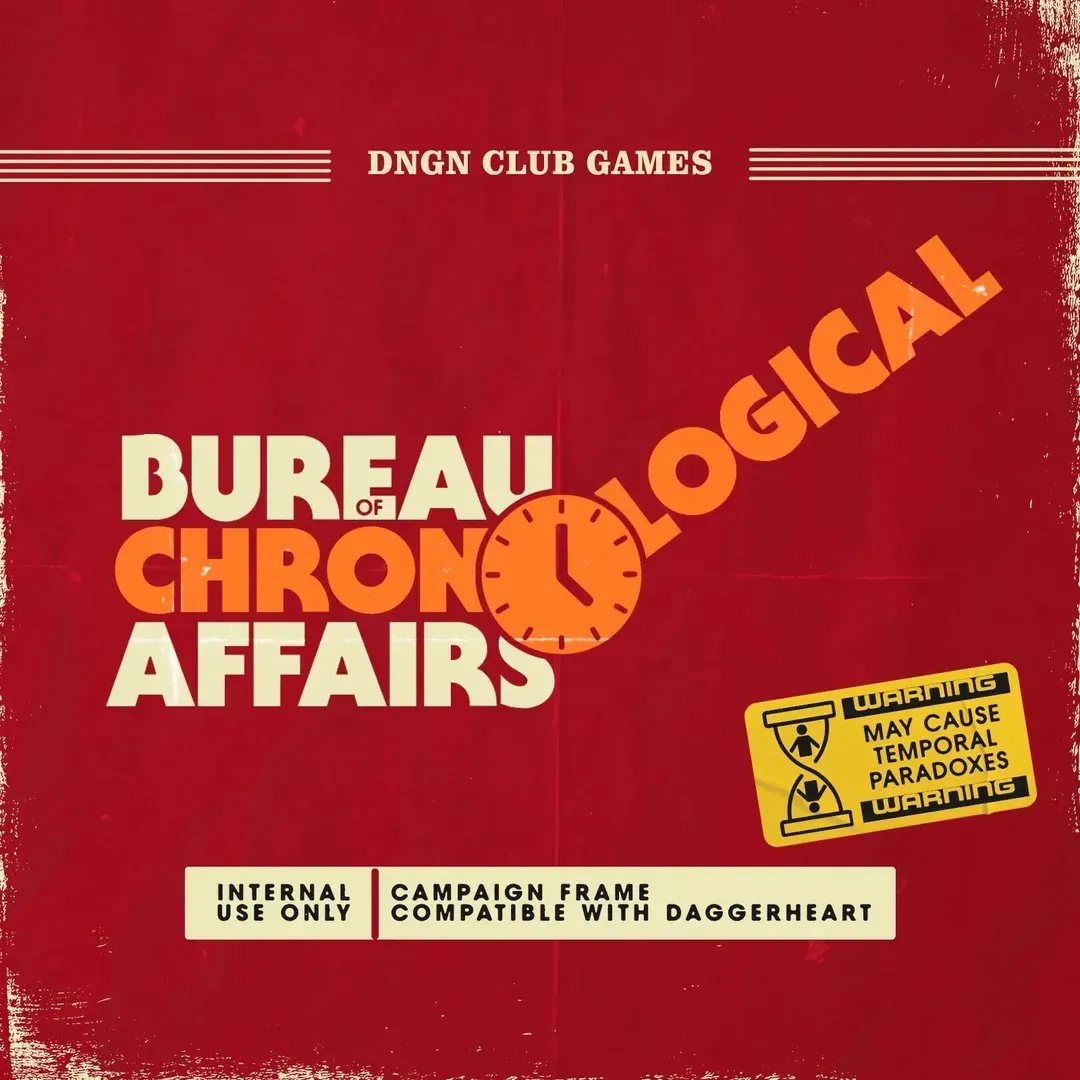
An excited Spenser Starke brought my attention to the 70s-inspired art direction wrapped around the curious case of The Bureau of Chronological Affairs by DNGN CLUB (aka Jack Panic).
Drawing inspiration from Severance and Loki, this original Daggerheart module bills itself as a bureaucratic time travel mystery:
At the heart of TIME/SPACE stands a vast office complex—its stairwells spiralling endlessly through every shadowed corner of the multiverse. This is the BCA, the Bureau of Chronological Affairs, long-time custodians of the universal time flow and guardians of the DOOM’S DAY CLOCK—a device that has ticked since the dawn of creation.
Or at least it did—before the entire staff of the Bureau vanished.
Now it’s up to you and a handful of freshly recruited field agents to navigate the surreal corridors of TIME/SPACE, restore the Bureau’s lost departments, and uncover the truth of what happened to the BCA.
The concept alone was enough to get the socials buzzing, but Panic—known for retro-future titles like Deepspace Void Truckers and pulpy micro-horror games like It Will Kill and The Gas Station—adds some fresh mechanics to the game that make it instantly VERY Daggerheart while entirely unfamiliar.
I particularly like Paradoxes, which aside from bending causality, includes Panic’s trademark “the more you do something, the more I remove a dice from your dice pool”—a simple hack guaranteed to ratchet up the tension as the drama unfolds.
Do yourself a favour and, aside from exploring BCA, visit Panic’s site. Several of his module’s could be adapted to Daggerheart and give you environments (and mechanics) to explore far beyond Umbra and the Witherwild. [Jack is a generational talent who will be remembered alongside Starke, Dionne, Colville, and Gillen. What a treat to watch his rise.] Vol. 15
🎨 CRAFTY
Vol. 14 · Community (the one without Alison Brie)
If you make things to share with other people, Matt Coleville’s “Community” video is worth your time. In it, he reflects on his own journey building the MCDM community that has morphed into Draw Steel, and offers advice on how to do it for your own work. [I suspect everyone has watched this video by now. But treat yourself if you haven't. It's one of Matt's best.] Vol. 14
Vol. 11 · The Life of a Game Designer
Chris McDowall lays bare the path, perils, and paydays of game design. tl;dr: the road is long, the money is meh, but the craft is rewarding and addictive. [TTRPG publishing is just three kobolds in a trench coat.] Vol. 11
Vol. 15 · Read to Run, or Read or Run?
"Donald Schepis, community manager and adventure designer for Pinnacle Games (Savage Worlds, Deadlands, etc) told me that adventures are meant to be READ, not RUN. On purpose. The reason: RPG companies have stats going back decades showing that 85-90% of the people who buy an adventure module just read it, and never run it. If the adventure is easy to run (Shadowdark layout method), it will not be fun to read, and 85% of their customers will opt out. They need to sell books, and readable (non-runnable) adventures sell."
That's a comment on the video RPG Content Often Sucks, where Chubby Funster ponders why RPG module design is often unplayable. I don't know if Schepis actually said this, but the comment feels true insofar as it reminds me of the publishing adage that book buying and book reading are two separate hobbies.
It's worth considering as you toil away on your Daggerheart module that what you think you're selling isn't necessarily what people think they're buying. [I'm reminded of the crowdfunding success of Heart of Cthulhu 1912 and Demonheart, both of which, to my mind, offered hastily adapted, substandard material but ran flashy campaigns with loads of art.] Vol. 15
Vol. 17 · Inspo from Cisco
Carlos Cisco, scribe of Colossus of the Drylands and the upcoming Dark Heart of Andaluria, is a mensch. Here he takes to the sub to offer advice about the highs and lows of self-publishing, then follows it up a few days later with survey results that allow everyone to peek into his process. [As the amusement park sign says: You must be this tall to ride.] Vol. 17
Vol. 22 · Evil Hat crowdfunding data
Fred Hicks of Evil Hat (Blades et al) shares their crowdfunding data going back to 2012. Extraordinary. [Hoe, meet hard row.] Vol. 22
🛠️ TOOLS & RESOURCES
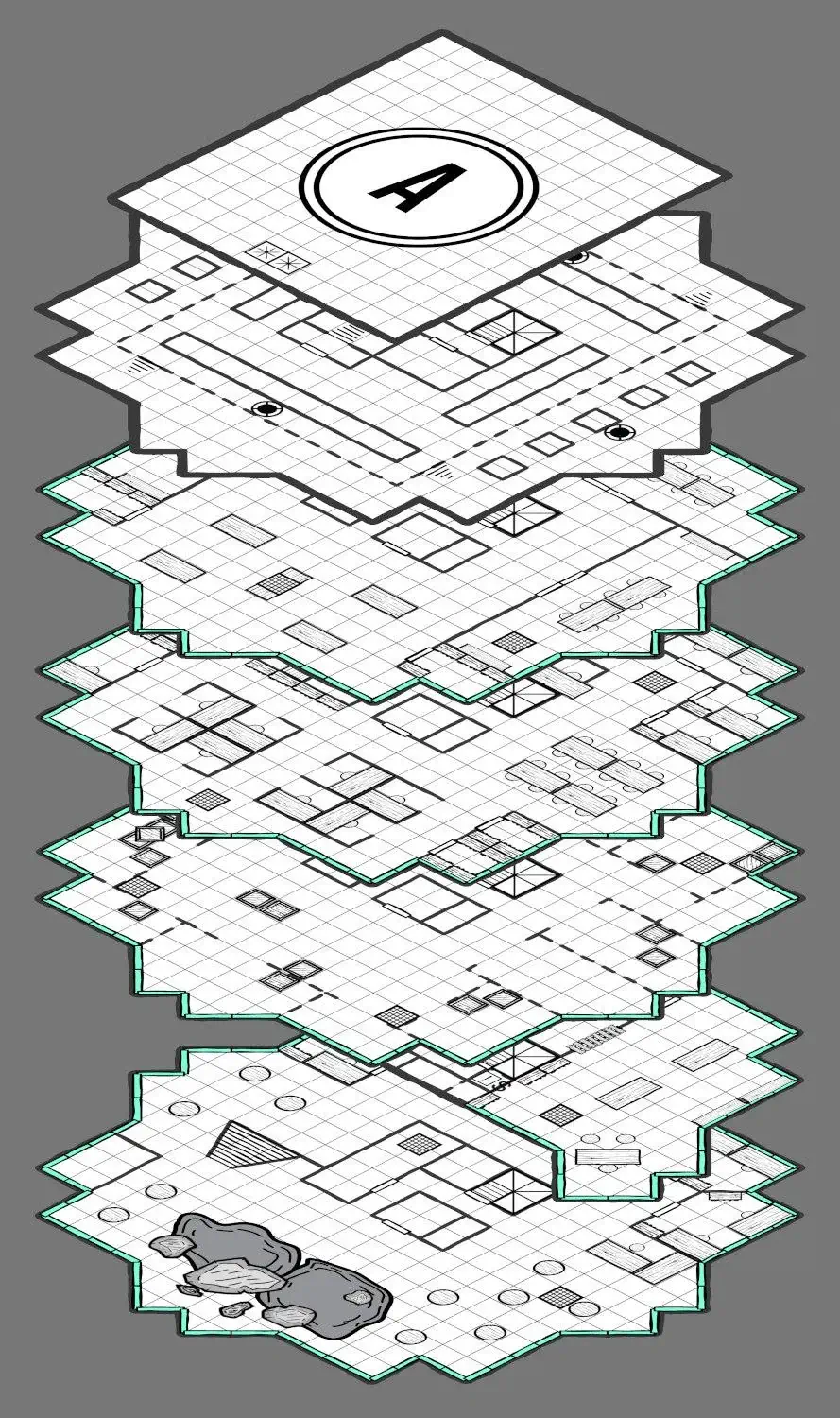
The floors of Nakatomi Tower from Die Hard, reimagined as a dungeon. There’s a whole adventure that goes along with this, though you’ll have to convert it from 5e. [It's a Christmas movie, goddammit.] Vol. 18
The Roundup:
- Traipse says: The same way equipment and gear help you get things done in the dungeon, Friends and Contacts help you get things done in the city. [This is so smart, and so vital for social-heavy campaigns.] Vol. 31
- This collection of additional background questions, customized for all 18 subclasses, can help your players weave better backstories. Vol. 28
- This six-page PDF contains condensed rules and procedures drawn from the OG-DHRD, with page number references to the Daggerheart Core Rulebook. It's free and available on Old Gus' Daggerheart System Reference Document. Vol. 26
- Situations and NPC generators, also courtesy of Ol'Gus. Vol. 26
- A lovingly designed BG3 costume dye simulator. God I love the Internet. [Play with that after you watch this.] Vol. 25
- Silken-haired Nico de Gallo prepared a handy one-page player guide you might want to pass around. [Nico's design is fugly, but it fucks for the normies. Use it!] Vol. 23
- Juan Castro has two free art packs for the Sablewood Messengers adventure: portraits, tokens, locations, and battle maps. [Juan is such a beautiful soul: playful, kind, and giving.] Vol. 22
- Over at Patchwork Paladin, rules for running a Daggerheart hexcrawl or traversal. [Elizabeth is one of the best observational writers around.] Vol. 20
- HoneyRoll is offering free "Ally" cards to help you remember your NPC defensive abilities. For print and digital use. Vol. 19
- Here’s a handy Consequences, Complications and Costs chart to guide Success with Fear rolls. Vol. 16
- Old Gus added new armour benchmarks to the guide. And for those looking for basic action handling, remember this handy flowchart. [God bless Gus.] Vol. 13
- Violruina is back with updated kid-friendly character sheets, adding an advancement sheet for each class and small bits like threshold, proficiency, more experiences spaces, and tag team reminders. Essential kit if you’re playing with kids. [Remember the children! How else do we get future players?] Vol. 12
- Gourmet Street is a gonzo guide to adding street-food adventuring to any game system. Filled with random menu tables, edible monsters, and magic kitchenware, it’s the perfect seasoning for campaigns that want a little more sugar and spice in their urban crawls. [Best find ever.] Vol. 10
- It’s OSR, but why not explore old RPG cities that you can use in your own campaigns? Hosted by Griffith Morgan, the creator of the documentary Secrets of Blackmoor, and co-author of The Lost Dungeons of Tonisborg. (Credits aside, he has a great voice.) [He really does have a great voice.] Vol. 8
- Need dice icons in your handouts or house rules? Polymath is a free font that renders d4 through d20 in both regular and bold styles—with two shapes for the d12 depending on case. Perfect for roll tables, homebrew, or just nerding out on typography designed for TTRPG. [I've used this font several times and stand by its utility and beauty. What a gracious contribution to the commons.] Vol. 7
- Where’d You Get That? is a system-neutral costume generator that uses a regular deck of cards to develop your character through what they wear and carry. The suit defines your relationship to the item (like gift, heirloom, or cultural symbol), while the number prompts a deeper story beat. Great for session zero, solo journaling, or fleshing out the weirder parts of a build. [The Devil Wears Prada, man. Haven't you heard?] Vol. 7
INSPO
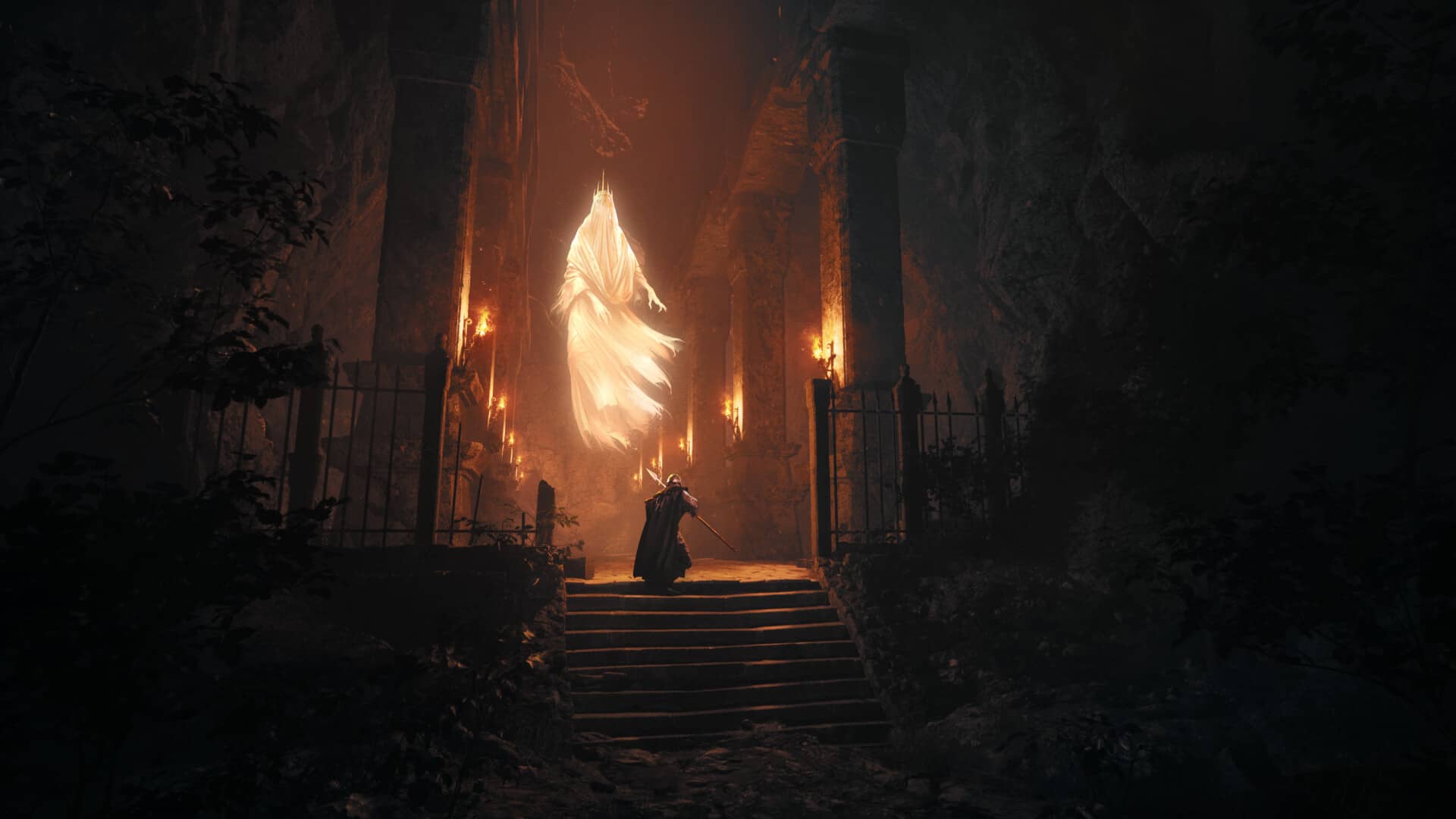
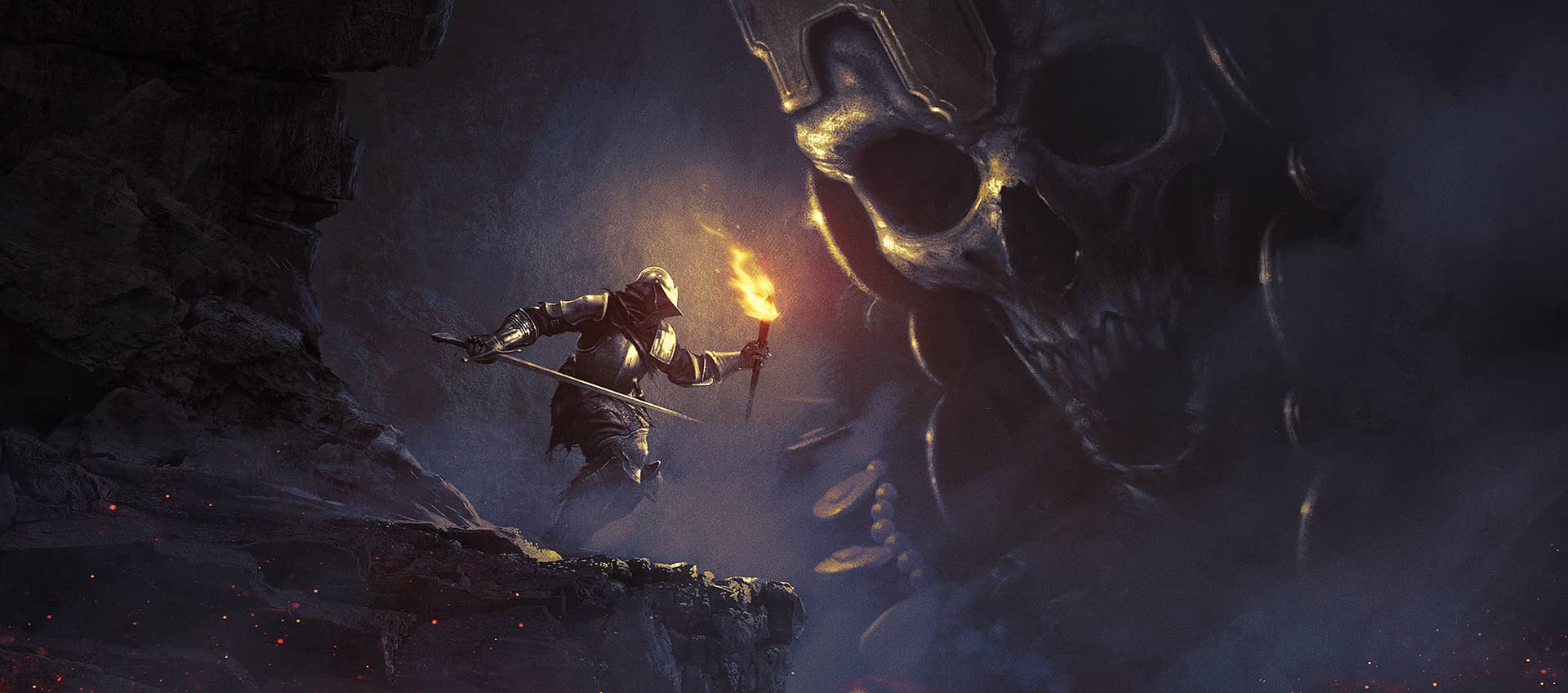
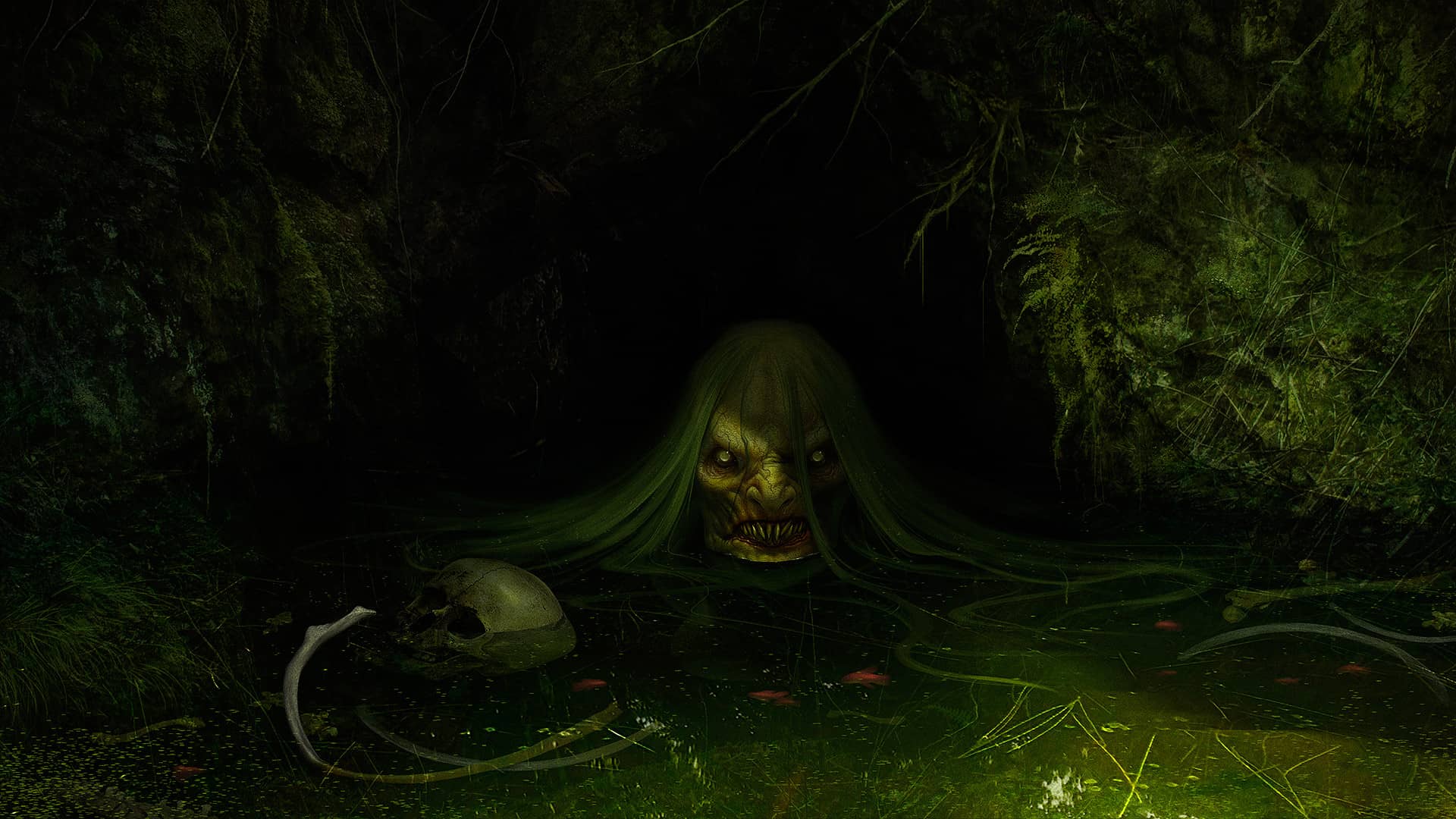
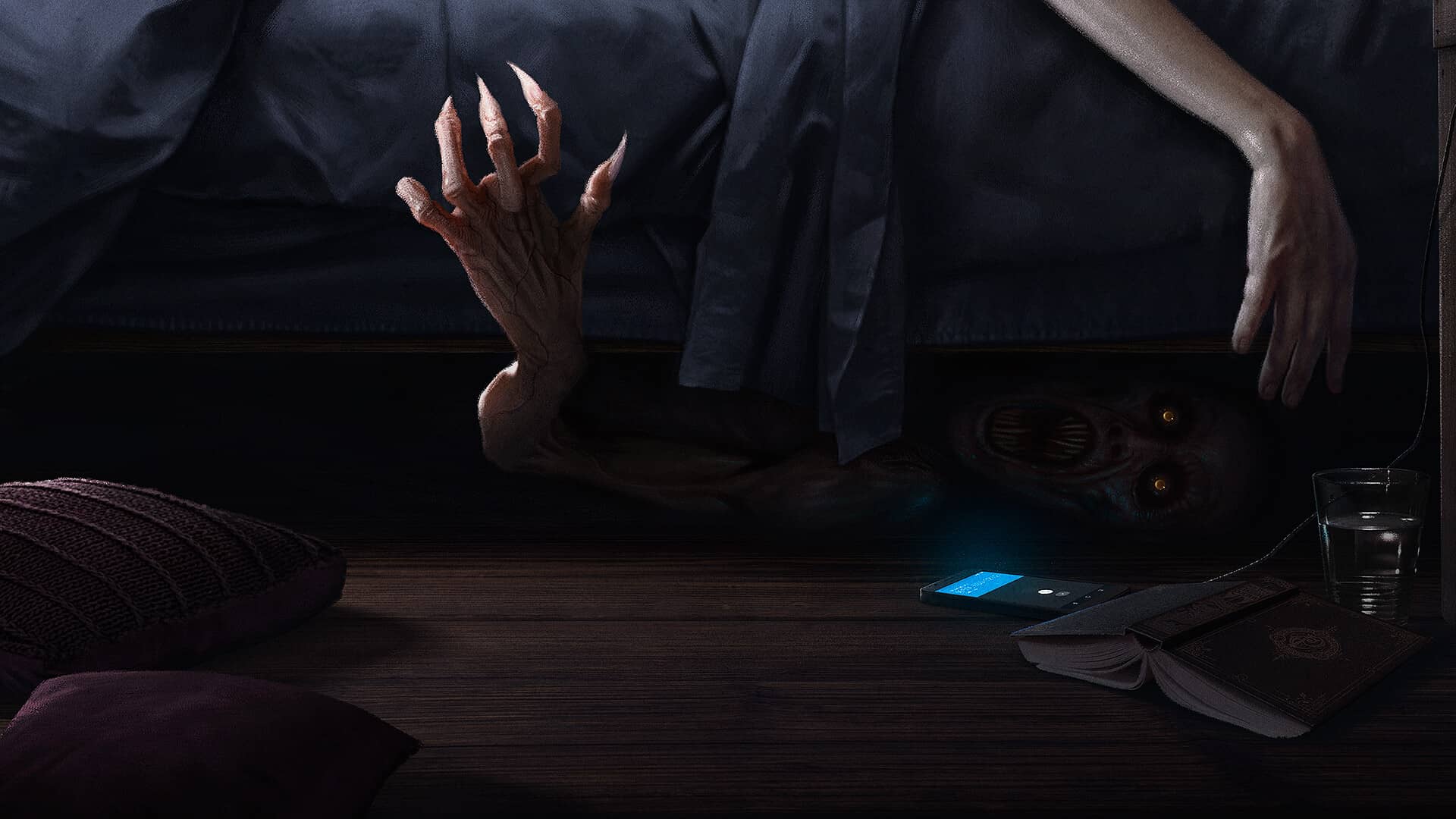
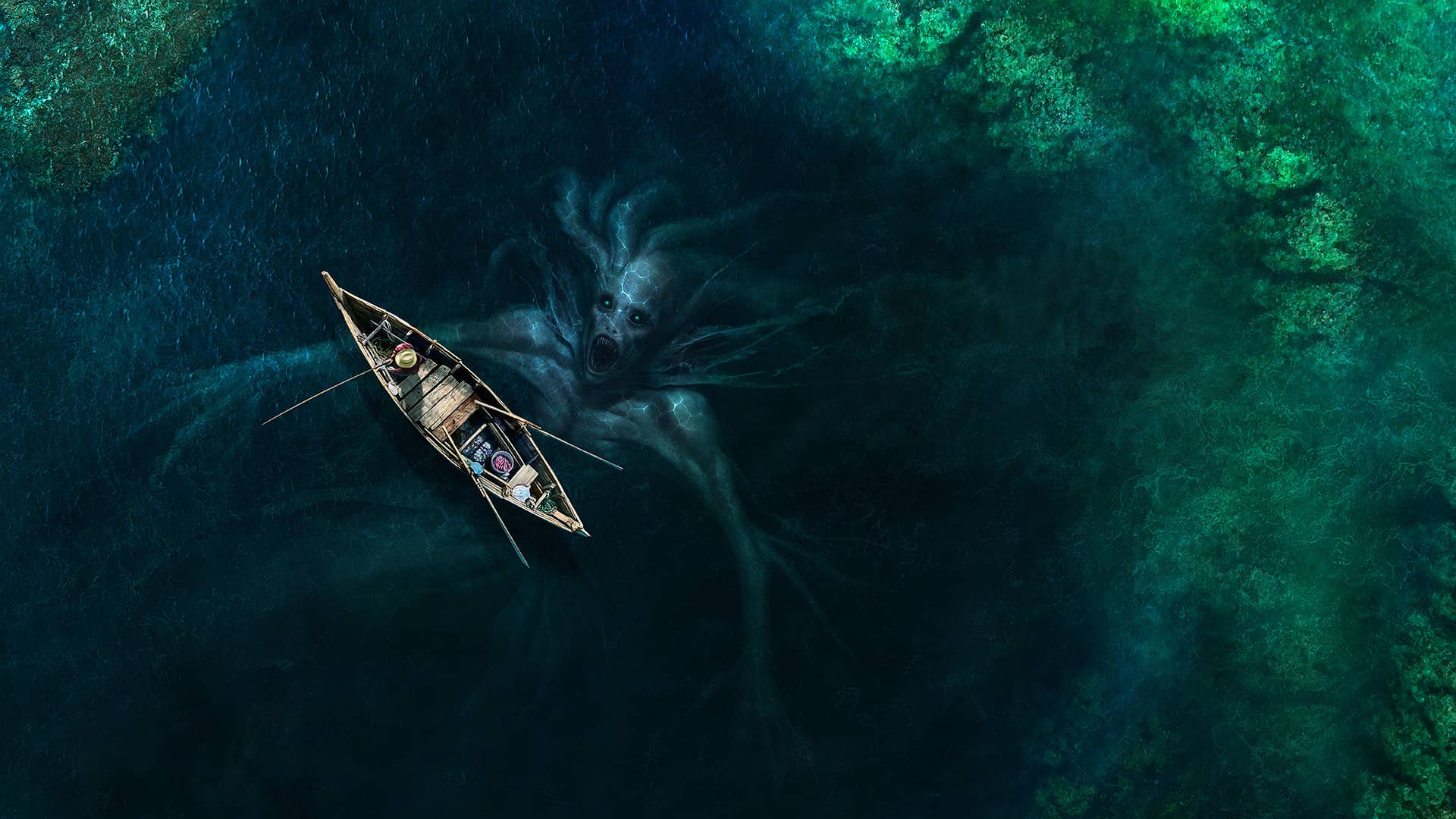
I can see why CR's creative team asked Spanish artist Daniel Jimenez to illustrate Sallowlands: facility with fright. His compositions, line work, facial expressions, colour palette…they harden into tight, thrilling moments of tension and horror that manage to express both scale and intimacy. [Jimenez is also responsible for this epic illo of Dol-Makjar.] Vol. 29
STORYTELLING
Vol. 1 · You Animal!
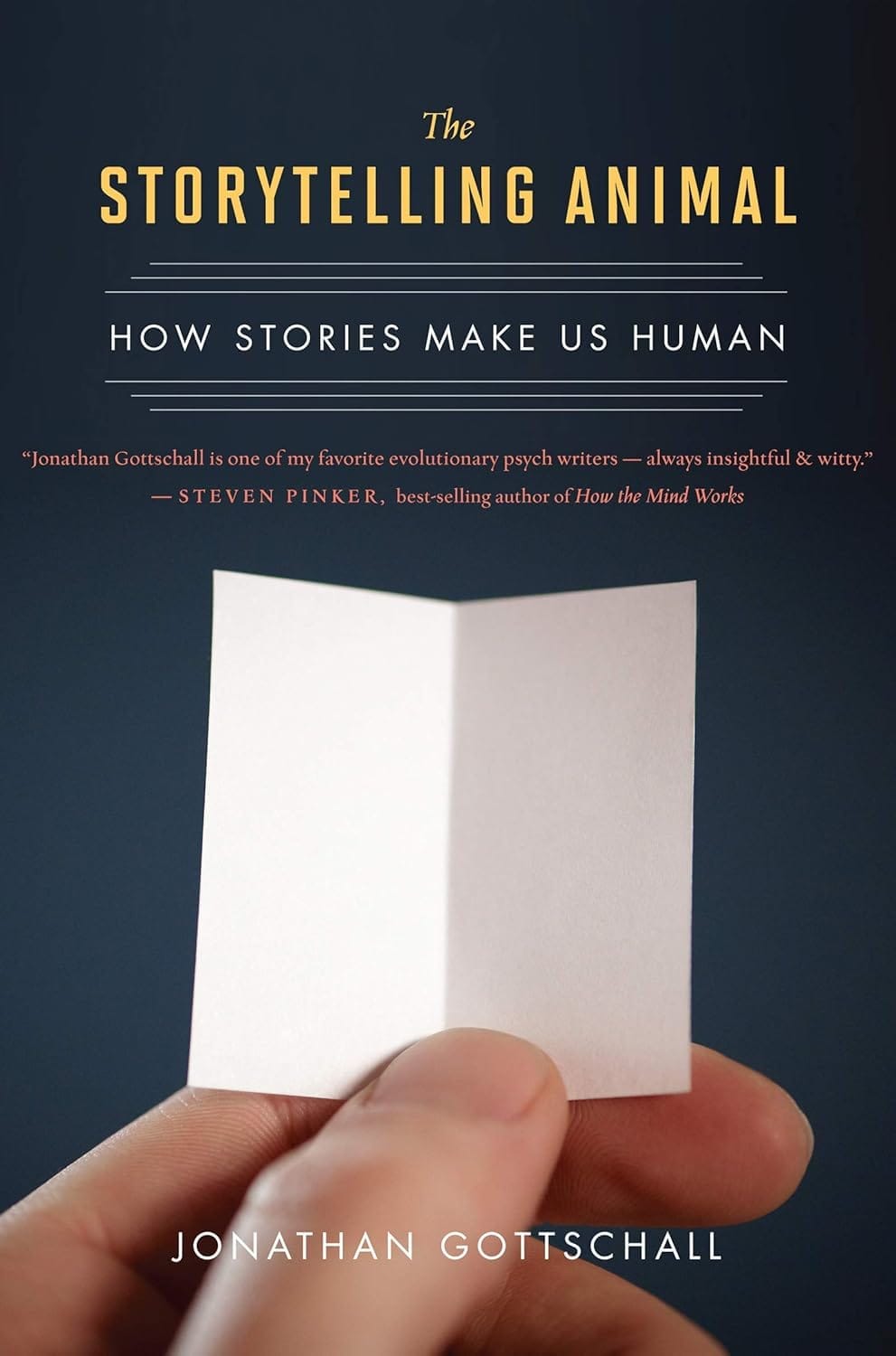
Daggerheart is narrative-first roleplay. But why does narrative even matter? What do we get out of stories? Why do they matter so much to us?
It turns out stories are a survival tool, something humans developed alongside fire and the wheel. They help us make sense of the world, pass on knowledge, and connect with each other.
Jonathan Gottschall’s The Storytelling Animal (book / video) explores this idea in depth, showing how story shapes our thoughts, emotions, and relationships. For GMs and players, it’s a reminder that what happens at the table isn’t just entertainment. It’s deeply human. Understanding that can help you build worlds, invent characters, and run games that feel more meaningful and memorable. [Trade is what keeps us from killing each other, and stories keep us from killing ourselves. We need them. And you're right to feel they need you.] Vol. 1
Vol. 9 · Re: Action
Corkboards & Curiosities is back with another video, this time to point out the purpose of action isn’t to mimic movies or discuss “how are you doing that?,” but to disrupt the flow of decision making in a game. Her observation: games are loops of “decision > outcome,” and action serves to accelerate those decisions—forcing logic to break and chaos to surface.
She adds a few tips to ratchet things up:
- Introduce complications round by round, rather than all at once. Each twist forces players to reprioritize.
- Strip away safety by removing time and perfect information. Give players incomplete intel and force fast choices.
- Help stuck players by narrowing their options (“help your ally or stop the engine fire?”).
- Establish a culture of quick turns. Not to punish, but to sync the pace of the story with the speed at the table.
The goal isn’t to fluster your players, but to create a rhythm of “pressure and release” where adrenaline, not analysis, drives the moment. [An underrated idea and one that shares more DNA with magic than with storytelling. Misdirection and irregular beats completely change the tempo of your story and the tension among your players. Try to master them.] Vol. 9
Vol. 27 · Pay Attention to the Unit of Attention
Your party storms the gates, swords high, casters at the ready. How do you clock the scene? How do you punctuate moments to create clarity and dramatic heft for your players?
Find the beat.
Writing for Interesting (a Scriptnotes blog), Chris Csont uses a recent comment from Project Hail Mary and The Martian writer Drew Goddard on finding and framing a beat:
“Beats to me are just moments [...] I tend to just start with moments that I respond to. It could be big or it could be small. It could be just, "Oh, I like when he said that thing to her." It could be, "Oh my God, this giant story turn." I'll put them on a board, and I'll just start noting them. Then at a certain point, I'll go, "I have enough beats," and go, "Okay, let's start trying to put scenes together."
Csont goes on to note, “a beat doesn’t have to be “something happens” in the plot sense. It can be a unit of attention. It’s the thing the scene is asking us to notice, process, feel, or carry forward.”
For instance, a beat might be “an image, a line of dialogue, a reversal, a character making a choice, a hesitation, a look, a gesture, a silence, an interruption, an entrance, an exit, a discovery, a mistake, a misunderstanding, a realization, a confession, a lie, a joke, a threat, a promise, a question, an answer, a non-answer, a change in status, a shift in power, or a new piece of information revealed."
Understanding beats is important for Daggerheart GMs who not only want to create rousing moments, but have practical concerns about using Fear.
Hundreds of comments on the Discords and sub are from GMs with too much Fear and unsure how to use it. Should it always be an attack? No. Sometimes you’re using Fear to hit a beat, to deploy that unit of attention in ways that crank the intensity without devolving into the slog of “hit/miss/hit.”
Here’s a fight scene from Mad Max: Fury Road.
Watch it, and then think about the beats. Call them out, consider how you might frame them at the table, how you might engage your players. Then compare your list to Csont’s.
The goal is to be aware of these moments, match them with your Fear inventory, and frame the moment so it’s as legible, intense and rewarding as possible. [The "unit of attention" is such a captivating way to explain how to explain things. Truly great post by Csont.] Vol. 27
EPILOGUE
As some of you may have heard, the Digest portion of The Dispatch is going on an indefinite hiatus. This retrospective serves as a goodbye-for-now.
Daggerheart Deconstructed will continue biweekly, as before.
Behind the scenes, Chris and I are readying a new publication. We'll have more to share in the next couple of weeks.
I have loved editing and publishing The Dispatch. I've met amazing people, witnessed the dawn of a new system, and hopefully contributed to shaping the energy and values we see spread across the socials, subs, and servers.
Thank you for the time you've given us. Hopefully we've made your time with the hobby a wee bit more enjoyable and that much more thrilling.